
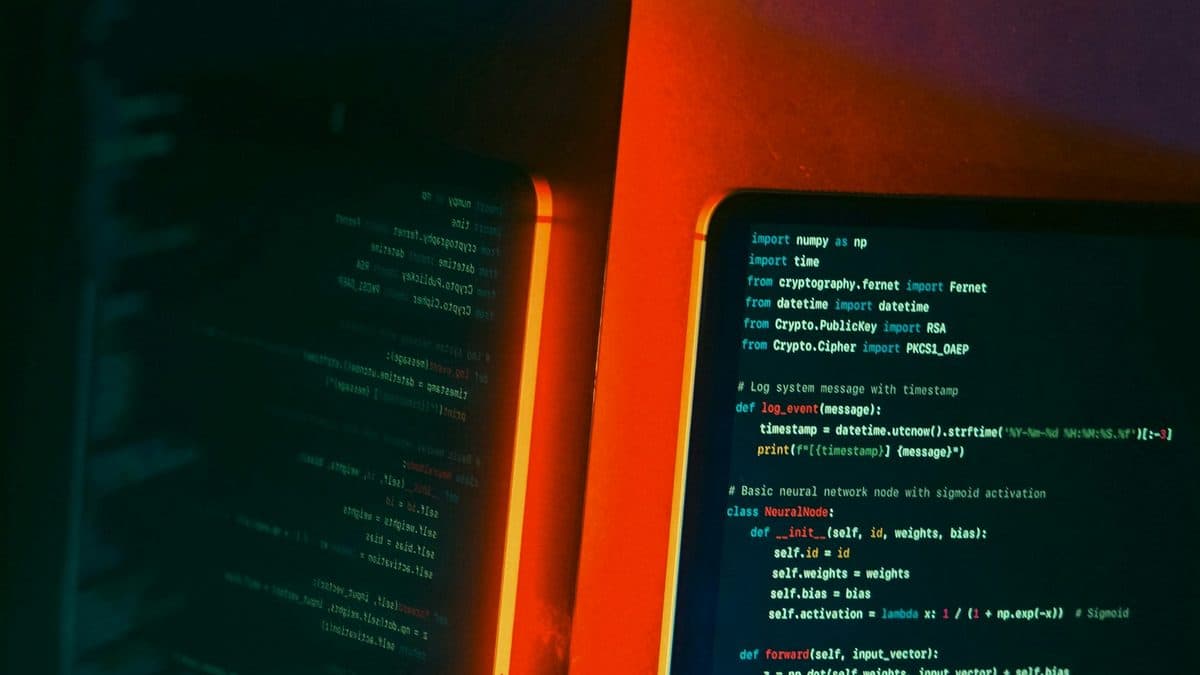
For a few years, the working assumption in AI was simple: only companies with enormous compute budgets and elite research teams got to compete. On June 25 and 26, 2026, that assumption took another visible hit. Over two days at Beijing's Zhongguancun Exhibition Center, the 21st OSChina World Open Source Conference brought together the Linux Foundation, GitHub, CNCF, Huawei, Xiaomi, ZTE, and dozens of other organizations to argue that open source — not bigger data centers — is now the fastest way to build competitive AI.
Why an Open Source Conference in Beijing Matters Beyond China
The OSChina World Open Source Conference is organized by the China Open Source Promotion Union (COPU) and hosted by CSDN, China's largest developer community. Now in its 21st year, the event has quietly become a bellwether for where open source AI is headed — not because China is the only place building it, but because it's where the open source and closed source strategies are being argued out loudest, in public, by the people funding both sides.
This year's edition drew an unusual mix: Linux Foundation executives, GitHub's Asia-Pacific technical lead, CNCF's executive director, and Saudi Arabia's programmers' association president shared a program with Huawei's robotics researchers, Xiaomi's inference engineers, and the founders of China's fastest-growing open model labs. That mix is itself the story — open source AI has stopped being a China-only or Silicon Valley-only conversation.
China's Bet: Cheaper, Leaner Models Beat Bigger Ones
COPU honorary chairman Lu Shoujun opened the summit with a blunt framing of the AI industry's two competing strategies. The Western approach, in his description, is capital-heavy: massive compute spending, huge power consumption, and a race toward ever larger, increasingly similar models. China's approach, he argued, is the opposite — lower investment, lower power draw, and open weights that let many smaller, specialized models compete instead of one giant one.
It's a framing built on real results. DeepSeek's cost-efficient training approach rattled the industry in 2025, and Lu pointed to a wave of open-weight Chinese models — Kimi, Alibaba's Qwen, Zhipu's GLM, MiniMax, and Xiaomi's MiMo among them — as proof the strategy scales. Whether or not you buy the East-versus-West framing, the underlying claim is testable: are these models actually closing the gap on closed frontier labs?
On that question, the summit offered a specific data point. Artificial Analysis benchmark results cited during the conference show Qwen-class open models now landing close to top closed-source performance on a number of tasks — not a clean win, but a meaningfully narrower gap than most people outside China's AI industry assume.
A New Linux Foundation Body Wants to Set the Rules for AI Agents
The most consequential announcement wasn't about a model at all. Linux Foundation executive director Jim Zemlin sent a video message revealing that the foundation has launched the Agentic AI Foundation (AAIF) — a neutral home for the open standards that let AI agents talk to tools, data, and each other. Eight companies signed on as founding members: Anthropic, Block, OpenAI, AWS, Bloomberg, Microsoft, Google, and Cloudflare, with Anthropic, Block, and OpenAI each contributing existing technology to the project.
AAIF executive director Mazin Gilbert framed the stakes plainly in his keynote: AI agents are moving from research demos into production fast enough that the industry risks the same fragmentation that slowed early cloud computing, unless a shared standards layer holds it together. His argument rested on a five-layer stack — hardware, infrastructure, intelligence, the agent layer itself, and end-user applications — where a lack of coordination at any layer creates data silos nobody can bridge later.

Gilbert's numbers back up the urgency. In 2026, more than 1.13 million GitHub repositories now integrate large language model SDKs, up 179% year over year, while contributors to AI projects grew 76%. API token prices have fallen roughly 90% over the past year even as usage is projected to grow fifty-fold — a combination that only works if agents can reliably call tools and pass context without every vendor inventing its own protocol.
Registered MCP servers — the connectors that let an agent reach a specific tool or data source — are approaching 10,000, Gilbert said, with the broader "agent economy" on a path toward a multi-trillion-dollar market. CNCF executive director Jonathan Bryce made a related point from the infrastructure side: every layer that delivers an AI token is already open source-led — Linux and Kubernetes underneath, PyTorch dominant in training at roughly 80% share, and vLLM leading inference — which is exactly why standards at the agent layer matter now, before the pattern repeats.
China's Open Agent Stack Is Catching Up Fast
Talk of standards would mean little without working systems, and the summit had no shortage of them. Huawei's Poisson Lab detailed openJiuwen, an open source framework for coordinating "agent swarms" — many smaller agents working a task together instead of one large model doing everything. Released under the Apache 2.0 license on AtomGit, it has passed 1.2 million downloads and gone into commercial use at more than 30 industry partners, earning Huawei gold-tier membership in the AAIF.
Xiaomi's LLM inference lead, Zhang Chen, described a narrower but sharper win: MiMo-V2-Pro, released in March 2026, became the first open source trillion-parameter model in China to support a full 1-million-token context window. As coding agents push real-world token usage up an expected 27-fold within six months, Xiaomi's engineering team says architectural changes — a hybrid sliding-window attention design that cuts both compute and memory cost to roughly a seventh of standard full attention — have pushed MiMo's inference cost down to match DeepSeek, long the price leader among Chinese labs.
Four Chinese Open Source Bets Worth Watching
- Huawei openJiuwenApache 2.0 framework for multi-agent "swarm" coordination across domestic chips — 1.2M+ downloads, 30+ commercial deployments.
- Xiaomi MiMo-V2-ProFirst Chinese open trillion-parameter model with a 1M token context window, engineered for DeepSeek-level inference cost.
- ZTE Co-SightIndustrial-grade agent architecture built for high-reliability, low-error execution rather than open exploration.
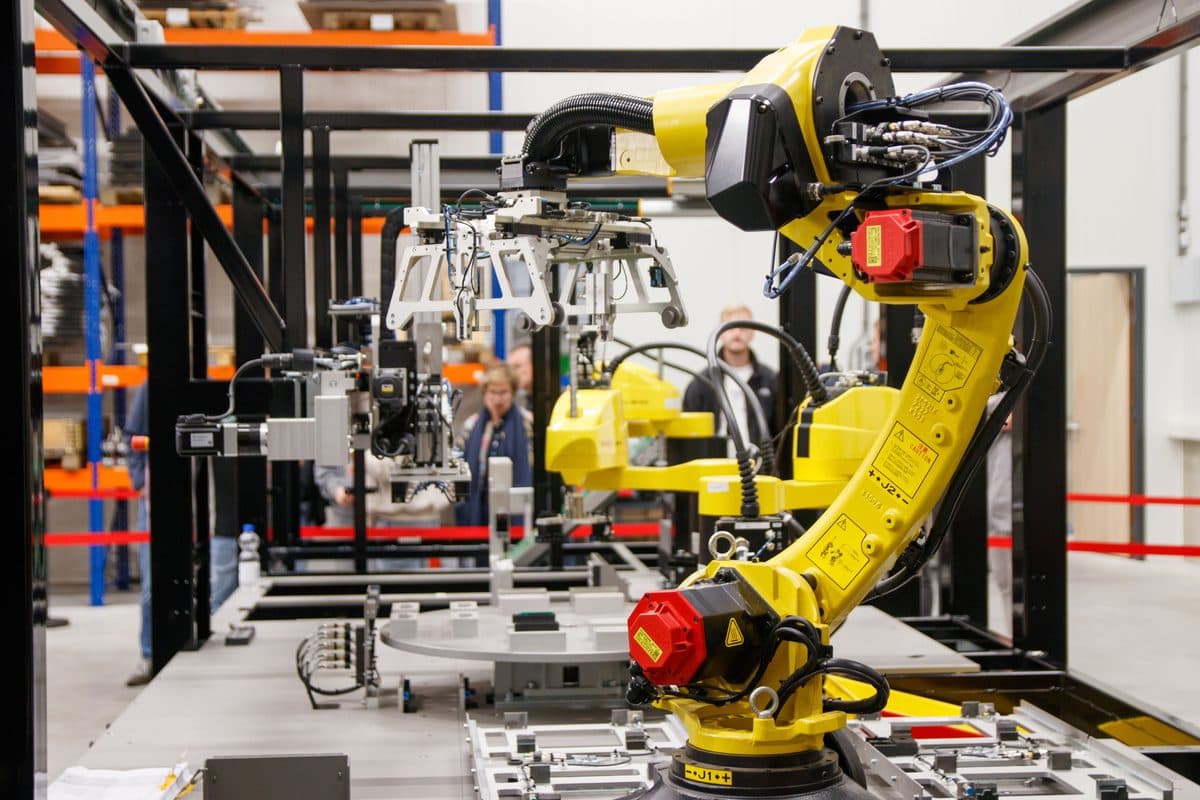
- Unitree & AgiBot (embodied AI)Open source robotics data sets and models applying the same playbook — Unitree alone has shared 47 GitHub projects and 66 real-robot data sets.
Open Source Still Has to Make Money
Not every speaker treated open source as purely a public good. OSChina chairman Ma Yue was direct about it: open source, he argued, "must achieve a great victory in commercialization," or it doesn't survive. His platform is reportedly completing a restructuring toward an IPO, built around what he calls "Chinese Tokens" — a distribution stack spanning domestic models, domestic chips, and domestic green power, aimed at capturing commercial value from open infrastructure rather than giving it away entirely.
CSDN founder and chairman Jiang Tao made the commercialization case with numbers that are hard to ignore. Anthropic's annualized revenue grew roughly 45-fold in 17 months to $44 billion; Cursor reached a $4 billion valuation with about 50 employees; Claude Code reportedly hit $2.5 billion with a team of 12. Jiang's read: output per person is up roughly 750-fold in some cases — not because people got smarter, but because the tools and methods changed underneath them.
Jiang calls this "silicon time" — the idea that AI has, for the first time, made time itself something you can manufacture at scale, with tokens as the raw material. He's blunt about the catch: the gains aren't evenly distributed. By his figures, the top 1% of AI-assisted code output outproduces the median developer by 46 times, and that gap is widening, not closing.
China's Open Source Ecosystem Is Going Global
A recurring theme across the two days was that Chinese open source is no longer building only for a domestic audience. COPU deputy secretary-general Tan Zhongyi described a shift from "consuming" global open source to helping supply and govern it — participating in Western standards bodies while actively exporting expertise to Belt and Road partner countries.
The clearest example is Saudi Arabia. COPU has built a three-year relationship with the Saudi Arabian Federation for Cybersecurity, Programming and Drones, signing a formal memorandum of understanding in 2024, running a joint database and AI-desktop working group, and hosting a first China-Saudi Open Source Summit in 2025 that drew more than 400 attendees. A second edition is scheduled for December 2026.

The Open Invention Network (OIN) added a separate but related thread: patent risk. OIN global ambassador Shane Coughlan told the summit that open source software now generates an estimated $8.8 trillion in demand-side value worldwide, and that enterprise software costs would run 3.5 times higher without it. OIN's community spans more than 4,000 organizations across 157 countries holding over 3 million patents, and its newly announced OIN 2.0 extends royalty-free patent protection deeper into cloud and AI-adjacent components — an unglamorous but necessary layer under everything discussed on stage.
What This Means If You're Evaluating Open Source AI for Your Business
Most companies reading about a Beijing open source summit will never deploy a Chinese model directly, and that's fine — the summit's real relevance is what it signals about where AI infrastructure is heading generally. Open weights, open protocols like MCP, and vendor-neutral standards bodies like AAIF are becoming the default architecture for serious AI deployments, not a fringe alternative to closed platforms.
That shift changes the calculus for a leadership team choosing an AI vendor or building an internal agent system. Betting entirely on one closed provider's roadmap carries more switching-cost risk today than it did two years ago, now that open standards for tool-calling, memory, and agent coordination have real momentum and real corporate backing behind them — Microsoft, Google, AWS, and Anthropic among them.
It also raises the bar for due diligence. "Open source" isn't a single risk profile — a model with an active foundation, commercial deployments, and a governance body behind it (like openJiuwen's AAIF membership) sits in a very different risk category than an unmaintained repository with one contributor. Our Applied AI & Intelligent Automation practice exists to help businesses make that distinction before committing a budget to it, rather than after.
A simple filter works for most leadership teams weighing open versus closed AI infrastructure in 2026. First, check whether the standard or model has multiple independent backers, not just one vendor's marketing. Second, look at real production deployments, not GitHub stars, as the signal of maturity. Third, treat the pace of change here as fast enough that a twelve-month-old architecture decision deserves a fresh look, not a rubber stamp. Teams planning a broader digital transformation roadmap should build that review cycle in from the start.
Frequently Asked Questions
What is the Agentic AI Foundation (AAIF)?
AAIF is a Linux Foundation project launched in 2026 to govern open, vendor-neutral standards for AI agents — how they call tools, share context, and coordinate with each other. Its eight founding members include Anthropic, OpenAI, AWS, Microsoft, Google, and Cloudflare, and it has since grown to more than 200 global members, including Huawei and Lenovo.
Why does China favor open source AI over a closed, compute-heavy approach?
Industry leaders at the summit argued open source lets many smaller, specialized models compete on efficiency rather than requiring the massive capital and power spending that closed-source frontier labs need. DeepSeek's low-cost training approach is the widely cited proof point, and models like Qwen, GLM, Kimi, and Xiaomi's MiMo have followed a similar cost-first strategy.
What is MCP, and why is it growing so fast?
The Model Context Protocol (MCP) is an open standard that lets AI agents connect to external tools and data sources without custom integration work for each one. Its SDK reportedly reaches 120 million downloads a month, with nearly 10,000 registered MCP servers, because it solves a real interoperability problem as agents move from demos into production.
Are Chinese open source AI models actually competitive with closed models?
On several benchmarked tasks, yes — Artificial Analysis testing cited at the summit shows Qwen-class open models approaching top closed-model performance. The gap hasn't closed entirely, but it's narrower than it was even a year earlier, and cost efficiency, not raw capability, is where models like DeepSeek and Xiaomi's MiMo are winning outright.
What should a business take away from China's open source AI push?
Open-weight models and open agent protocols are maturing into lower-risk, vendor-neutral building blocks rather than a developer-only curiosity. Businesses evaluating AI infrastructure should weigh open standards backed by multiple independent organizations alongside closed platforms, rather than defaulting to a single vendor's roadmap by habit.
The Bottom Line
The 21st OSChina World Open Source Conference wasn't really about any single model or company. It was two days of evidence that open source has become the connective tissue of the AI industry — the layer where China's cost-efficient models, America's biggest AI labs, and a new Linux Foundation standards body are all, deliberately or not, building on the same foundation.
For most businesses, the takeaway isn't which country's models win. It's that the infrastructure decisions made this year — which standards to build on, which vendors to trust with a long-term roadmap — are getting harder to make casually, and more valuable to get right.
Weighing Open Source vs. Closed AI Vendors?
Pine & Birch helps businesses cut through AI infrastructure hype and choose the platforms and standards that will still make sense in two years, not just today.
Book a Free Consultation