
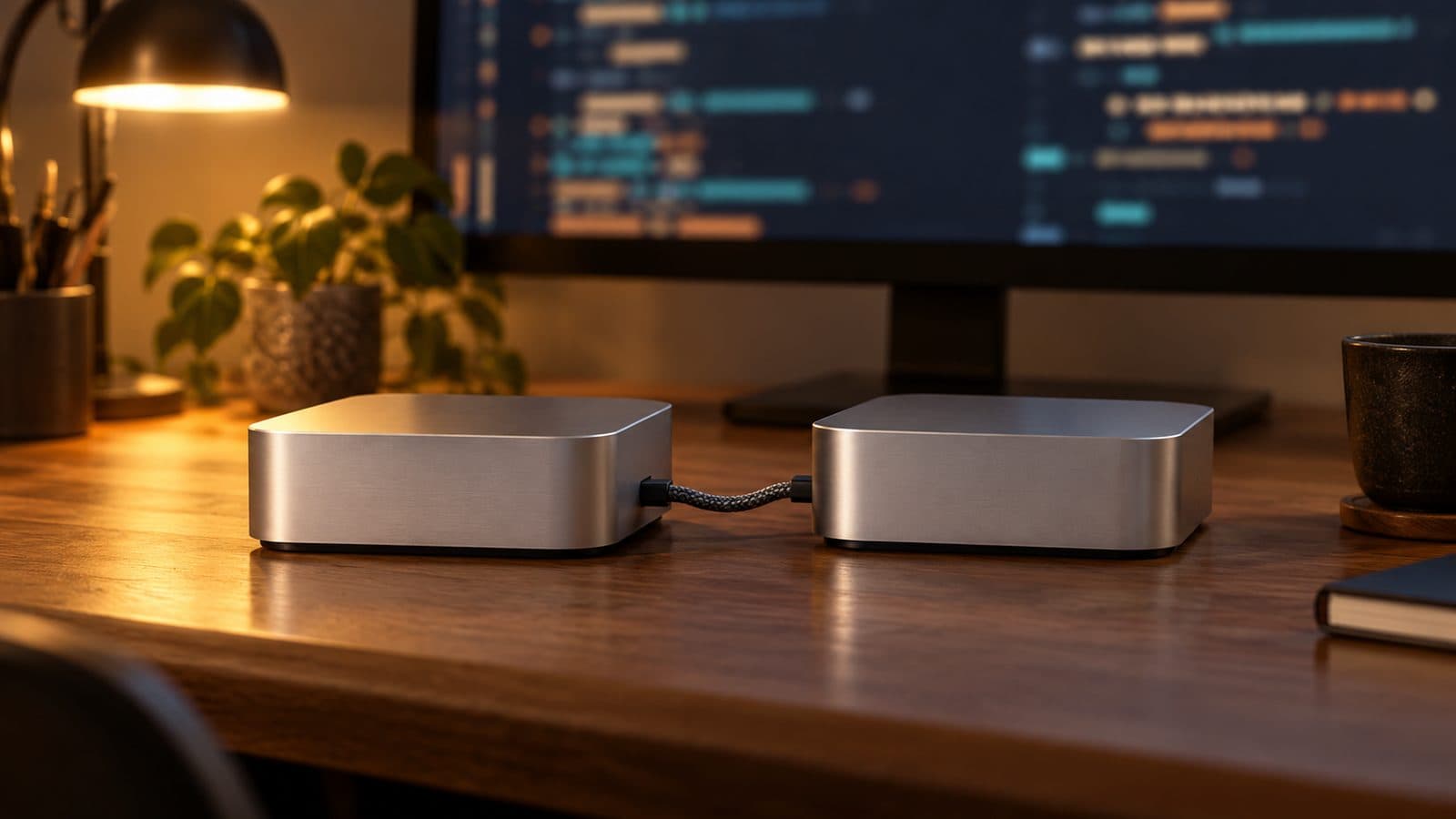
An 816-Billion-Parameter Model on Two Mac Studios
Picture two Mac Studios side by side on a desk, joined by Thunderbolt cables, running an 816-billion-parameter model that helps you fix code. That is the setup Meta documented for Muse Spark Open, the open-weight model it released on 15 October. The model comes from Meta and the machines from Apple, two companies that compete on almost everything else, and each has its own reason to be there.
This piece explains what Muse Spark Open is and what it takes to run locally, why Apple helped after falling behind in AI, what NVIDIA released the same week, and the practical question underneath: should a person, or a business, run AI on its own hardware?
What Is Muse Spark Open?
Meta describes Muse Spark Open as natively multimodal, built for coding and agentic work, with a one-million-token context window and “the most capable US open-weight model to date”, in its release post. The benchmark results are Meta’s own so far. It has 816 billion parameters in total but uses about 42 billion for each token: it is a mixture-of-experts design, with many sub-networks (“experts”) and a router that picks a few for each token. Only the active 42 billion do the work for each token, which keeps generation fast, but all 816 billion must still sit in memory, which is why one Mac is not enough.
Open-weight means you can download the model files and run them yourself. It does not mean open source in the MIT or Apache sense. The Muse Model License requires products to show “Built with Muse Spark Open”, applies a usage policy, and asks any company offering the model itself as a service with more than $20 million in revenue over twelve months to sign a separate agreement. Internal use and building it into your own product fall outside that trigger, and Meta claims no ownership of outputs. Read it before building a product on it. Earlier this year we noted that Meta had moved its Muse Spark flagship to closed weights in our piece on open and closed AI models; this release puts an open version back out.
How many Mac Studios does Muse Spark Open need?
Meta’s Mac guide is blunt: the model “doesn’t fit in one Mac’s memory”. You need two Mac Studios with the M5 Ultra chip and 512GB of unified memory each, or four with 256GB, on macOS 26.2 or later with MLX 0.30.1 or later, and a direct Thunderbolt 5 link between every pair of machines, with RDMA turned on, which lets one Mac read another’s memory directly over the cable instead of copying data through the normal network stack. Meta puts setup at about four hours. Unified memory is what makes a Mac a candidate: the processor and graphics chip share one large pool, so a model does not have to squeeze into a separate graphics card. MLX is Apple’s machine-learning framework for its own chips, and the weights come in NVFP4, a 4-bit quantised format that stores numbers at lower precision to save memory, at some possible cost to quality.
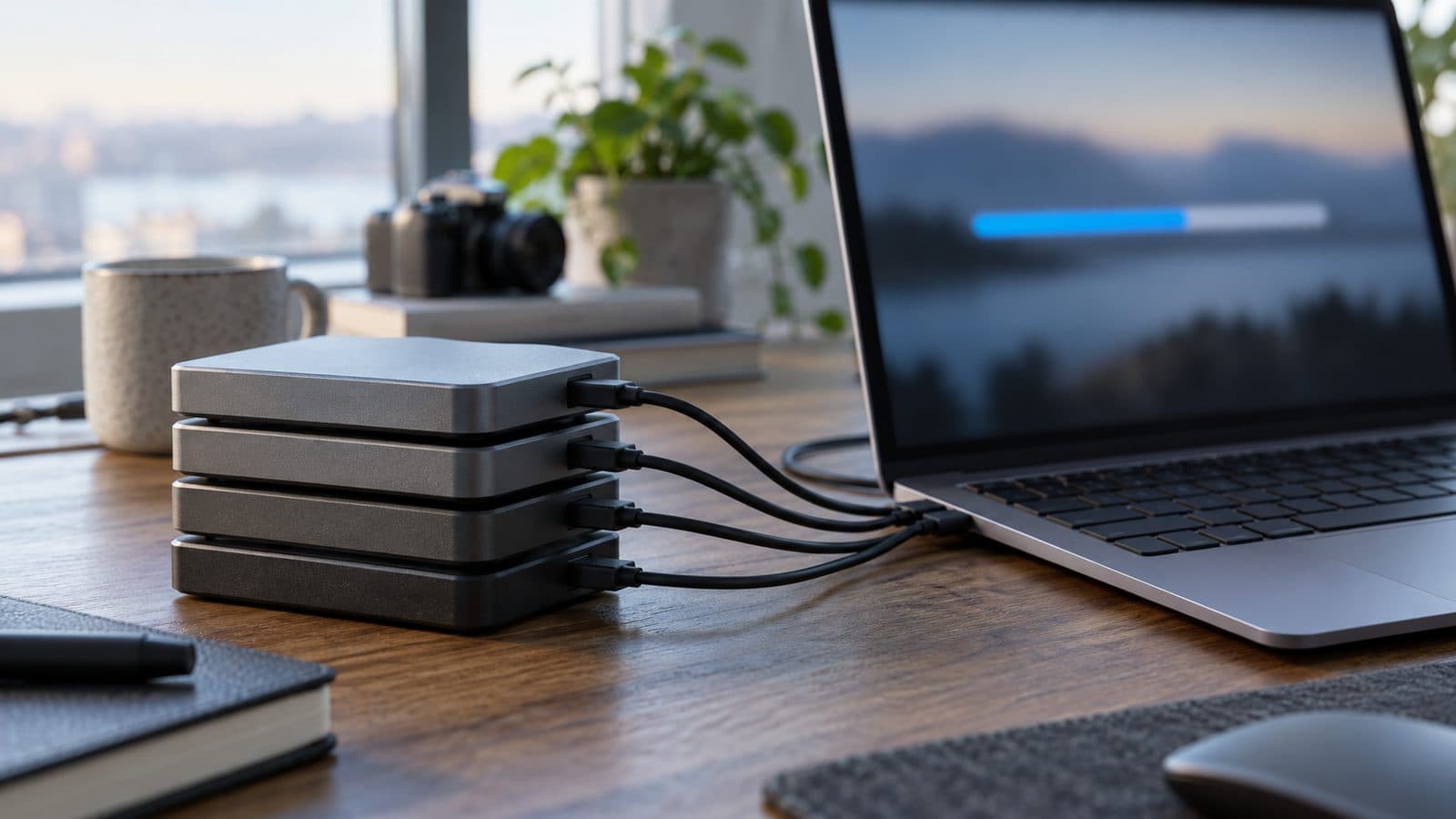
Apple published its own measurements: at an 8,192-token context, Muse Spark Open generated about 16 to 25 tokens a second on two Macs, depending on how the work was split, and about 37 on four. A long 65,536-token prompt took 8.2 seconds to start answering on two machines and 4.8 on four. Those are single-user figures; Apple did not test many people sharing the machines.
The Mac is one option among several. Meta lists NVIDIA Blackwell servers (four GPUs at NVFP4), AMD MI355X and MI350X, and Intel Xeon 6, plus hosted APIs from Baseten, Fireworks AI, Groq, Modal, Nebius, OpenRouter and Together AI, and the major clouds.
NVIDIA’s Nemotron 3.5 arrived the same week
On 14 October NVIDIA published the technical report for Nemotron 3.5 Super (120 billion parameters, 12 billion active) and Lightning (30 billion, 3 billion active, first previewed in August), and on 15 October it released Nemotron 3.5 Bolt, a 74-billion-parameter model (9 billion active) squeezed into 24GB with 2-bit quantisation to run on RTX laptops and desktops. The licence, OpenMDW-1.1, is generally described as permissive; Super’s fine-tuning data is not yet public.
Why Has Apple Fallen Behind in AI?
The record is public, if mostly through reporting. The context-aware Siri Apple showed for 2024 slipped; “It’s going to take us longer than we thought,” Apple said in March 2025, as TechRadar reported. Ruoming Pang, who led Apple’s foundation-model team, left for Meta in July 2025, Bloomberg Law reported, and more researchers followed in January 2026, along with Siri executive Stuart Bowers to Google DeepMind, according to 9to5Mac, citing Bloomberg. Apple announced in December 2025 that AI chief John Giannandrea would retire.
In January 2026 Apple and Google announced that “the next generation of Apple Foundation Models will be based on Google’s Gemini models”, as Engadget reported, after talks with Anthropic, which reportedly sought several billion dollars a year according to Bloomberg, as The Decoder reported, came to nothing. Apple’s privacy design adds friction: its Private Cloud Compute, the Apple-run servers that handle requests too heavy for a device, runs on Apple chips, while Gemini is tuned for Google’s, which heise described as a likely obstacle.
Why Did Apple Help Meta?
Mark Zuckerberg wrote that the model “runs great on new Mac Studios thanks to work with @johnternus and Apple”; Ternus, who became Apple’s chief executive on 1 September, replied, as MacRumors reported, that “Mac Studio keeps pushing the boundaries of on-device AI.” Our read, and it is a judgement rather than a reported fact: if Apple cannot lead with its own model, it can sell the best machine to run everyone else’s. Unified memory is a genuine hardware advantage for large models, and an open-weight release from a company that competes with Google and OpenAI gives Apple a flagship workload to show off, while its next Siri models are set to be based on Gemini.
Our read again: NVIDIA’s releases fit the same pattern from the other side. Hardware makers want more people running models themselves, because every local deployment is a hardware sale, and open-weight models narrowing the gap, if independent tests confirm it, makes that pitch credible.
Should You Run AI Locally on a Mac Studio?

For most people, no. ChatGPT Plus and Claude Pro each cost $20 a month. A pair of 512GB Mac Studios needs the top M5 Ultra chip; Apple lists the M5 Ultra from $5,499 and had not published a US price for the 512GB model when we checked. Even at the starting price, two machines cost more than $11,000, which is over 45 years of a $20 subscription by our arithmetic, and the 512GB build costs more. Electricity is minor by comparison: at Apple’s 385-watt maximum for the top configuration (a ceiling, not typical draw), two machines running flat out for eight hours use about 6 kWh, roughly 56 cents to $1.16 a day at Ontario’s time-of-use rates from 1 November, before delivery charges. That is a rough estimate at full load.
Running something smaller is a different story. LM Studio, free for home and work, and Ollama, an open-source tool, run a small or mid-sized local LLM on an ordinary laptop; NVIDIA’s Bolt targets a 24GB graphics card. Before buying anything, an LLM memory calculator on FreeToolsForWeb, a free tools site our team runs, gives a rough idea of what fits in the memory you already have. Local models make sense for sensitive documents, offline work and curiosity. Our expectation is that what fits on a laptop will keep improving.
When should a business deploy privately?
A business has three good reasons: data that cannot leave the company or the country, rules or client contracts that require it, and usage high and steady enough that owning hardware beats paying per token. In Canada, PIPEDA does not forbid sending personal information abroad for processing, but the organisation stays accountable and must ensure “a comparable level of protection”, in the Privacy Commissioner’s guidance; keeping processing in-house avoids the cross-border transfer question, though PIPEDA’s other obligations still apply. Legal files, medical records and internal codebases are typical candidates.
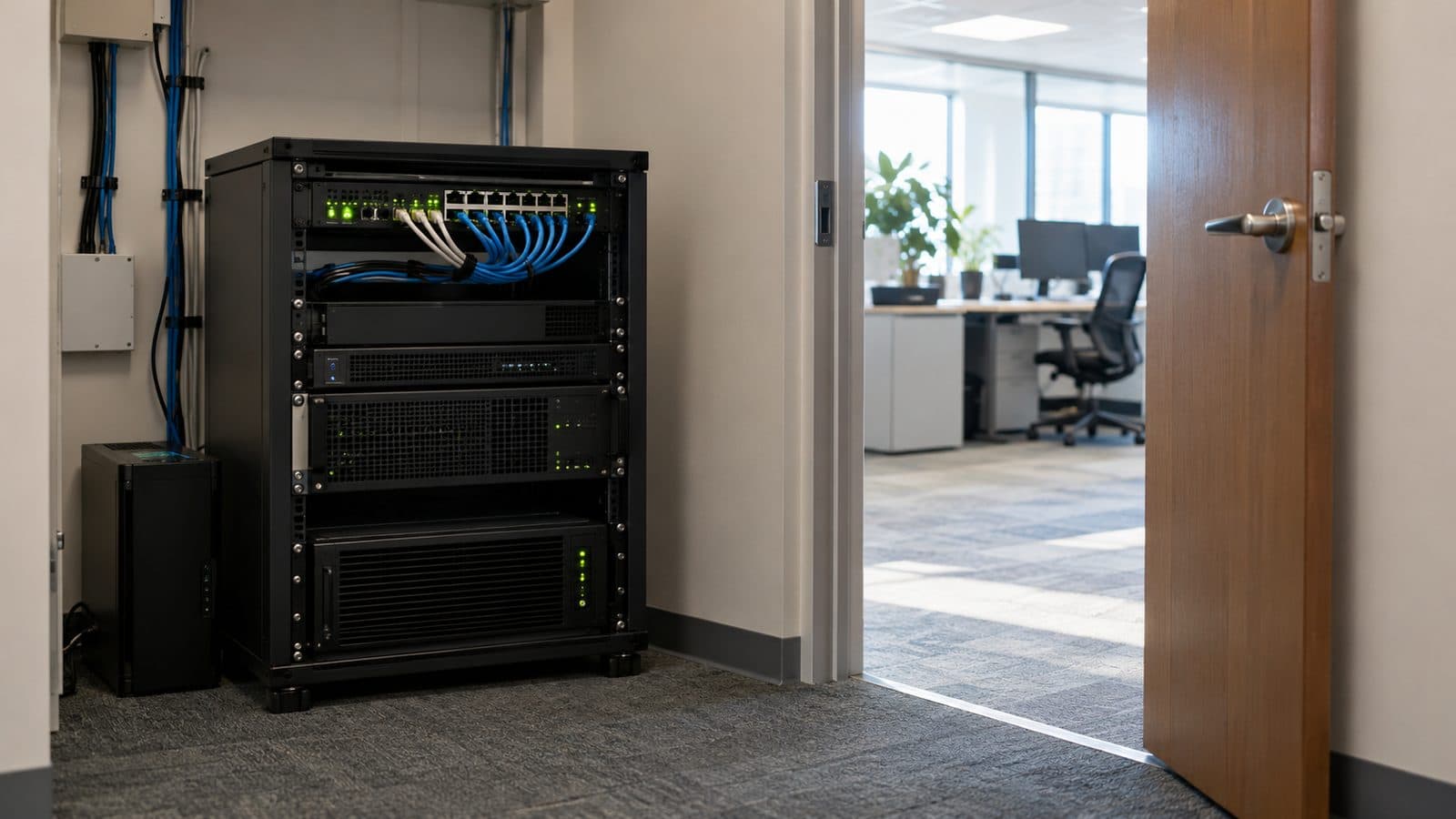
The hardware is the visible cost. The rest is setup, security patching, monitoring, evaluating whether the model is good enough for the task, and someone who owns all of it. A hosted API from the same model’s provider list is often the sensible first step for testing on non-sensitive data.
What It Means for a Consultancy Like Pine & Birch
- Consulting. Clients will ask whether to buy Macs and run models in-house. We should answer with a decision framework (data sensitivity, usage volume, licence terms, who runs it) and a small proof of concept, and treat a Mac Studio with MLX as one private option for smaller clients rather than a default.
- Outsourced delivery. On projects with sensitive client code, a local model for coding help keeps that code off third-party servers; we write which tools may see client code into the statement of work with our delivery partners.
- Our own apps. A small on-device model can be a real feature, for example private document search that works offline. For anything larger, validate demand on a hosted API before buying hardware.
- Internally. Before buying a high-memory Mac Studio for experiments, compare its cost against a year of API usage for the same work.
If you are weighing a private deployment, that is the kind of question we work through in AI agent development. For what the money behind AI infrastructure is buying, see our piece on Modal and AI infrastructure funding.
Questions Worth Following
- How does Muse Spark Open perform in independent evaluations, beyond Meta’s own?
- What will Apple charge for the 512GB Mac Studio?
- Will the next Siri lean on open-weight models as well as Gemini?
If a model this large can run on hardware you own, is the hard part the hardware, or knowing what to use it for?
FAQ: Muse Spark Open and Local AI
What is Muse Spark Open?
Muse Spark Open is an open-weight AI model Meta released on 15 October 2026. Meta describes it as natively multimodal, with 816 billion total parameters of which 42 billion are active for each token, a one-million-token context window, and a focus on coding and agentic work. Meta calls it the most capable US open-weight model to date; the benchmark results so far are Meta’s own.
Can you run Muse Spark Open on a Mac?
Yes, but not on one. Meta’s guide requires two Mac Studios with the M5 Ultra chip and 512GB of unified memory each, or four with 256GB, running macOS 26.2 or later and MLX 0.30.1 or later, with a direct Thunderbolt 5 link between every pair of machines. Meta estimates about four hours of setup, and four machines run it fastest.
Is Muse Spark Open open source?
It is open-weight, which is not the same as open source. You can download and run the model, but the Muse Model License sets conditions: products built with it must show “Built with Muse Spark Open”, an acceptable-use policy applies, and a company offering the model itself as a service with more than $20 million in revenue over twelve months needs a separate agreement with Meta.
Should I run an AI model locally instead of using ChatGPT?
For most people, no. A $20-a-month subscription to ChatGPT Plus or Claude Pro is far cheaper and easier than hardware that can run a frontier-scale model. Running a smaller model locally makes sense if you handle sensitive data, need to work offline, or enjoy experimenting; free tools such as LM Studio and Ollama run small and mid-sized models on an ordinary laptop.
When should a business deploy AI models privately?
When data cannot leave the company or the country, when regulation or client contracts require it, or when usage is high and steady enough that owning hardware beats paying per token. Budget for the hidden costs too: setup, security, monitoring, model evaluation and the people to run it. Legal documents, medical records and internal codebases are typical candidates.