
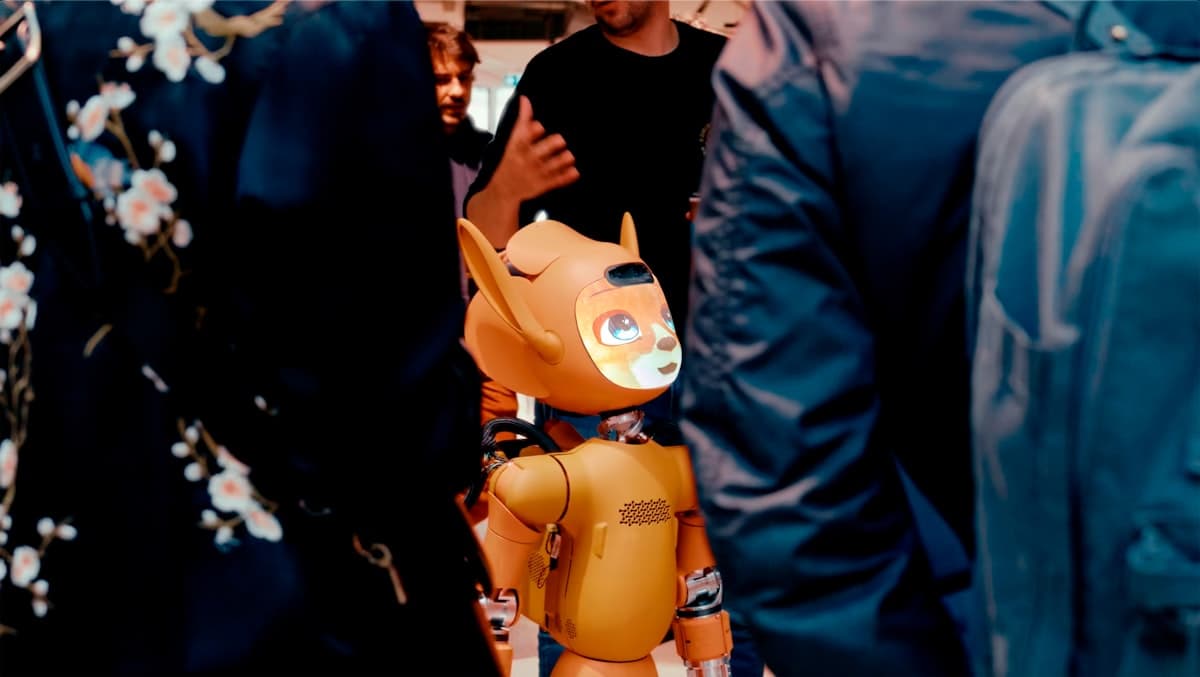
In January 2025, NVIDIA CEO Jensen Huang told a CES keynote audience that the industry had just entered the "ChatGPT moment" for robotics. The term he used to describe it — physical AI — has since shown up in earnings calls, venture term sheets, and boardroom strategy decks across the industrial economy. This piece explains what physical AI actually is, how it differs from the robotics you already know, and why billions of dollars are moving toward it in 2026.
What Is Physical AI, Exactly?
Physical AI is artificial intelligence that perceives its surroundings, reasons about them, plans a course of action, and then acts on the physical world through a robot, vehicle, or machine. NVIDIA, which popularized the term, frames it as the third stage in an evolution: perception AI (systems that understand images and sound), generative AI (systems that create text and images), and now physical AI — AI that has to obey gravity, friction, and timing, not just statistics.
That last part is the whole difficulty. A language model that gets a sentence wrong can simply be asked again. A robot arm that misjudges the weight of a box drops it — or worse, drops it on someone. Physical AI systems have to be right in real time, inside a body that has mass, momentum, and consequences.
Physical AI vs. Embodied AI vs. Ordinary Robotics
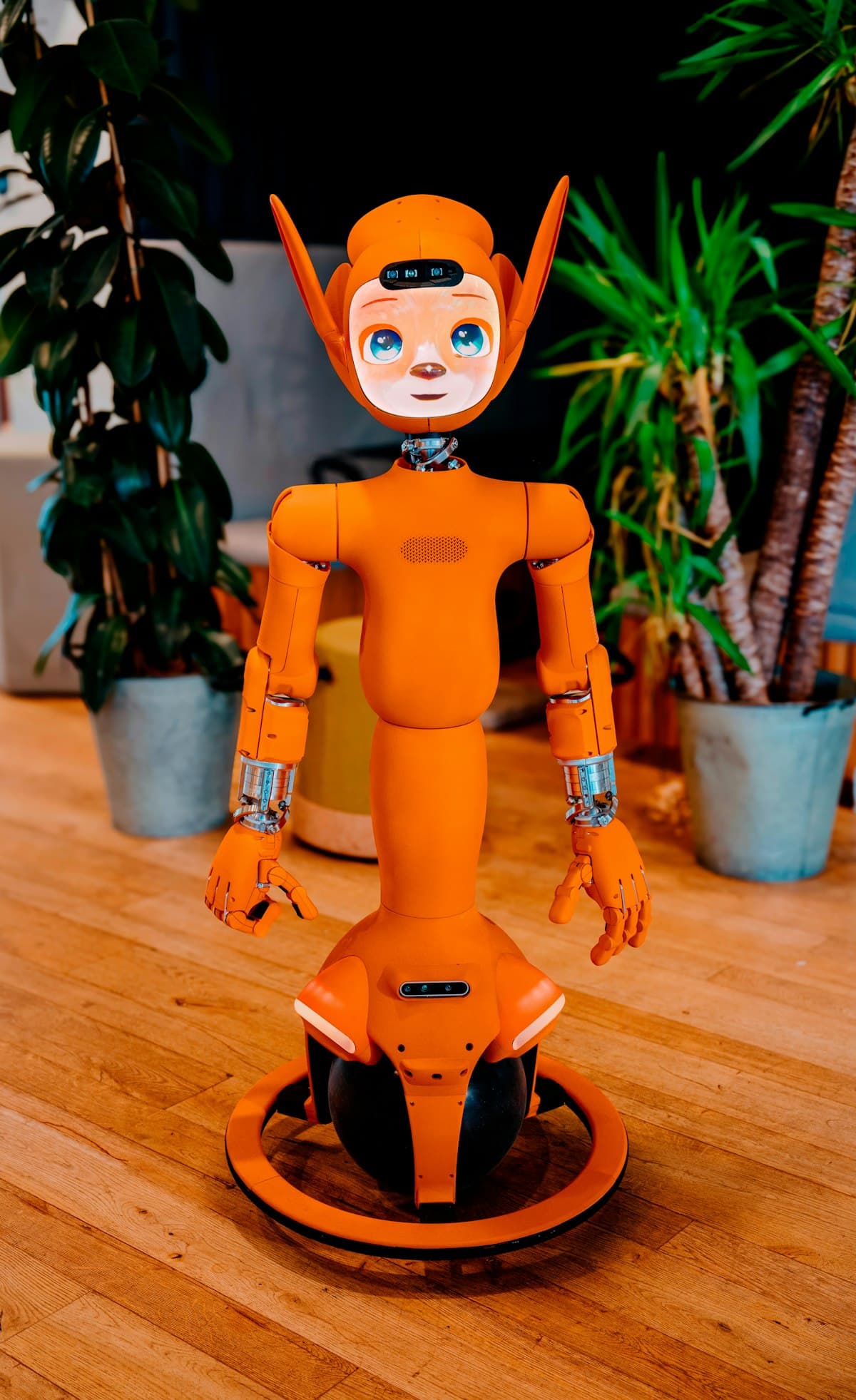
"Physical AI" is new marketing language for a research lineage that is not new at all. Roboticists have used the term embodied AI since the 1990s to describe systems that learn through a body's interaction with an environment. The core science overlaps heavily — physical AI is best understood as embodied AI repackaged for an industry and investor audience, not a separate technology.
Where physical AI does mark a real break is from traditional industrial robotics. A welding arm on a car line runs hand-coded logic for one repeated motion; move the part six inches and the whole program breaks. Physical AI systems instead run on general-purpose foundation models — vision-language-action models trained on huge datasets of video and simulation — so the same underlying model can, in principle, transfer across tasks and even across robot bodies.
Four Terms People Use Interchangeably (And Shouldn't)
- Physical AIThe industry umbrella term: AI that perceives, reasons, and acts through a physical body under real-world constraints.
- Embodied AIThe older academic term for the same underlying research — learning through a body's interaction with its environment, real or simulated.
- Traditional RoboticsRule-based control for a single, fixed task. Reliable but brittle — it cannot generalize beyond the exact motion it was programmed for.
- General-Purpose RoboticsThe end goal, not yet achieved: one model architecture that performs many physical tasks without task-specific reprogramming — what researchers informally call the "coffee test."
Why Physical AI Is Suddenly Everywhere in 2026
Three technical pieces matured around the same time, and none of them would have been enough on their own. The first is foundation models capable of learning general-purpose behavior instead of a single task. The second is world models — generative systems that simulate physical environments so robots can practice millions of scenarios in software before ever touching hardware. NVIDIA's Cosmos world foundation models, released as open weights in January 2025, were trained on roughly 9,000 trillion tokens drawn from 20 million hours of driving, robotics, and industrial video.
The third piece is compute that can run those models on a robot rather than in a data center. At CES 2026, NVIDIA introduced the Jetson AGX Thor T5000 edge module and an open reference design for a humanoid robot built on Unitree hardware, meant to give hardware makers a starting point instead of a blank sheet of paper. Put those three pieces together — a foundation model, a simulator to train it safely, and a chip fast enough to run it on-device — and a problem that looked unsolved for a decade suddenly looks tractable.
How Physical AI Actually Works: The Perception-to-Action Loop
Every physical AI system runs the same basic loop, whether it's a warehouse robot or a self-driving car: perceive, reason, plan, act, and check. Cameras, depth sensors, and force sensors build a model of the immediate environment. A vision-language-action model — NVIDIA's Isaac GR00T is the most widely licensed example — turns that sensory input plus a task instruction into a sequence of physical motions. The robot executes, sensors report back what actually happened, and the loop runs again, often dozens of times per second.
The hard part isn't any single step; it's that mistakes compound across the loop in ways a chatbot never has to worry about. A language model that misreads context produces an awkward sentence. A robot that misreads the weight or friction of an object produces a dropped part, a stalled line, or a safety incident. That's why world models like Cosmos matter as much as the action model itself — they let a robot rehearse thousands of variations of a task in simulation, including edge cases and near-failures, before a single real-world attempt. Simulation isn't a nice-to-have here; it's the only economically viable way to generate enough training data for physical tasks, since real-world robot trials are slow, expensive, and occasionally destructive.
The Money Behind the Moment
As of 2026, venture and strategic capital is moving into physical AI at a pace that mirrors the earliest large language model funding rounds. Figure AI closed a Series C above $1 billion at a $39 billion post-money valuation in September 2025 — a fifteen-fold step-up from its round eighteen months earlier — with NVIDIA, Intel Capital, and Salesforce among the investors. Skild AI, which builds a general-purpose "robot brain" rather than hardware, tripled its valuation to more than $14 billion in seven months, closing a SoftBank-led raise in January 2026. Austin-based Apptronik added a $520 million extension in February 2026, backed by Google, Mercedes-Benz, and John Deere, pushing its total raised toward $1 billion.
Foundation-model specialist Physical Intelligence, which builds robot-agnostic control policies rather than its own hardware, has also raised at a multibillion-dollar valuation with backing that includes Jeff Bezos — a signal that some of the smartest capital in tech sees the model layer, not the robot chassis, as where the durable value sits.
Who's Building Physical AI
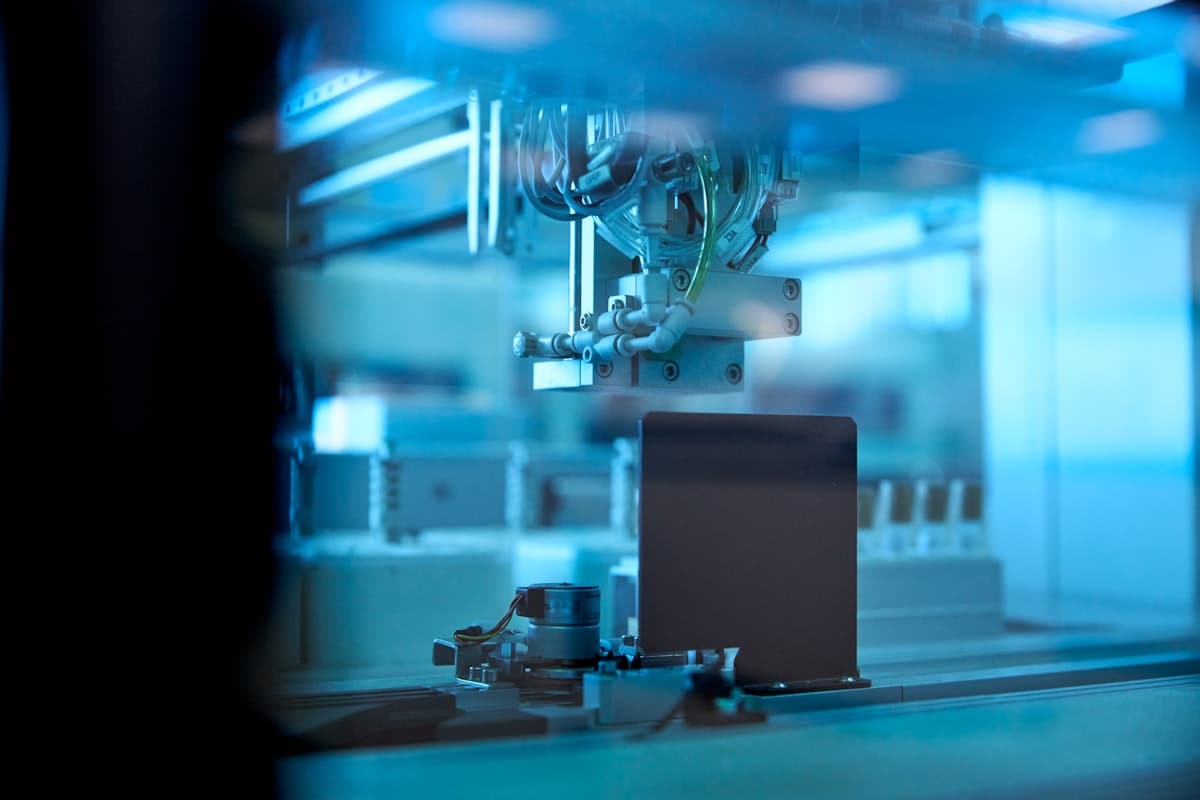
The landscape splits cleanly into an infrastructure layer and a hardware layer, and it is worth knowing which is which before reading any company's press release.
The Physical AI Landscape in 2026
- NVIDIAThe infrastructure layer: Cosmos world models, the Isaac GR00T robot foundation model, and Jetson Thor edge hardware — sold to nearly every other company on this list.
- TeslaConverting a Fremont production line to build Optimus at scale, targeting late-2026 startup; Elon Musk has publicly declined to give a firm 2026 unit forecast.
- Figure AIHumanoid robots for logistics and manufacturing, including a BMW pilot, backed by one of the largest robotics raises on record.
- Boston Dynamics & Agility RoboticsThe longest-running hardware players. Boston Dynamics' electric Atlas is shipping to Hyundai's Robotics Metaplant; Agility's Digit has been in commercial warehouse use since mid-2024.
- Physical Intelligence & Skild AIFoundation-model companies betting that one general control policy, licensed across many robot bodies, beats any single hardware maker's vertical stack.
Where Physical AI Is Actually Deployed vs. Where It's Still Hype
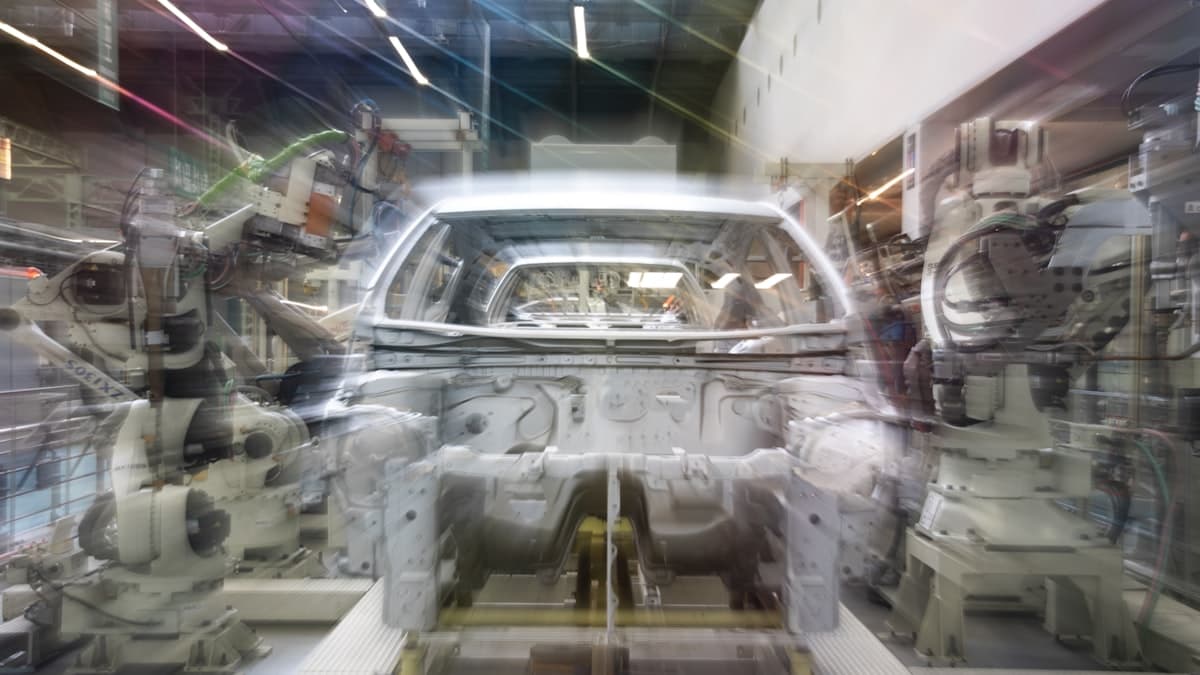
It's worth separating the demo reel from the deployment log. The International Federation of Robotics counted 4.66 million industrial robots operating worldwide by the end of 2024 — but those are overwhelmingly fixed-task machines on car and electronics lines, not general-purpose humanoids. Asia accounted for 74% of new installations, with China alone responsible for 295,000 units, or 54% of the global total.
Humanoid robots specifically are earlier stage. Boston Consulting Group's 2026 analysis of physical AI deployments notes that current systems can typically take over about half the tasks inside a human role, not the whole job, and that most of the cost in a robotics deployment still comes from integration and engineering rather than the robot itself — the exact cost line that software-defined physical AI is meant to shrink. Even Goldman Sachs' own base case assumes humanoid robots close only about 4% of the U.S. manufacturing labor shortage by 2030, not a wholesale replacement of the workforce.
None of that makes the trend less real; it makes it a multi-year infrastructure build rather than a single product launch. Companies that treat 2026 humanoid demos as a finished product will be disappointed. Companies that treat this decade as the buildout phase — the equivalent of cloud computing in the early 2010s — are positioning correctly.
What This Means If You're Planning Technology Investment
Most businesses reading about physical AI are never going to buy a humanoid robot, and that's fine — the near-term opportunity for almost every mid-market company is one layer down from the robot itself. The same shift that makes physical AI possible — better world models, cheaper edge inference, foundation models that generalize instead of requiring bespoke rules — is also what makes software-side AI automation, computer vision quality control, and intelligent workflow systems dramatically more capable than they were two years ago.
In our own AI advisory work, the businesses that get the most value from this moment are not the ones chasing headline robot announcements. They're the ones auditing where perception and decision-making already bottleneck their operations — inventory counts, quality inspection, document-heavy back-office work — and applying the same foundation-model techniques there first, where the risk of a mistake is a re-run, not a dropped box. Our Applied AI & Intelligent Automation practice exists for exactly that gap between "physical AI is in the news" and "what should our business actually build in 2026."
For manufacturers and logistics operators specifically, the groundwork matters more than the robot: clean sensor data, reliable connectivity, and infrastructure that can support real-time inference are prerequisites, not afterthoughts. That's the kind of foundational work our Cloud Infrastructure & Cyber Resilience practice handles before any automation layer gets added on top.
A simple three-part filter works for most leadership teams evaluating this space in 2026. First, identify where a decision or inspection step already sits on human perception and judgment — that's the layer physical AI's underlying models are best at today. Second, ask whether the task can be rehearsed in simulation before it touches production; if it can't be tested safely offline, it's not ready for this generation of tools. Third, check whether the infrastructure — sensors, connectivity, compute — already exists to support real-time inference, or whether that has to be built first. Most projects fail on the third point, not the first.
Frequently Asked Questions
Is physical AI the same thing as embodied AI?
Not exactly. Embodied AI is the decades-old academic term for systems that learn through interacting with an environment. Physical AI is the industry term NVIDIA popularized in 2025 for the same underlying research, framed for a business and investor audience rather than a research one.
Will physical AI replace factory and warehouse workers?
Not wholesale, and not soon. Goldman Sachs projects humanoid robots will close only around 4% of the U.S. manufacturing labor shortage by 2030, and BCG's 2026 analysis found current systems typically automate about half the tasks in a role, not the full job. The near-term effect is task augmentation, not mass displacement.
Which industries will adopt physical AI first?
Manufacturing and logistics are leading, building on decades of existing industrial robot infrastructure — the International Federation of Robotics recorded 542,000 new industrial robot installations in 2024 alone. Warehouse and e-commerce fulfillment are close behind, following early commercial deployments like Agility Robotics' Digit.
How is physical AI different from the robot arm already on a factory floor?
A traditional robot arm runs fixed, hand-coded logic for one task; change the task and an engineer has to reprogram it. Physical AI systems run on foundation models trained across huge datasets, so the same underlying model can, in principle, adapt across different tasks without a full rewrite.
When will general-purpose humanoid robots be widely available?
Not soon. Morgan Stanley's base case has adoption staying relatively slow until the mid-2030s before accelerating sharply in the late 2030s and 2040s, on the way to a projected $5 trillion market and over a billion units in use globally by 2050.
The Bottom Line
Physical AI is a real technical shift, built on foundation models, world simulators, and edge compute that finally work together — but it is an infrastructure build, not a finished product. The humanoid robots getting the headlines in 2026 are years from the general-purpose "coffee test" capability their promotional videos imply, even as the underlying market keeps attracting serious capital: Goldman Sachs' $38 billion 2035 projection and Morgan Stanley's $5 trillion 2050 forecast are both bets on a slow buildout, not an overnight one.
For most businesses, the actionable opportunity right now isn't the robot — it's the same foundation-model and automation techniques applied to the perception and decision bottlenecks already sitting inside day-to-day operations.
Wondering What This Means for Your Business?
Pine & Birch helps businesses cut through AI hype and identify where foundation-model automation actually moves the needle — before you spend a budget on the wrong bet.
Book a Free Consultation