
Higgsfield and the $1 Billion AI Video Run Rate
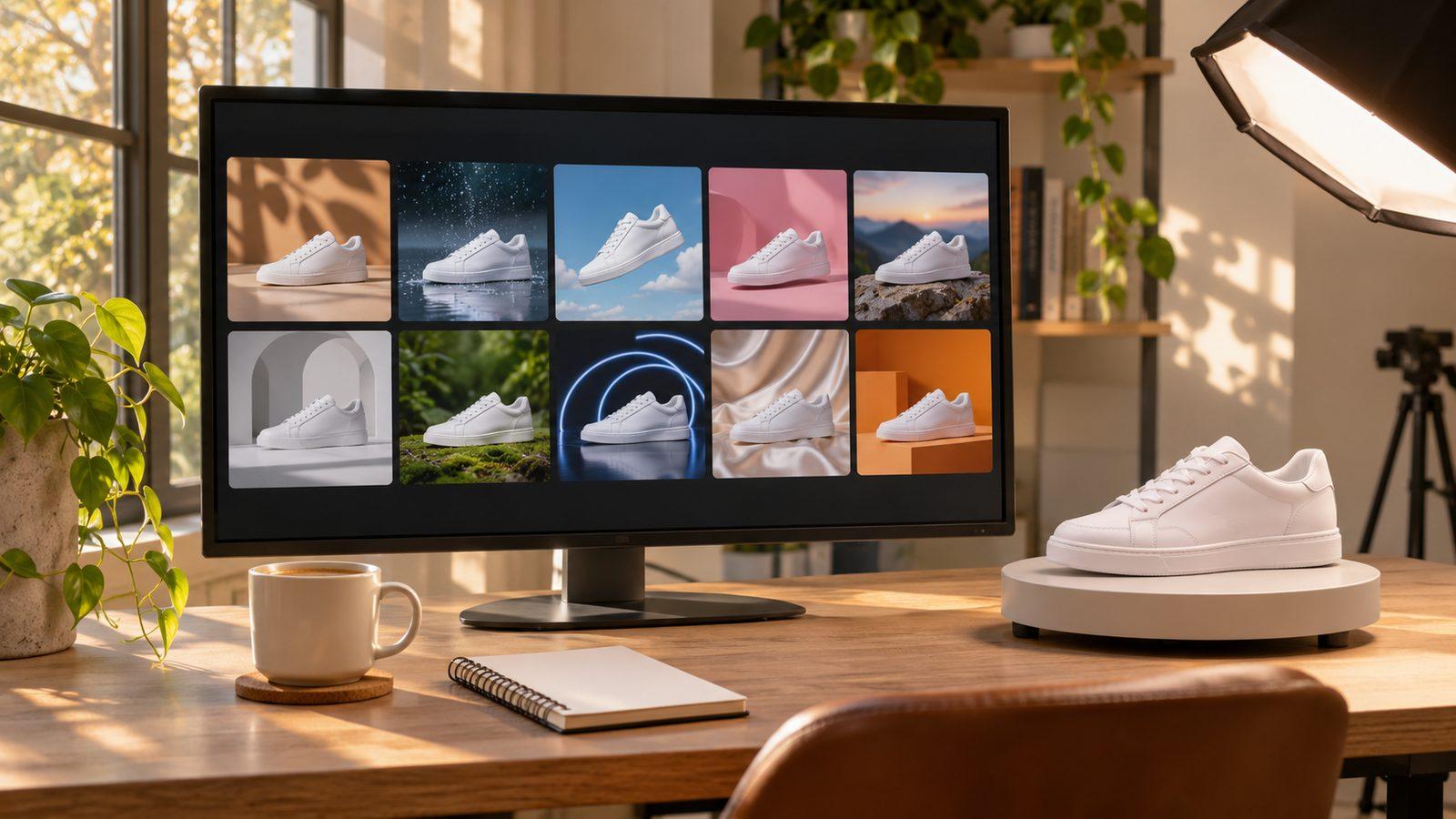
Picture a sneaker brand that needs a product video. Traditionally that has meant a studio, a crew and days of shooting. In this hypothetical, three people with an AI video tool spend an afternoon and come out with ten versions: the shoe on a beach, in the rain, on a pink set, in Korean, in German. Higgsfield sells tools for that kind of video generation, and says its business reached a $1 billion annualized revenue run rate 18 months after launch.
That is the company’s own figure, and it is not $1 billion of revenue banked over a year. This post explains what Higgsfield sells, how the number is built, why AI video is now a business, and what it changes for teams that make marketing content.

Run Rate, Video Models and Subscriptions in Plain Words
Five terms
| Term | In plain words |
|---|---|
| Annualized revenue run rate | Recent revenue scaled up to a year. It shows current pace, not money already earned. Fast growth makes it look big; customers leaving make it shrink. |
| Video generation model | AI that turns a text prompt or an image into a video clip. |
| Subscription | A monthly or yearly plan at a set price. |
| Business contract | A company signing for a longer term, often with a committed spend. |
| Burn rate | How much cash a company loses each month after its income. Zero or less means it is paying its own way. |
What Is Higgsfield?
Higgsfield is a San Francisco company with an engineering hub in Almaty, Kazakhstan, run by CEO Alex Mashrabov, who previously led generative AI at Snap. Its web platform launched on 31 March 2025. It describes itself as one workspace that brings “video, image, and audio models alongside our own creative tools” for creators, brands, agencies and studios.
Many of the models in that workspace come from other companies. The home page currently headlines ByteDance’s Seedance 2.5 as “the most advanced AI video model”, and Kling and Veo are on the menu too. Mashrabov told the 20VC podcast, in an interview summarised by Dealroom, that Higgsfield had walked back an early bet on building its own foundation models. It still trains models for specific customer needs, such as keeping a product consistent from shot to shot.
Higgsfield in numbers
| Item | Figure and source |
|---|---|
| Run rate, September | $1B+, latest four weeks × 13 (company); $1.35B for October, per the CEO via SaaStr, a Higgsfield investor |
| Growth | Run rate up about 20× since September 2025; business contract revenue up 10× since June (company) |
| Users | 32M+ users, nearly 1M paying subscribers (company, September) |
| Revenue mix | Subscriptions down from over 90% to just over 60%, as on-demand usage grew (company) |
| Big customers | “Campaigns for 390 of the Fortune 500” (company); none named |
| Funding | $400M Series B in August at $5.4B, led by DST Global; TCV and NVIDIA joined in October, terms undisclosed (company) |
| Cash | Breaking even on cash flow over the past couple of months, per the CEO; profit not disclosed |
One widely quoted figure needs care. Dealroom headlined its summary “Burning $4M a month”, but its text says internal spend on AI models tops $4 million a month, over $10,000 per person across a team of about 400. That is a cost line, not net cash burn. On cash, Mashrabov says the company has been breaking even on a cash-flow basis over the past couple of months.
How Is a $1B Run Rate Calculated?
On method, Higgsfield’s own announcement is clear: “revenue from the latest four weeks multiplied by 13”, and it “does not represent revenue already earned over the previous year”. Mashrabov added in the 20VC interview, as Dealroom summarised it, that annual subscriptions are spread across 12 months and only live revenue counts.
The arithmetic (ours)
run rate = last 4 weeks × 13

$1.00B+ ÷ 13 ≈ $77M+ in 4 weeks
$1.35B ÷ 13 ≈ $104M in 4 weeks

hypothetical: next 4 weeks = $62M
  $62M × 13 ≈ $0.8B run rate
Think of it as a runner’s pace, not the distance covered. At a company growing this fast, four strong weeks times 13 can sit far above what it actually took in over the past year. The Next Web put it plainly in August, reporting a $700 million run rate: “A company growing this fast will flatter itself by that measure, and a company that stalls will look worse than its accounts.”
Why Is AI Video Making Money Now?
Businesses now bring in over half the revenue
AI video first caught on with short social clips. If these numbers hold, it has become a production tool. The company says revenue under contract from business customers has grown tenfold since June, and Mashrabov told 20VC, per Dealroom’s summary, that business revenue is now slightly over half the total. Direct-to-consumer brands, which test many versions of each ad, are a major source of demand, the company says. Separately, in a 2025 survey by the IAB in 2025, 86% of ad buyers said they were using or planning to use generative AI to build video ad creative.
Run rate is a pace, so read it with care
Run rate is not the only number in AI that deserves a second look. TechCrunch reported in May on a wider argument over inflated annual recurring revenue (ARR) at AI start-ups, quoting Spellbook CEO Scott Stevenson, who called it a “huge scam”. Clio CEO Jack Newton told the outlet: “We see some investors looking the other way when their own companies are inflating numbers because it makes them look good from the outside in.” Neither was talking about Higgsfield, which states its method openly. The lesson is to ask which number you’re reading. The October figure of $1.35 billion, for example, comes from SaaStr’s Jason Lemkin, who says Mashrabov sent it to him; SaaStr’s fund is a Higgsfield investor, which it discloses.
The models keep changing; the workspace has to last
A platform that sells other companies’ models can be undercut by those companies. Its pitch is the workspace itself: many models and its own creative tools in one place. Its margins depend on which models customers pick. Margins, Mashrabov said in the same interview, run above 80% on its own and open-weight models but 20% to 30% on closed ones. On those figures, the more customers choose closed models, the thinner its margin on each clip. For how fast that market moves, see our look at the AI video generation race.
Moderation, likeness and deepfake rules
Growth has come with rough patches. Forbes reported racist and antisemitic videos on the platform and customer complaints about billing and refunds, according to a Dealroom summary dated 15 February; the company said it was strengthening moderation and clarifying billing. The Register reported that it deleted an X post boasting that its AI motion design tool had “put an end to more than 20 creative jobs”.

The rules are tightening too. Under the EU AI Act, deepfakes depicting real people must be disclosed from 2 August 2026, and providers of generative tools must mark their output in a machine-readable way, with tools already on the market given until 2 December 2026, according to law firm Goodwin. Our suggestion: any brand putting a real face or voice in an AI ad should get written permission and keep it on file.
What AI Video Means for Consultancies Like Pine and Birch
Pine and Birch is an independent technology consultancy that runs AI projects for clients, works with outsourced delivery teams and builds its own apps. What follows are suggestions for those three kinds of work, not descriptions of our internal practice or results.
Cheaper video in client marketing plans
For client marketing and app launches, AI video can earn a place in the plan as a way to make many test versions cheaply; our digital marketing work is where we’d put it. We’d pair it with a short usage policy agreed before production: whose faces and voices may appear, what proof of permission is kept, which tools are allowed and how AI clips are labelled. Our step-by-step AI marketing video guide covers the production side.
A new brief for video suppliers
We expect demand for traditional outsourced shoots to shrink for routine ads, and small teams fluent in AI video workflows may gain an edge. Our suggestion is to ask any video supplier to list the AI tools and models used on each deliverable and where every source image, voice and face came from, so the client can answer a rights question later.
App-store assets and in-app video features
For apps a studio builds itself, AI video can make app-store previews, social ads and A/B tests cheap to produce, so more versions can be tried before a launch. Adding video generation inside an app is another option, part of the venture studio kind of work, but the costs are per clip and depend on the model chosen, as the CEO’s margin figures suggest. We’d model those costs per active user before building the feature.
Three Checks and Three Open Questions
- Read the method first. Run rate, ARR and revenue are different numbers; ask which one a headline uses.
- Price per clip, not per plan. Higgsfield says subscriptions have fallen to just over 60% of its revenue as on-demand usage grew. Budget for the versions you’ll actually generate.
- Keep a rights record. Note the tool, model and source material behind every clip you publish.
Questions the public record doesn’t answer yet:
- How long does the run rate hold? Four strong weeks are not a year.
- How many of the nearly 1 million paying subscribers are still paying a year later?
- How much of the video comes from Higgsfield’s own models, and what happens to margins if a closed model stays ahead?
What Happens When AI Video Is Almost Free?
On these numbers, AI video has found paying customers, with businesses now slightly over half of revenue by the CEO’s account. Whether it becomes durable revenue depends on retention, model costs and how the rights questions settle. A week-long shoot that becomes an afternoon of prompts changes what a campaign costs. It doesn’t change what makes people stop scrolling. When anyone can generate ten versions of a video in an afternoon, where does the value of a good one come from?
FAQ: Higgsfield, Run Rate and AI Video
What is Higgsfield?
Higgsfield is a San Francisco AI video company led by CEO Alex Mashrabov, formerly head of generative AI at Snap. Its web platform, launched in March 2025, puts its own models and third-party video generation models such as Seedance, Kling and Veo in one workspace for creators, brands and agencies making ads and social clips.
Did Higgsfield really make $1 billion?
Not in the sense of a year’s revenue banked. Higgsfield says it reached a $1 billion annualized revenue run rate in September 2026: revenue from the latest four weeks multiplied by 13. That is the yearly pace at that moment, not revenue earned over the past year. We found no audited revenue or profit figures in its public statements.
What is an annualized revenue run rate?
A run rate takes recent revenue and scales it to a year. Its formula is the latest four weeks times 13. When a company is growing fast, a run rate can sit far above the revenue it actually banked over the past 12 months; if customers leave, the next month’s run rate falls.
How much is Higgsfield worth?
Higgsfield raised a $400 million Series B at a $5.4 billion valuation in August 2026, led by DST Global, up from a $1.3 billion valuation in January. TCV and NVIDIA joined the round in October without disclosing amounts or a new valuation.
Does Higgsfield make its own AI video models?
Partly. It offers third-party video models such as ByteDance’s Seedance, Kuaishou’s Kling and Google’s Veo alongside its own, including the Soul model. In a 20VC interview summarised by Dealroom, Mashrabov said the company walked back its early bet on its own foundation models and now trains models for specific customer needs, such as product consistency.
Is AI video safe for brands to use in ads?
It can be, with rules. Brands need rights to every face, voice and product shown, a record of which tool and model made each clip, and labels where the law requires them. In the EU, the AI Act requires deepfakes of real people to be disclosed from 2 August 2026.