
Volantis’s $88M Series A and the AI Memory Wall
Picture a very fast reader at a small desk. She can only work from the books within reach, and the desk has room for eight. She can also only pull pages towards her so fast. An AI chip has the same two limits: the processor is the reader, memory is the desk, and the gap between how fast she reads and how fast pages arrive is called the memory wall. The Volantis Series A is a bet that light can put more than 200 books within her reach.
On 1 October 2026 Volantis, a San Francisco chip startup, announced an $88 million Series A to connect AI processors and memory with photonics, meaning light in place of copper wire. Its physics has precedent and its backers are well known. Every performance figure, though, is a design target, and when The Register reported on 5 October the first production chip had not yet been sent to a factory.
Memory Wall, HBM and Optical Interconnect in Plain Words
If you know what a GPU is and the rest is fog, start here.
The vocabulary
| Term | In plain words |
|---|---|
| Memory wall | Chips compute faster every year; fetching data from memory hasn’t kept up, so the processor waits. |
| Capacity and bandwidth | Capacity is how much memory holds: how many books fit on the desk. Bandwidth is how much can move per second: how fast pages reach the reader. |
| HBM | High-bandwidth memory: memory chips stacked in small towers and placed right beside the processor. Fast, and only a few fit. |
| SRAM | Very fast memory built into the processor itself. Tiny capacity for the space it takes. |
| Inference | Running a trained AI model to produce answers, as opposed to training it. |
| Parameters and tokens | Parameters are the numbers a model is made of. Tokens are the word pieces it reads and writes; tokens per dollar is a rough measure of what running a model costs. |
| Optical waveguide | A microscopic channel that guides light across a chip or board, doing the job of a wire. |
| VCSEL | A very small laser that shines straight up from a chip’s surface. |
What Is the AI Memory Wall?
The memory wall is the gap between how fast a chip can compute and how fast it can fetch data from memory. Think of a language model as a very large table of numbers, its parameters. To produce each token of an answer, the processor has to pull a large share of those numbers out of memory. Volantis’s argument, which The Register’s coverage shares, is that for the biggest models the fetching, more than the arithmetic, sets the pace. On that view, how fast an answer streams out depends heavily on memory bandwidth, and the size of model you can run at all depends on memory capacity.
HBM gives a processor both, up to a point. Its speed comes from very short copper connections. Volantis puts them at about 2 millimetres, so the memory has to sit against the edge of the processor. The Register describes memory as limited by the chip’s “shoreline”, its perimeter: once that is full, no more stacks fit. Nvidia’s best current chips hold eight HBM chips each, Reuters reports, and Nvidia lists its Rubin GPU at 288 GB of memory and 19.2 terabytes per second of bandwidth. AMD’s MI455X squeezes in twelve stacks for 432 GB, according to ServeTheHome.
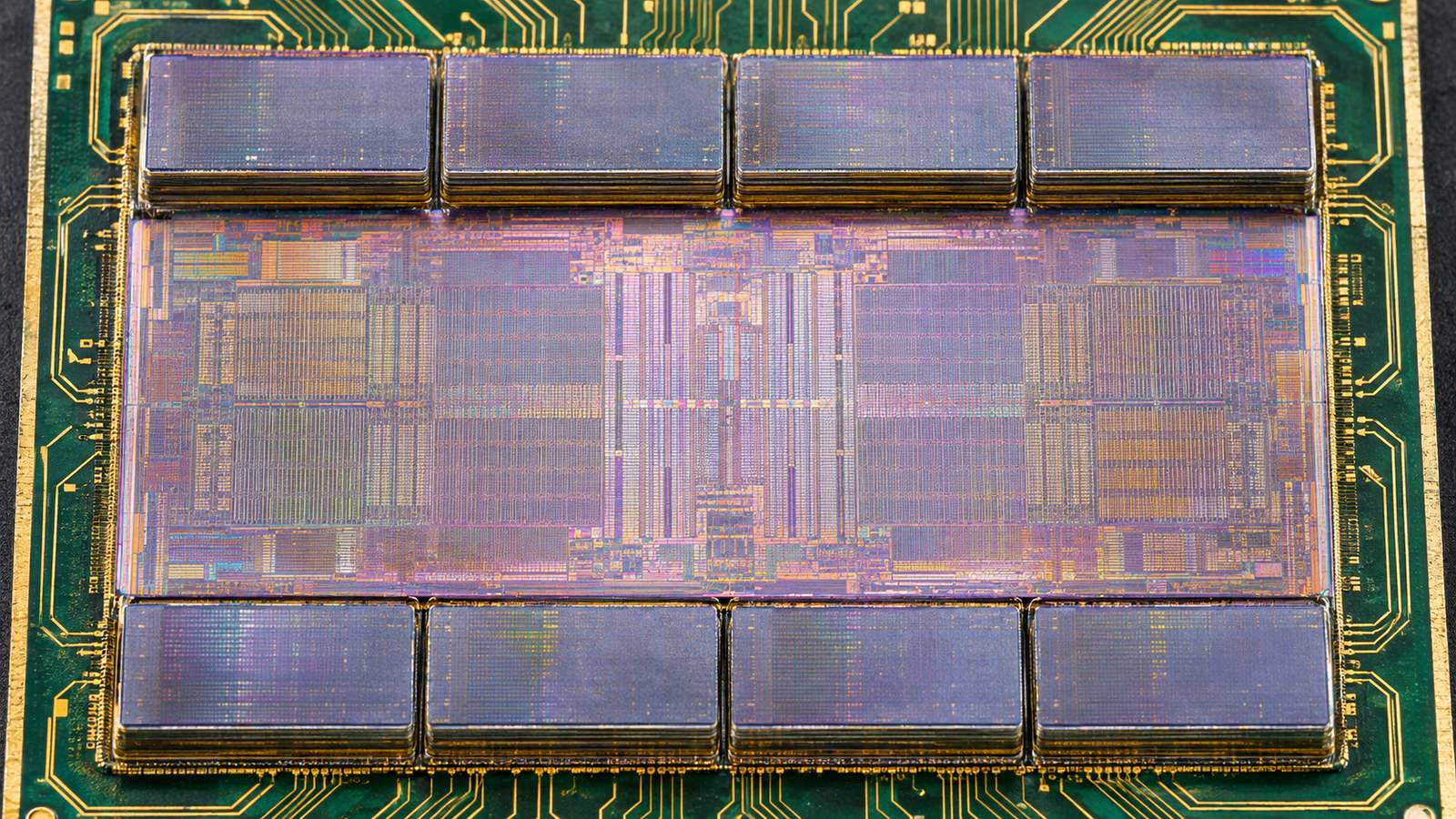
Chip designers therefore pick a side. Tapa Ghosh, Volantis’s chief executive, writes on the company blog that chips using on-chip SRAM “deliver high memory bandwidth in exchange for reduced memory size”, that GPUs built on HBM do the reverse, and that you can’t “have your cake and eat it too”. We wrote about the supply side of the same squeeze in the AI memory shortage.
Volantis’s $88M Series A: What Was Announced
Total funding is $97 million, by the company blog’s count. If that includes this round, everything before it came to about $9 million over four years, which fits a company that has so far shown small demonstrators. Details of the round are in the press release.
Volantis at a glance
| Item | Detail |
|---|---|
| Round | $88M Series A, co-led by Lachy Groom and Abstract Ventures |
| Also in the round | John Doerr, VXI Capital, Triatomic, Susa Ventures; angel investors Dwarkesh Patel, Naveen Rao and Sholto Douglas, an Anthropic researcher |
| Other backers (company site) | Sam Altman, Jeff Dean and Dylan Patel; the round each joined is not stated |
| Total raised | $97M, per the company’s blog |
| Company | Founded 2022, San Francisco; CEO Tapa Ghosh; CTO Roy Meade, who led Micron’s HBM programme and was a vice-president at Ayar Labs, per the company |
| Team | The company says its team includes veterans of Nvidia, AMD, Broadcom and Ayar Labs |
| Plan | First systems to customers in 2027 |
| Not public | Valuation, customers, price, headcount |
How Does Volantis’s Photonic Interconnect Link AI Memory?
What follows is the company’s description of its design; none of it has been independently measured. On its technology page, Volantis says electrical wires on the board that chips sit on travel about 2 millimetres, and that its optical waveguides travel more than 200. With a hundred times the reach, the company argues, memory no longer has to touch the processor. It says more than 220 memory chiplets, small chips made to be combined, can then form one pool that the processor reaches with the same delay wherever a chip sits. A chiplet here isn’t necessarily an HBM stack; we found no statement of what kind of memory Volantis will use.
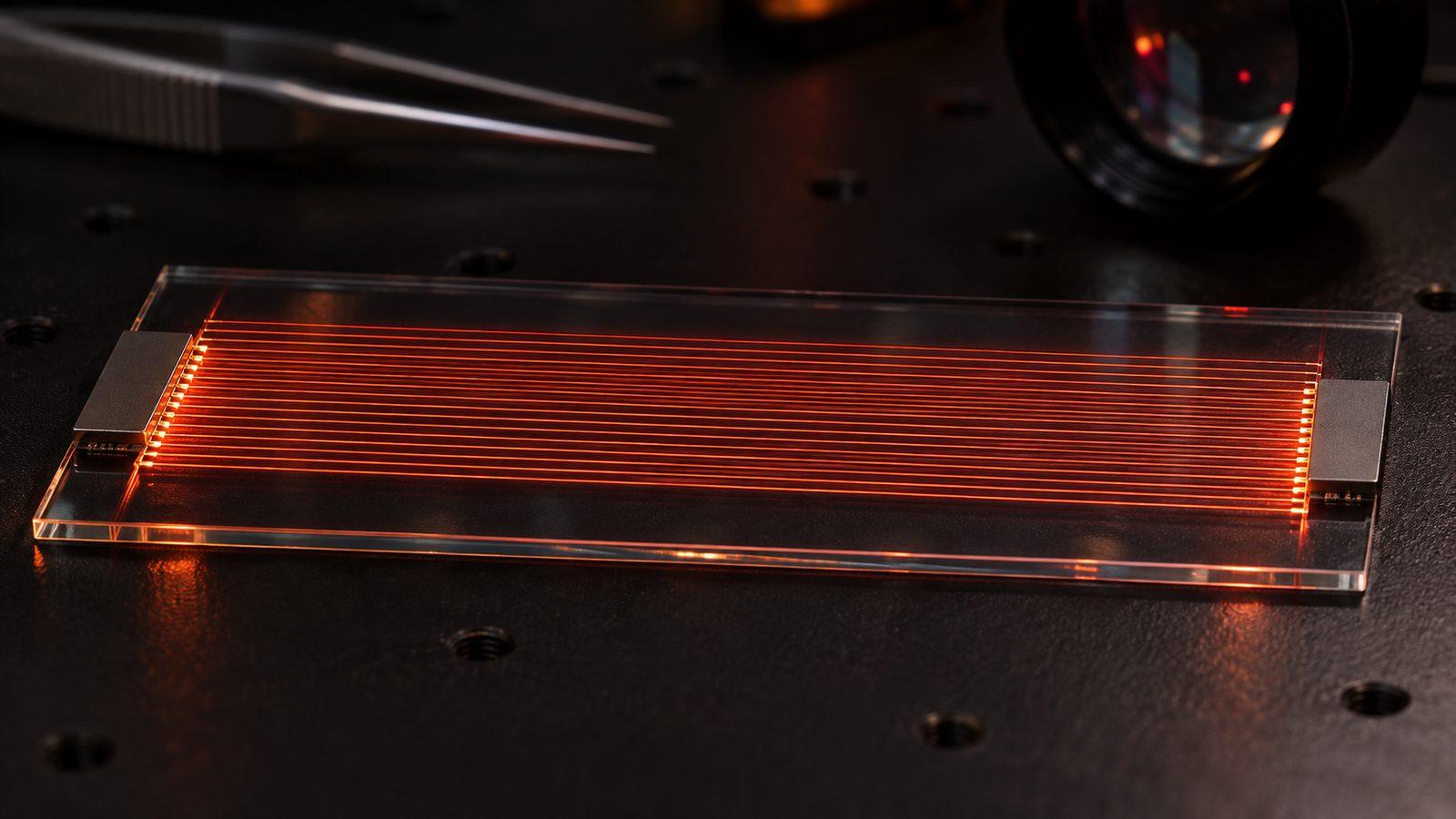
Volantis has chosen many slow lanes over a few fast ones. Each lane of light is specified at 24 gigabits per second, and the company plans tens of thousands of them side by side, which is where the bandwidth is meant to come from. It puts the energy per bit moved at under one picojoule, a trillionth of a joule, and gives no baseline to compare that with.
For the light source, the release says Volantis uses custom micro-VCSELs “rather than external lasers”. Reuters notes that the same kind of laser powers facial recognition in many Apple devices, and the company says it can draw on that existing supply chain. These lasers are made from gallium arsenide, which the company says lets it avoid indium phosphide, the material much other data-centre optics depends on. Lumentum’s chief executive said in July 2026 that supply of such parts was running about 30% below what customers need, as Tom’s Hardware reported.
VCSELs “have faced criticism over their reliability”, The Register notes. Roy Meade told the publication that “by giving up some speed, significantly higher reliability can be achieved”, which fits the choice of many slow lanes. That argument is plausible, but we found no published reliability data for the lasers.
What Is the Volantis A-1?
Volantis’s planned first product is the A-1: a complete inference system, sold as a box, built around Volantis’s optical link. Its targets come from the company’s product page and press release.
A-1 design targets, as stated by Volantis
| Item | Company’s figure |
|---|---|
| Memory capacity | 10 TB in one pool |
| Memory bandwidth | 240 TB per second |
| Power | 20 kW |
| Size | 15U, about a third of a standard rack |
| Model size | Over 20 trillion parameters (press release); over 10 trillion (company blog) |
| Speed | Up to 10,000 tokens per second per user (press release) |
| Cost claim | 15x tokens per dollar against Nvidia Rubin |
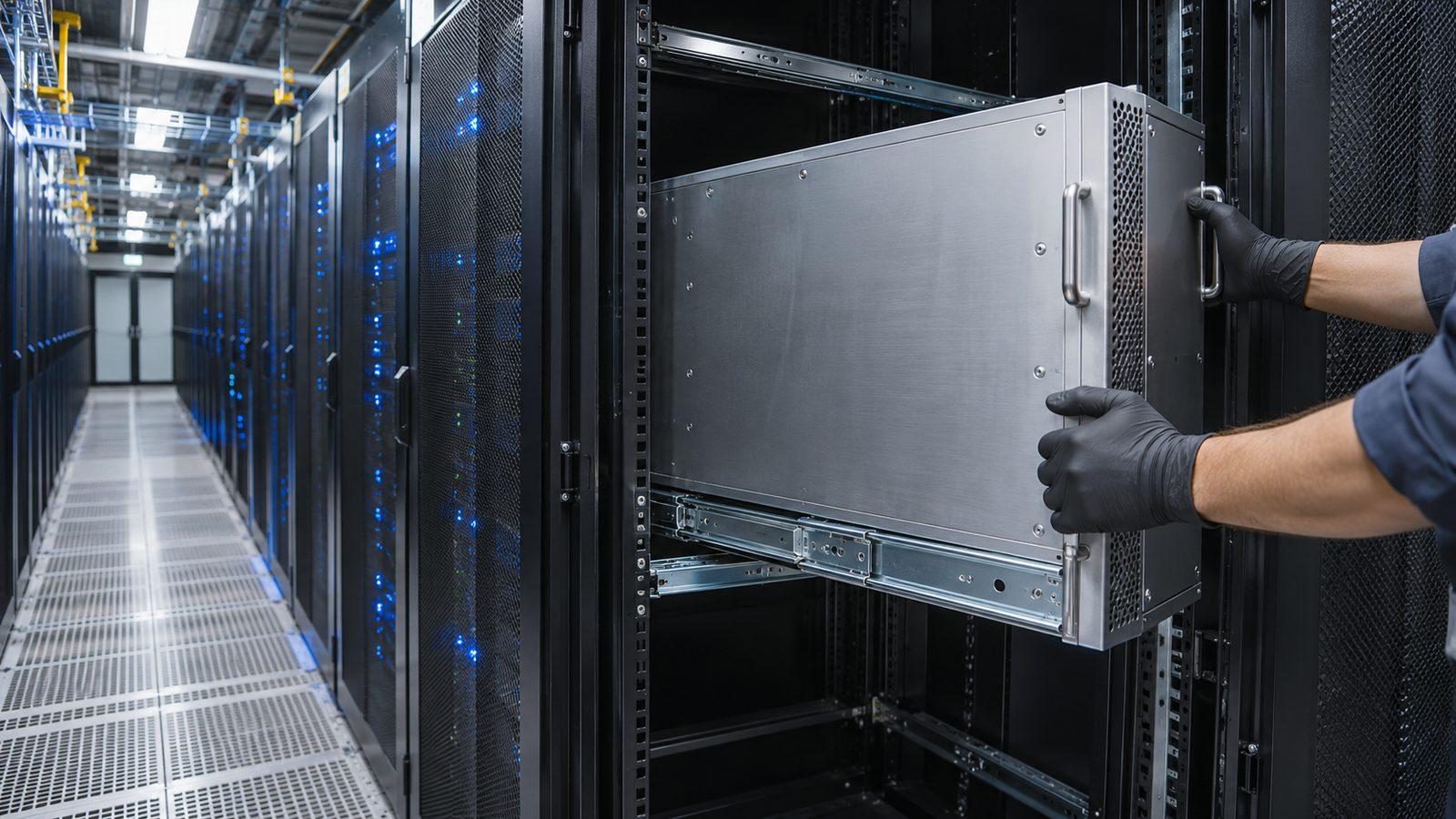
Volantis A-1 vs Nvidia Rubin: one memory pool against 72
For scale, Nvidia lists one Rubin GPU at 288 GB and 19.2 TB per second. Its full Vera Rubin rack of 72 GPUs has more of both in total, 20.7 TB and 1,400 TB per second, divided among 72 processors that each hold a share. Volantis’s pitch is a single 10 TB pool in front of one processor, about 35 times the memory and 12 times the bandwidth of one Rubin GPU. That should matter most when one model is too large for a single GPU’s memory and has to be split across several.
Two of the targets pull against each other. By our arithmetic, a model of more than 20 trillion parameters fits in 10 TB only if each parameter takes less than four bits. And at 240 TB per second, a model that filled the memory could be read end to end about 24 times a second, so 10,000 tokens a second would mean touching only a sliver of it per token, or running something far smaller. Since the release says “up to”, the two figures may describe different models. We found nothing from the company that says which.
The processor is not Volantis’s own design. Its product page says the first system uses “silicon-proven” compute designs “licensed from external parties”, and Ghosh told The Register the company would license “absolutely everything we possibly can”. Licensing removes one way the first system could fail. It also means the company’s advantage rests entirely on the optical link.
Can Volantis Deliver by 2027?
No production chip had been taped out as of October
The Register reported that Volantis “still has a ways to go before it tapes out its first production-ready chip”, taping out being the hand-off of a finished design to a factory, and that it “will need to raise a fair bit more” to get there. So far, by the publication’s description, the company has shown small-scale optical demonstrators. Ghosh’s own target, which he called aggressive, is an MVP in 12 to 18 months: “a working prototype not volume production”. Counted from October 2026, that lands between October 2027 and April 2028, so by the founder’s own estimate the prototype arrives at the very end of 2027 or after it.
The 15x claim comes with no stated basis
We found no model, workload, price or Rubin configuration on the product page for “15x tokens per dollar”, and no published price for the A-1, so the dollar side of the ratio is unknown. The Next Web described the A-1 figures as “design goals rather than measurements from a running machine”. We found no independent benchmark.
The idea has precedent, and much larger owners
The Register notes that Lightmatter and Celestial AI have both “toyed with the idea” of memory at a distance, and puts Marvell’s purchase of Celestial at $5.5 billion; Marvell says the deal closed in February 2026. That purchase shows large chipmakers think the approach is worth owning. Ayar Labs, a neighbouring optics business where Meade used to work, raised $500 million in March 2026 at a $3.75 billion valuation, according to its investor Insight Partners. By its own account, Volantis differs in selling a whole system and in integrating its lasers. In its favour, its CTO ran the HBM programme at Micron, per the company, so the team knows the technology it wants to displace. For a chip startup funded on a different bet, see SiMa.ai’s Series C for physical AI chips.
The investor list is not a customer list
Angels in this round include Sholto Douglas, an Anthropic researcher, the podcaster Dwarkesh Patel and Naveen Rao, and the company names Sam Altman and Jeff Dean among its backers, without saying in which round. Our reading is that people close to the AI labs think inference speed is worth a side bet. A personal cheque is a different thing from a purchase order, and we found no named customer.
How Should You Read AI Hardware News Like This?
Some habits that help with any chip story:
- Separate capacity from bandwidth. Headline numbers in terabytes tell you the size of the desk; you also need to know how fast pages arrive. Volantis is promising both at once, which is the claim to test.
- Sort “the company says” from “someone measured”. In this story the second pile is empty so far.
- Find the delivery date and who set it. Dates in a press release and a founder’s “aggressive” prototype target are different kinds of promise.
Two questions are specific to optical startups like this one. What share of the boards coming off the line work? With tens of thousands of lasers on one board, a small failure rate per laser adds up. And will existing AI software run on it unchanged? Any box that needs models rewritten meets the same resistance we described in DeepSeek’s work on Huawei Ascend.
If your business buys AI through an API, none of this changes your bill this year. Watch it anyway. Hardware that runs a model is a large part of what a token costs, and which of those costs matter for your own operations is something we work through in our AI agent development projects.
Better Chips, or Better Wiring
The Volantis Series A funds a specific wager: that the next jump in AI speed comes from how the processor reaches its memory, more than from the processor itself. Marvell paid for the same idea, and Huawei is betting on system scale for its own reasons, so the direction has company. A startup with $97 million may not be the one that gets there. Real evidence starts with a working A-1. Until one runs, the memory wall is a well-described problem with a promising and untested fix.
FAQ: Volantis, the AI Memory Wall and Photonics
What is Volantis?
Volantis is a San Francisco semiconductor startup, founded in 2022 and led by CEO Tapa Ghosh, that is designing an AI inference system in which the processor and its memory are connected by light instead of copper wires. On 1 October 2026 it announced an $88 million Series A co-led by Lachy Groom and Abstract Ventures. The company says it has raised $97 million in total.
What is the AI memory wall?
The memory wall is the gap between how fast a chip can compute and how fast it can fetch data from memory. An AI model has to pull its stored numbers out of memory to produce each word of an answer, so how large a model a chip can run depends on how much memory it can reach, and how fast it answers depends largely on how quickly it can read that memory. Today’s fast memory, called HBM, sits right beside the processor on very short copper links, which limits how much fits. Nvidia’s Rubin GPU has 288 GB.
How does Volantis use light to connect memory?
According to the company, it replaces the short copper wires between a processor and its memory with a photonic interconnect: optical waveguides, tiny channels that carry light across the board the chips sit on. Volantis says these reach more than 200 millimetres, against about 2 millimetres for electrical wires, so more than 220 memory chips could share one processor. The light is to come from very small lasers called micro-VCSELs integrated with the chips.
What is the Volantis A-1?
The A-1 is Volantis’s planned first product, a system for running AI models. The company’s targets are 10 terabytes of memory, 240 terabytes per second of memory bandwidth and 20 kilowatts of power in a 15U chassis that fits existing data centre racks. These are design goals. The Register reported in October 2026 that the company had yet to tape out a production chip.
Is Volantis faster or cheaper than Nvidia Rubin?
There is no public evidence either way yet. Volantis’s product page claims 15 times more tokens per dollar than Nvidia Rubin, and we found no workload, model, price or test conditions behind the figure, nor any independent benchmark. For scale, Nvidia lists one Rubin GPU at 288 GB and a full 72-GPU rack at 20.7 TB and 1,400 TB per second; Volantis’s target is a single 10 TB pool at 240 TB per second. Volantis plans to deliver its first systems to customers in 2027.
How much did Volantis raise in its Series A, and who invested?
Volantis raised $88 million in a Series A announced on 1 October 2026, co-led by Lachy Groom and Abstract Ventures, with John Doerr, VXI Capital, Triatomic and Susa Ventures, and angel investors Dwarkesh Patel, Naveen Rao and Sholto Douglas. The company also names Sam Altman, Jeff Dean and Dylan Patel among its backers without saying in which round. No valuation has been reported.