
The Model Works in the Lab. Then It Has to Fit in a Robot.
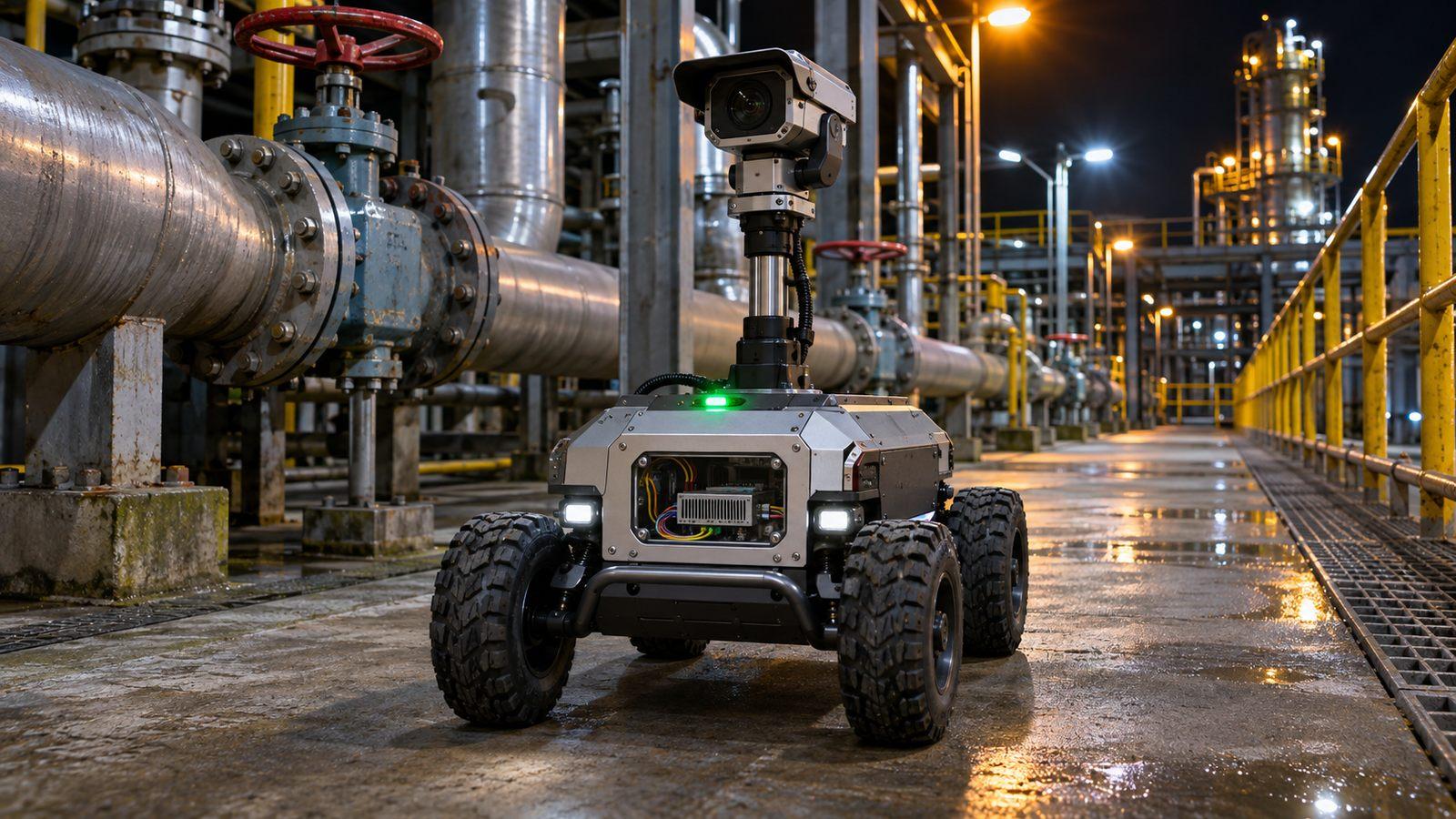
Picture a small company that builds inspection robots for chemical plants. Its vision model spots leaks and corroded valves well on a desktop GPU. Then the model has to run inside the robot, on a chip the size of a credit card, on a battery, without overheating. That step can take months of conversion, tuning and testing. SiMa.ai, a maker of physical AI chips, raised a $150 million Series C in September on the promise of making that step faster.
The round, announced on 28 September, values SiMa.ai at $1.45 billion. Headlines framed it as another company taking on Nvidia. The more interesting bet is software: SiMa.ai is wagering that AI agents can do much of the deployment work engineers do by hand today.
What Is Physical AI?
Physical AI is AI that lives in a machine and acts in the world: a robot that picks parts, a drone that inspects power lines, a car that keeps its lane. It has to see, decide and move in real time. We wrote a longer introduction in what is physical AI; the short version is that the computing has to happen on the device.
That is called edge inference: the model runs locally instead of sending video to a data centre and waiting for an answer. It is faster, uses no bandwidth and keeps working when the connection drops. The cost is that a robot or drone has a few watts to spare where a server GPU draws hundreds, and nowhere to dump the heat. On a device, power efficiency often matters more than raw speed.
A common default has been Nvidia’s Jetson modules, small boards that bring Nvidia’s GPU and software to robots and cameras. SiMa.ai is one of several companies trying to win that slot with a chip built only for this job, plus software, plus a module it describes as pin-compatible with the leading GPU provider’s.
SiMa.ai’s Series C and $1.45B Valuation: What Was Announced
According to SiMa.ai’s press release, Fidelity and Amplify Partners co-led the round, which the company calls oversubscribed. Existing backers Dell Technologies Capital, Maverick, Point72, StepStone, Alter and ND Capital joined, and AllianceBernstein, Baron Capital, J.P. Morgan and the State of Michigan came in as new investors. Total funding is now $500 million.
SiMa.ai at a glance
| Item | Detail |
|---|---|
| Company | San Jose; founder and CEO Krishna Rangasayee |
| Series C | $150M, co-led by Fidelity and Amplify; $1.45B valuation |
| Previous round | $85M, announced Aug 2025; about $960M valuation per PitchBook |
| Current chip | Modalix MLSoC; module rated 50 TOPS by the company |
| Software | Palette Neat, open source since June 2026 |
| Next chip | 1,000 dense TOPS, planned for first half of 2028 |
The previous raise was an $85 million round in August 2025, which TechCrunch, citing PitchBook data, put at about $960 million. TechCrunch calls it a Series B; SiMa.ai did not name the round, and its Series B was an $80 million raise in 2021. If the PitchBook figure is right, the valuation rose by about half in roughly 14 months.
The company reports “quadrupled year-over-year revenue growth” from 2024 to 2025 but gives no amounts. It names Bosch, Emerson, Micron, Synopsys, TRUMPF, Kontron and others as “customers and partners”, without saying which are which.
What Are the Modalix MLSoC and the 1,000 TOPS Chip?
An MLSoC is a system on a chip for machine learning: the AI accelerator, ordinary processor cores and image processing on one piece of silicon, so a camera feed can go in and decisions come out without a separate computer. Modalix is SiMa.ai’s current one. The company’s product brief rates the module at 50 TOPS.
TOPS, trillions of operations per second, is horsepower on paper. Vendors quote it at different precisions, and some count “sparse” operations that roughly double the figure. Nvidia lists the Jetson Orin Nano at up to 67 TOPS, a sparse number; SiMa.ai does not say whether its 50 is dense or sparse. Neither tells you how fast your model will actually run, or at what power.
The next chip, planned for the first half of 2028, targets 1,000 dense TOPS for drones, humanoid robots, driver assistance (ADAS) and AI-powered car cockpits. SiMa.ai plans to offer it three ways: as ML IP that other chip designers license, as a chiplet (a small die that can be packaged with others into one part), and as a complete SoC. Two years is a long time in this market, and a roadmap date is a target.
What Problem Does Palette Neat Solve?
Getting a model onto a device chip is tedious. Engineers convert it to a format the hardware understands, shrink it to lower precision, check accuracy has not dropped, profile where it is slow, and repeat. Each chip family has its own tools and quirks, which is one reason teams stay with Jetson: they already know the steps.
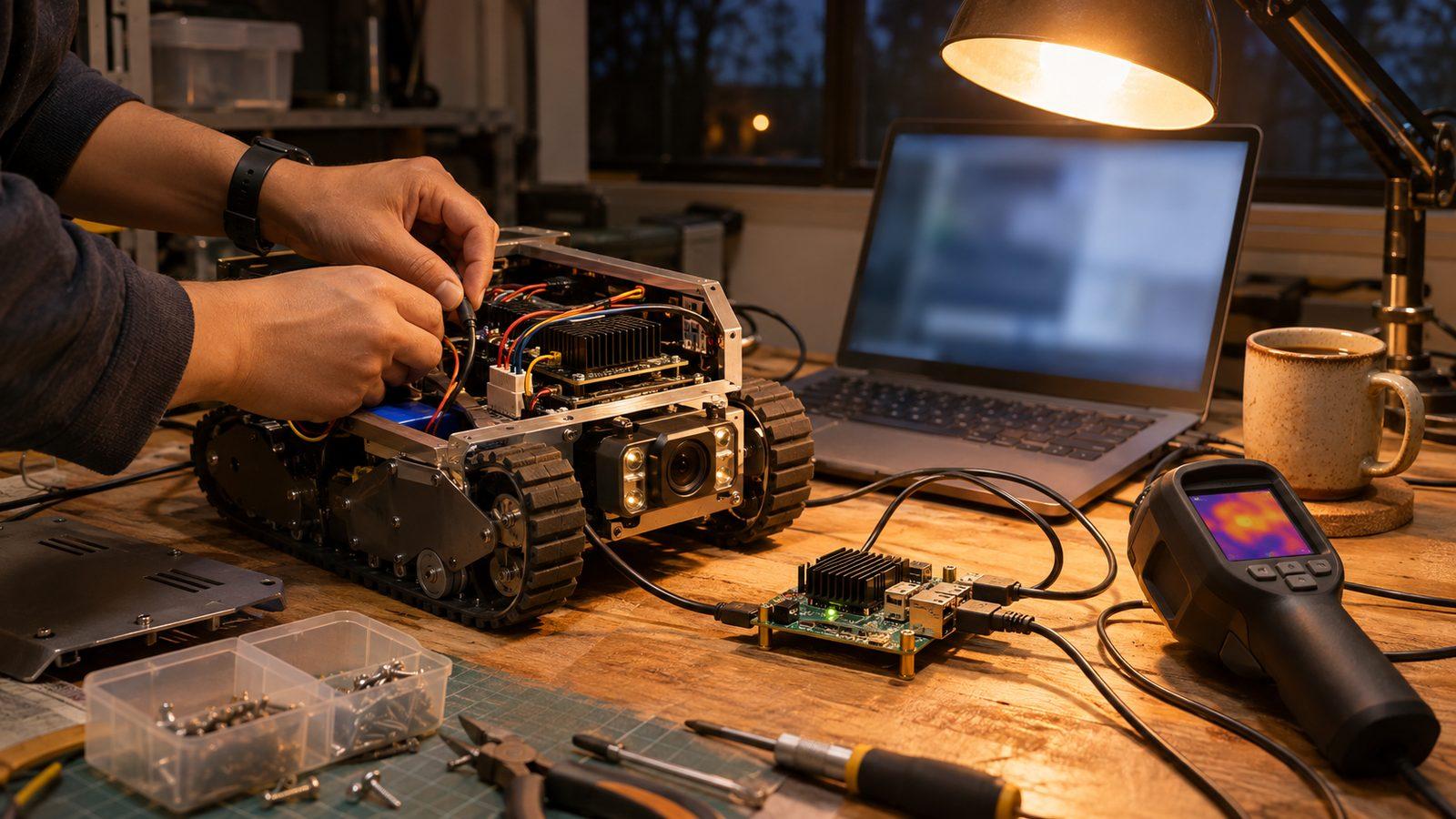
Palette Neat is SiMa.ai’s answer. The company calls it “the industry’s first agentic software environment for Physical AI”. In SiMa.ai’s description, agents take on steps engineers would otherwise do by hand. Engineers describe the application in plain language and the tool maps it onto SiMa.ai’s silicon, according to Embedded Computing Design. It was released as open source in June 2026.
The company says it can cut deployment from months to days or even hours. We found no independent test of that. “First” is also the company’s own claim. The idea is sound; the number needs a customer willing to publish their before-and-after.
How Does SiMa.ai Compare With Nvidia Jetson?
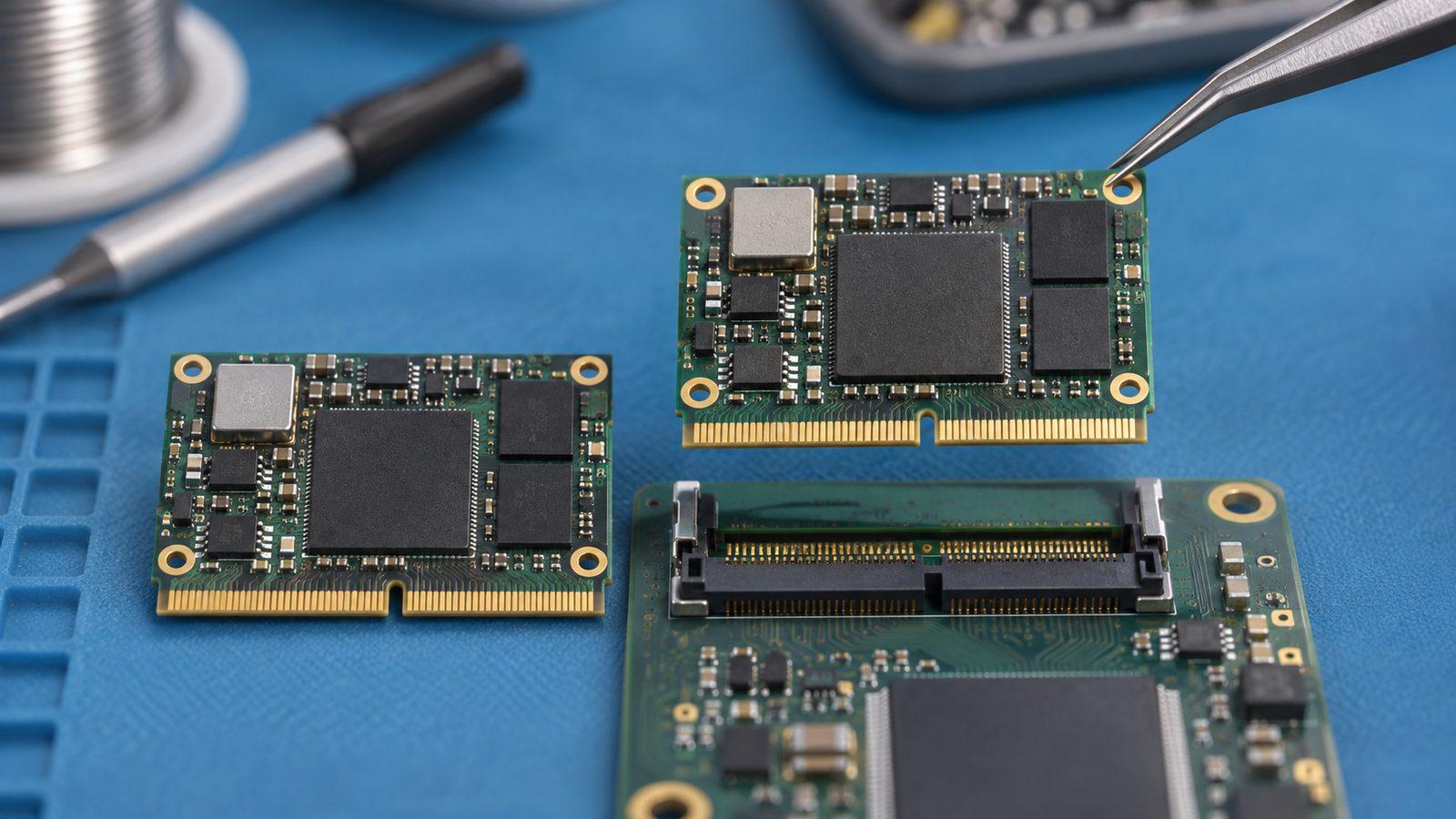
SiMa.ai’s product brief says its module is “pin-compatible with SoMs from the leading GPU provider”. Pin-compatible means the connector and wiring match, so a carrier board designed for that module can, in principle, take SiMa’s instead. Partner ARK Electronics names Jetson Orin NX and Nano as the match and lists some interface differences. It lowers the cost of trying a second supplier.
On price and power, SiMa.ai’s release says physical AI “has historically relied on expensive, complex, and power-hungry NVIDIA GPUs”. That is positioning; the release gives no figures or test conditions. Nvidia has helped the argument: it raised Jetson prices by up to 101% around July 2026, as CNX Software reported. The Orin Nano Super developer kit went from $249 to $399, per CNX Software and Nvidia’s current Jetson price list.
The risk of the drop-in strategy is that you are always measured against Nvidia, on Nvidia’s terms. Jetson comes with CUDA, years of tutorials and a large hiring pool. Nvidia can also cut prices, or ship a cheaper module, faster than a startup can tape out a chip. The swap is easy to try. Only your own model can show if it pays.
Can SiMa.ai Challenge Nvidia?
Technology: power is the ceiling
A drone that flies five minutes less because its computer runs hot is a worse drone, however clever the model. On devices, the useful number is work per watt. A thousand dense TOPS in 2028 would be a large jump for an edge chip, if it fits a drone’s power budget, and the company has not published the wattage.
Software: where chip companies win or lose
Nvidia’s lead was built as much on CUDA, its programming platform, as on silicon. Jetson rivals have often run into the same wall: good chips, unfamiliar tools. Palette Neat goes straight at that gap. If agents really make the move to a new chip cheap, the CUDA moat gets shallower for edge work. Watch that bet closely.
Business: selling chips and selling designs
Offering the 2028 design as licensable IP and as a chiplet means SiMa.ai could end up inside other companies’ parts as well as on its own boards. Several new investors, including Fidelity, J.P. Morgan, AllianceBernstein and Baron, are better known for later-stage and public-market investing. We will not guess at what that means for an IPO.
Markets: factories and cars before humanoids
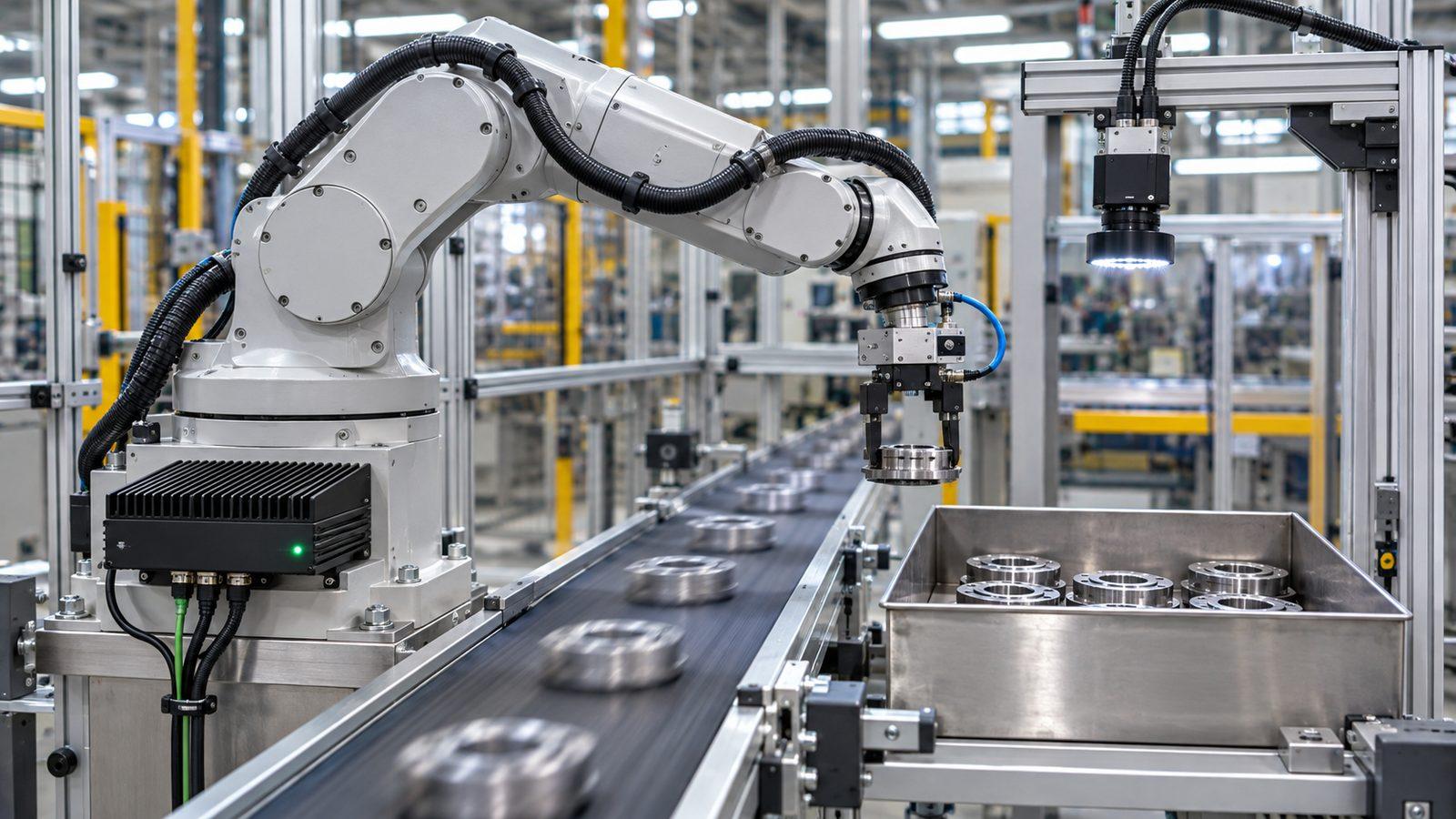
Counterpoint expects cumulative shipments of 145 million physical AI devices, including vehicles, robots and drones but excluding consumer and defence drones, between 2025 and 2035, according to its April forecast. That averages about 14.5 million a year over the decade. SiMa.ai’s named customers and partners lean industrial: Bosch, Emerson and TRUMPF make factory and automation equipment. Factory lines and cars have budgets and volumes today; humanoid robots, which we looked at in our household robots piece, are still mostly pilots.
What Should Hardware and Robotics Teams Ask?
If you are choosing a chip for a robot, camera or machine:
- Start with the power budget, then the model. Decide how many watts and how much heat the product can take, then run your own model at that limit.
- Price the porting as well as the part. Ask how long it takes to move your model to the chip and who does it. If a vendor promises days, ask for a trial on your model before you redesign anything.
- Keep a second option on the board. Pin-compatible modules make it cheaper to hedge against a single supplier’s price rises, as Jetson buyers found this summer. Check the interface differences before assuming a straight swap.
If you are following SiMa.ai or companies like it:
- What is revenue in dollars? “Quadrupled” growth from a small base can still be small.
- Has any customer published how long deployment took with Palette Neat, against how long it took before?
- Does the 1,000 TOPS chip arrive in the first half of 2028, and at what power?
We help teams plan and build AI agents for real workflows, including where a model should run; see AI agent development. For the wider chip contest, see how Huawei’s Ascend 960 competes with Nvidia.
Compute, or Time to Deploy?
Nvidia is not about to be displaced, and SiMa.ai has not yet proved its software claims. The number to watch is time to deploy, and only customers can publish it. If agents handle deployment too, will the chip contest be won on compute, or by whoever gets an engineer’s model into the machine fastest?
FAQ: SiMa.ai and Physical AI Chips
What is SiMa.ai?
SiMa.ai is a chip company based in San Jose, led by founder and CEO Krishna Rangasayee, that designs processors for physical AI: robots, drones, cars and factory equipment that run AI models on the device itself. Its current product is the Modalix MLSoC, sold as chips, modules and PCIe cards. On 28 September 2026 it announced a $150 million Series C at a $1.45 billion valuation, bringing its total funding to $500 million.
What is physical AI?
Physical AI is AI that sees, moves and decides in the real world, inside a robot, a drone, a car or a machine on a factory line, rather than answering questions in a chat window. Because it has to react in milliseconds and often works without a reliable connection, most of the computing happens on the device, within tight limits on power and heat.
What is Palette Neat?
Palette Neat is SiMa.ai’s open-source tool, released in June 2026, that uses AI agents to help engineers move a model onto SiMa’s chips. Engineers describe the application in plain language and the tool maps the work onto the hardware. SiMa.ai says it can cut deployment from months to days or even hours; no independent test of that claim has been published.
Can SiMa.ai replace Nvidia Jetson?
Possibly for some products. SiMa.ai says its Modalix module is pin-compatible with modules from the leading GPU provider, and partner ARK Electronics names Jetson Orin NX and Nano, so a board designed for Jetson can in principle take SiMa’s module with some interface differences. Whether it is a good swap depends on the model, the software and the power budget, which needs testing on your own workload.
What does 1,000 TOPS mean for an AI chip?
TOPS means trillions of operations per second, a rough measure of how much arithmetic a chip can do. SiMa.ai’s planned 2028 chip targets 1,000 dense TOPS. Vendors often quote sparse or low-precision figures that run roughly twice the dense number, so TOPS from different companies are rarely comparable, and real performance also depends on memory, power and software.