
From Paying the Power Bill to Signing for 20 Years
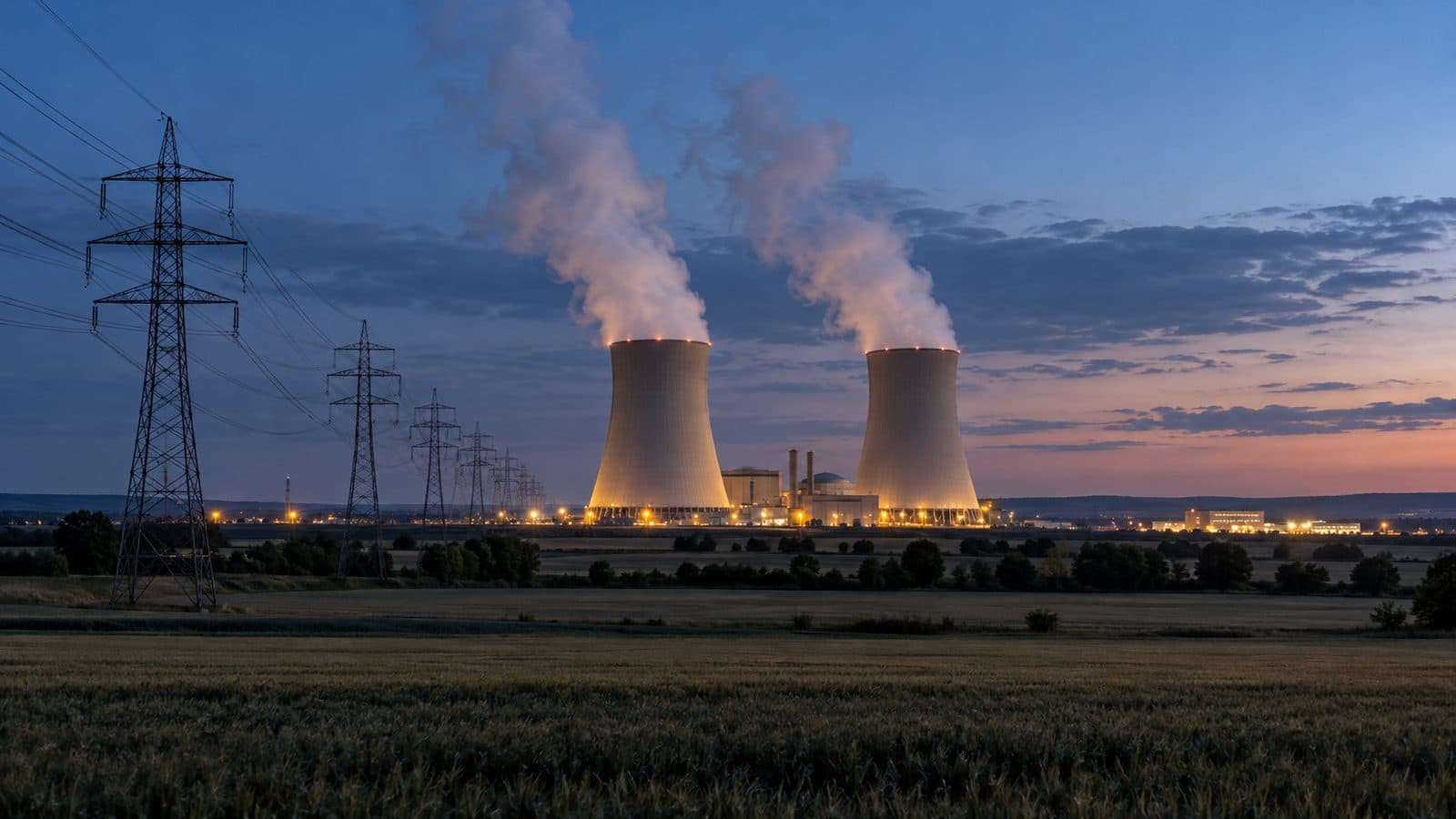
For most of the internet’s history, a tech company bought electricity the way a household buys water: connect to the grid, pay the monthly bill. On 6 October, Google and Constellation Energy, the largest nuclear operator in the United States, announced agreements for about 3.6 gigawatts of power in PJM, the largest US grid region, including a 20-year contract backing more than $4.3 billion of upgrades at reactors Constellation owns or co-owns, so they produce more.
That headline number hides the interesting part. Only 890 megawatts, roughly a quarter, is new nuclear output. Everything else is a long-term purchase of power that already exists. Taken together, the two contracts show something bigger than one company’s energy bill: for AI companies, electricity has moved from an operating cost to a strategic resource, and the Google Constellation nuclear deal is what that looks like when it is written into a power purchase agreement.
How Much Power Do AI Data Centers Need?
Training and running AI models happens in data centers, and for AI data center operators the limiting factor is shifting from chips to electricity. A report for the US Department of Energy by Lawrence Berkeley National Laboratory estimated that data centers used about 4.4% of US electricity in 2023 and could reach 6.7% to 12% by 2028. Building a data center takes a year or two. A new power plant, a transmission line or a place in the grid connection queue takes several times that.
PJM Interconnection, which runs the grid and wholesale power market for more than 67 million people across all or part of 13 states and the District of Columbia, shows the squeeze in prices. In its capacity auction, where PJM pays generators to be available in future years, the price rose from $28.92 per megawatt per day for 2024/25 to the auction’s cap of about $329 for 2026/27, and stayed at the cap for the next two years. When the December 2025 auction closed, PJM’s Stu Bresler said it left “no doubt that data centers’ demand for electricity continues to far outstrip new supply.” Northern Virginia, the largest US data-center market, sits inside PJM.
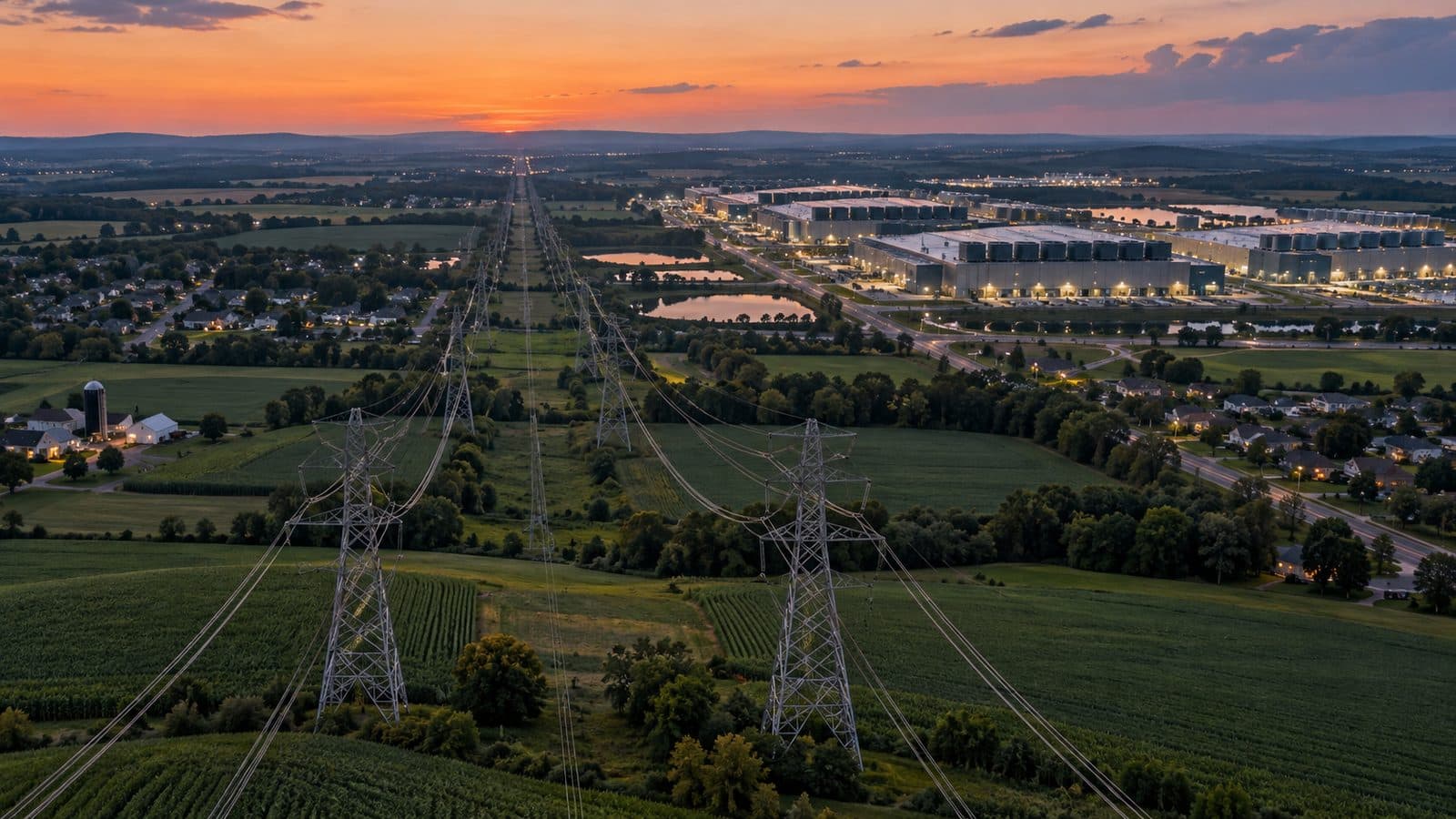
So the grid operator started pushing back. PJM proposed a faster connection path for large new loads that bring their own new supply, an idea the companies called “Bring Your Own Power”. And tech companies had already promised something harder than buying enough clean energy over a year. Google’s goal is to run on “24/7 carbon-free energy on every grid where we operate by 2030”, meaning every hour of consumption is matched by clean supply. Sun and wind cannot do that alone at night or on still days.
What Google and Constellation Actually Signed
The 3.6 GW is two contracts with very different jobs. Read separately, they tell different stories.
Two contracts, one headline
From Constellation’s release, Google’s blog and Reuters, 6 October 2026. Prices were not disclosed.
| Uprate PPA | Existing-fleet supply | |
|---|---|---|
| Size | 890 MW | 2,700 MW |
| Term | 20 years | 15 years |
| New generation? | Yes, from 11 upgraded units | No |
| Timing | First by 2028; all by end-2032 (Google) | Existing plants |
| What it does | Finances $4.3bn+ of reactor upgrades | Long-term revenue for current plants |
What the companies say: 890 MW of new nuclear
The first contract is a power purchase agreement, or PPA: a buyer commits to buy a generator’s output, or settle financially against it, for many years at an agreed price. The power still flows through the public grid; nobody runs a cable to a Google building. What changes is who is guaranteed to pay, and whose books the clean output counts on.
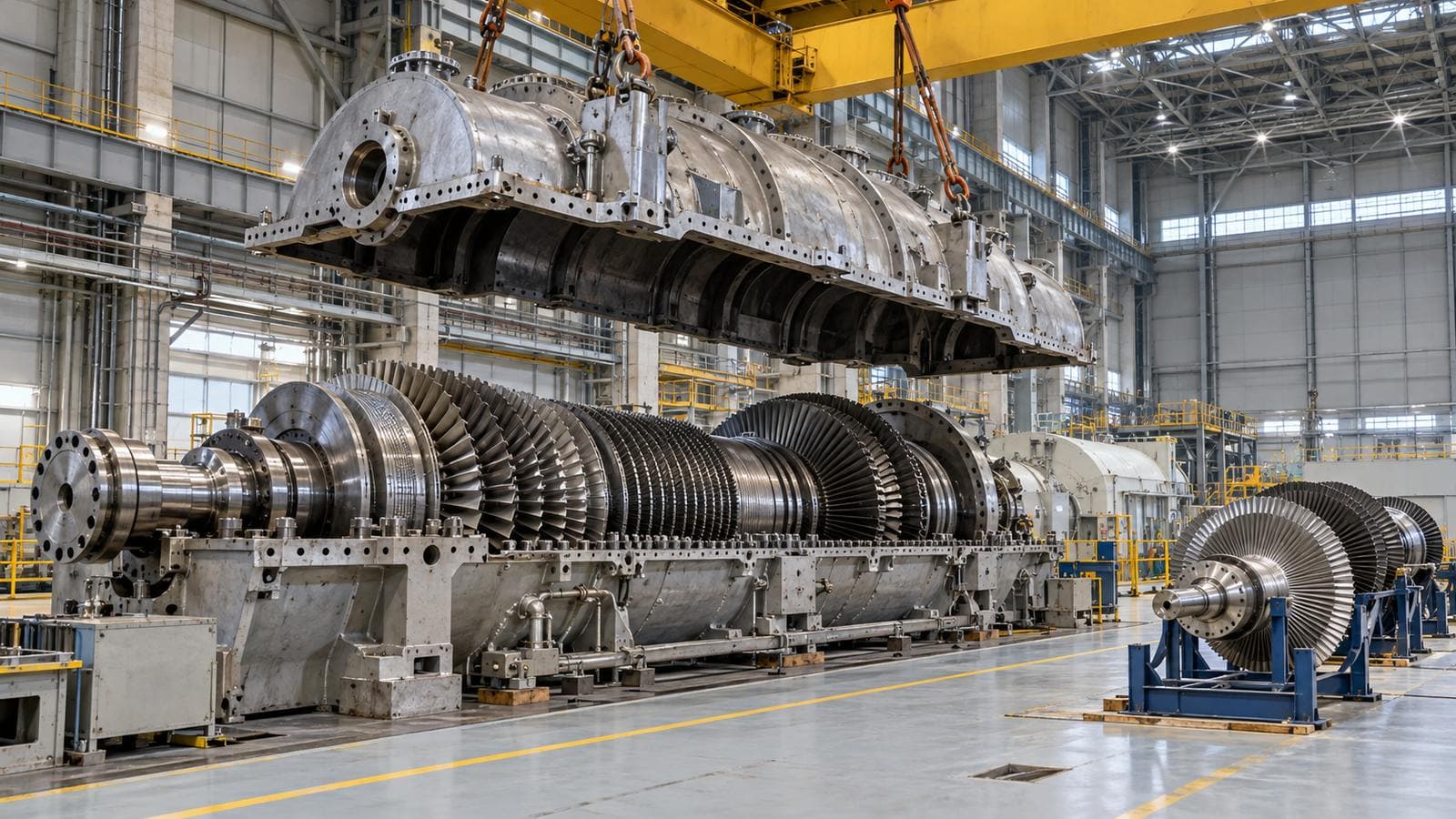
The new output comes from nuclear uprates: upgrades to existing reactors, with no new reactor built. According to Constellation’s release, it will replace turbines, steam generators and digital control systems at 11 units it owns or co-owns on six sites in Illinois, Pennsylvania and New Jersey, and the result is equivalent to a new nuclear reactor. Uprates reuse an existing site and grid connection, so they move faster than new plants, though the extra output still needs PJM approval, and each plant can only be pushed so far. Google’s role, in its own words, is to serve “as the anchor customer” while “ensuring other grid customers bear none of the associated costs.” Constellation’s release adds that the costs will not be passed to residential customers. An anchor customer is the large early buyer whose contract makes a project financeable.
What the companies say: 2,700 MW of existing power
The second contract adds no generation. It is a 15-year agreement for power from Constellation’s existing PJM fleet, “not tied to a specific generation source”, as Reuters put it, and Constellation described it to POWER as a “financial structure”. It gives Google price certainty and gives existing plants long-term revenue. On the same day the two companies signed a five-year alliance under which Constellation uses Google Cloud and Gemini Enterprise for speed to power, generation optimisation and protecting critical infrastructure.
What reporters and analysts add
The companies did not publish the price. Canary Media estimates the uprates cost about $4,800 per kilowatt of new capacity, which is a capital cost, not the price Google pays for power.
Nor did they say which unit gets the first uprate, how much each site adds, or which Google data centers the power will be matched to. And the rule they said they were responding to has since changed. PJM filed its proposal with the federal regulator in August as “Bring Your Own New Capacity”. POWER noted that neither company had said whether the 890 MW would count, and that capacity already sold in a PJM auction generally would not, which suggests the 2,700 MW would not count. Then on 9 October the Federal Energy Regulatory Commission rejected the proposal, saying “states have a crucial role to play in this challenge”, according to Utility Dive. So the deal now stands without the rule it was built to answer.
Why Is Google Buying Nuclear Power, and Why Now?
What direct deals mean: users become investors
Until recently, the grid planned supply and big users plugged in. With a contract like the 890 MW PPA, the buyer’s contract helps decide which projects get built: Constellation’s more than $4.3 billion is backed by Google’s 20-year commitment. Whoever holds the long contracts shapes where capacity grows. Part of the AI race is now a race to lock up power, and the companies with the strongest balance sheets can move first.
What Google wants: certainty, compliance and clean hours
Google’s motives are easier to see one at a time. Certainty comes first: power available for years at a price it can plan around. Then there are grid rules, and staying ahead of any requirement that large new loads bring their own supply. And the 24/7 goal needs a clean source that runs at night. There is also politics. By stressing that other customers will not pay and that the projects sustain thousands of jobs, both companies are answering a growing complaint that data centers push up household bills.
Why now: the timelines converged
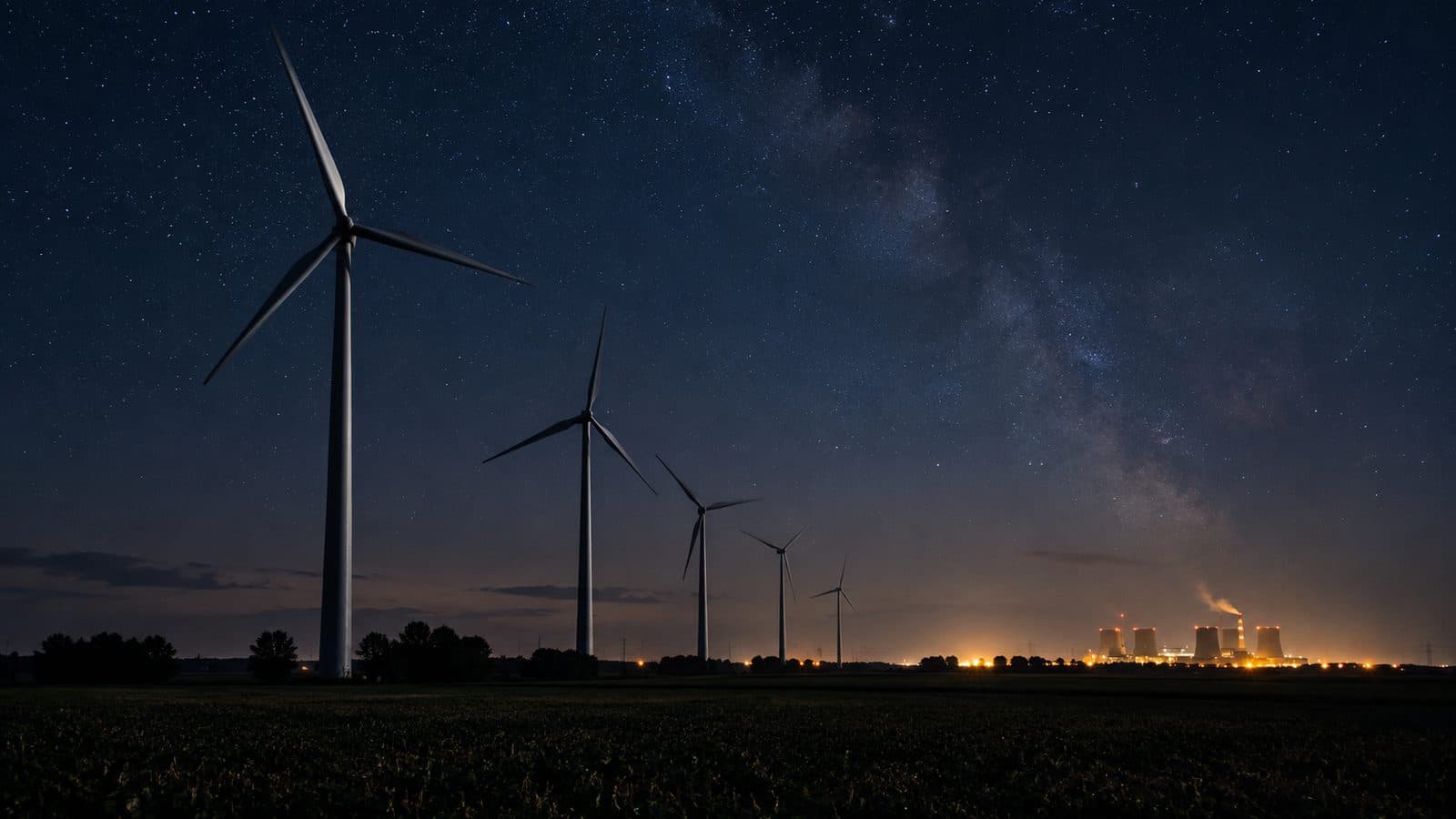
Several timelines met this year. AI spending has pushed data-center projects into queues for power. PJM had just proposed making large loads bring their own supply. In March the Department of Energy launched UPRISE, a programme to add about 5 GW from existing reactors by 2029 through uprates, life extensions and restarts, with access to federal financing; Constellation says the deal advances it. And an uprate can deliver power from 2028, years before most new reactors or small modular reactors (compact, factory-built designs) could.
Why nuclear, and why uprates
Few sources are carbon-free, run around the clock and fit on a small footprint; geothermal and hydro qualify where geography allows. Wind and solar with batteries can get close in some hours, at a cost in land and storage. Gas runs all night but fails the carbon goal. Existing nuclear passes all three tests, and an uprate is one of the fastest forms of new nuclear, alongside restarts. It is also finite: once the best upgrades are done, more nuclear means restarts, new large reactors or small modular reactors, which is why Google also has a deal with Kairos Power for 500 MW of small reactors by 2035.
Who carries the cost
Google says other customers bear none of the uprate costs; that is its statement, and no regulatory filing yet shows how costs are allocated. The 2,700 MW is a financial contract, so those plants keep selling into PJM’s markets. The fairness question is about price: who pays when data-center demand tightens supply? PJM’s market monitor estimated that data-center demand added $29.4 billion to capacity payments over four auctions, according to Utility Dive. That cost is recovered through customers’ bills, data centers’ included. Whether contracts like this ease the pressure or add to it is the question state regulators will now have to answer.
What the market heard
Constellation’s shares rose almost 14% in morning trading on the day, according to Utility Dive. For other tech companies the deal is a template. Microsoft has its agreement with Constellation to restart Three Mile Island Unit 1, now called the Crane Clean Energy Center, which is separate from this deal; Google has its NextEra restart in Iowa and now these uprates, and says it has enabled more than 1.5 GW of new US nuclear capacity.
What This Means for You
- Read power-deal headlines in three numbers. How much is new generation and how much is existing supply? How long is the contract? When does power actually flow? In this deal the answers are a quarter, 15 to 20 years, and 2028 at the earliest for the new 890 MW.
- If you run AI or cloud workloads, electricity is a growing and harder-to-predict input to compute cost. Where your provider’s power comes from, and which grid it sits on, is worth asking about when you choose a region or a colocation site. We help teams weigh that in our IT infrastructure work.
- If you care about your power bill, watch how your state regulator allocates grid costs when large data centers arrive; FERC’s ruling leaves much of that to the states.
We traced a similar squeeze through chips in our piece on the AI memory shortage, and an even longer-range answer to the power problem in our explainer on Google’s Project Suncatcher.
Public Grid or Private Supply Chain?
This deal is neither a nuclear renaissance nor proof that AI will break the grid. What it does show is narrower. Companies with the most money are now using long-term contracts to shape where new power is built and who holds long-term claims on existing power. That leaves an open question for regulators and for everyone who pays a power bill: is electricity still public infrastructure, or is part of it becoming a tech company’s private supply chain?
Further reading, by search term: AI data center electricity demand; nuclear uprate; power purchase agreement PPA; PJM bring your own new capacity FERC; 24/7 carbon-free energy.
FAQ: The Google Constellation Nuclear Deal
What did Google sign with Constellation?
Two agreements, announced on 6 October 2026, totalling about 3,590 MW in the PJM grid. The first is a 20-year power purchase agreement for 890 MW of new nuclear output, created by upgrading equipment at 11 reactor units Constellation owns or co-owns in Illinois, Pennsylvania and New Jersey; Constellation is investing more than $4.3 billion. The second is a 15-year agreement for 2,700 MW from Constellation’s existing plants, not tied to a specific plant. Prices were not disclosed.
Is Google building new nuclear reactors?
Not in this deal. The 890 MW of new capacity comes from uprates: replacing turbines, steam generators and digital controls so existing reactors produce more power. The first uprate is due by 2028, and Google says all 890 MW will be online before the end of 2032. Google has separate agreements for new small reactors with Kairos Power.
What is a power purchase agreement (PPA)?
A long-term contract in which a buyer agrees to buy a generator’s output, or settle financially against it, at an agreed price for many years. The power still flows through the public grid; there is no private cable to the buyer’s data center. The contract gives the generator guaranteed revenue, which lets it finance projects, and lets the buyer claim that output toward its own consumption and climate goals.
Why are tech companies signing nuclear power deals now?
AI data centers are being built faster than grids can add supply, capacity prices in PJM have hit the auction cap three years running, grid operators have proposed making big new loads bring their own supply (FERC rejected PJM’s version on 9 October), and nuclear is one of the few sources that runs around the clock without carbon emissions. Uprates add power to existing plants years sooner than new reactors.
Will the Google Constellation deal raise electricity bills?
Google says other grid customers will bear none of the costs of the uprate projects, and Constellation says costs will not be passed to residential customers. Those are company statements, and how costs are allocated depends on regulators. The broader pressure on bills in PJM comes from capacity prices, which have risen sharply as data center demand grew.