
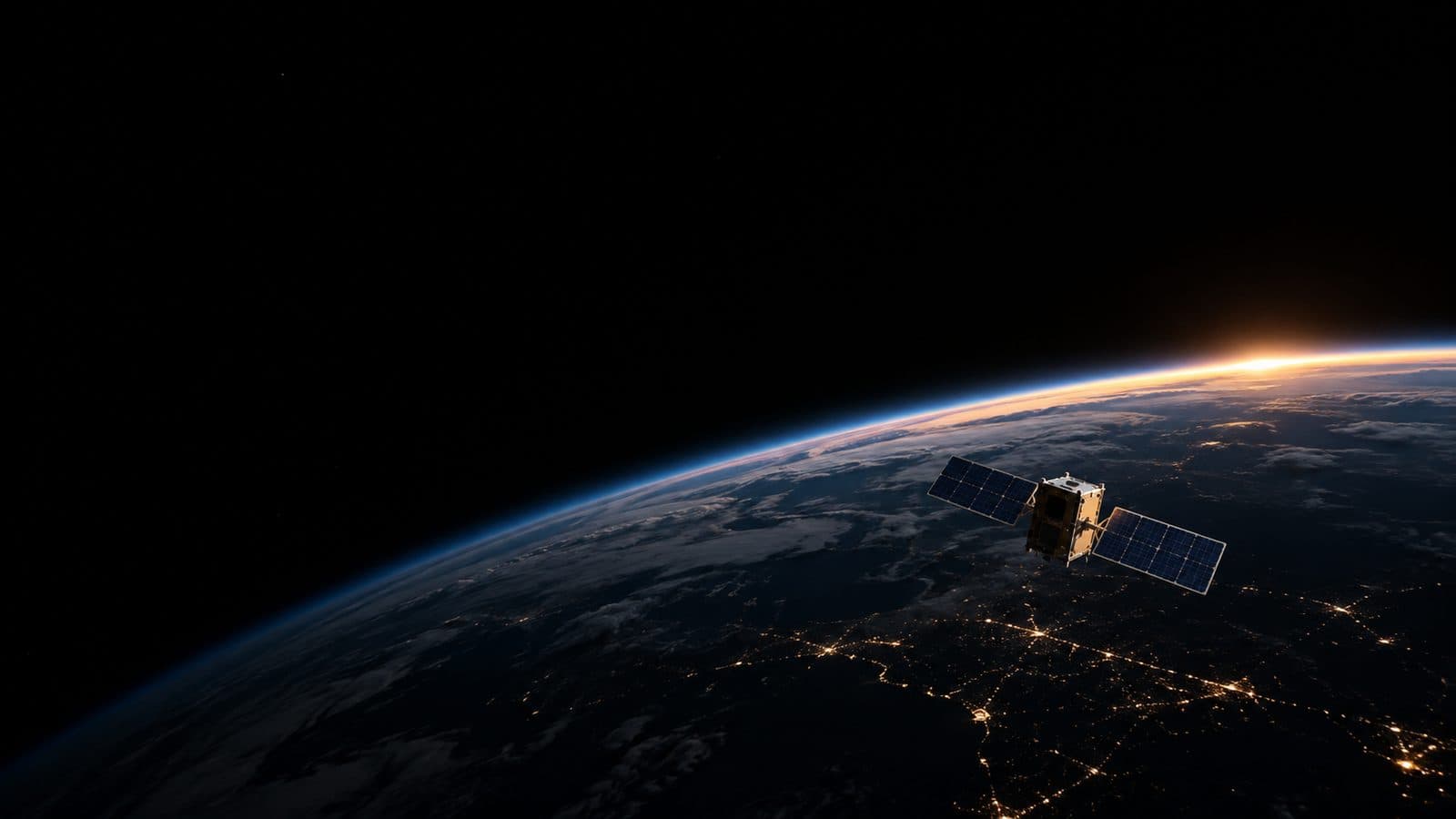
Can a Data Center Fit on a Satellite?
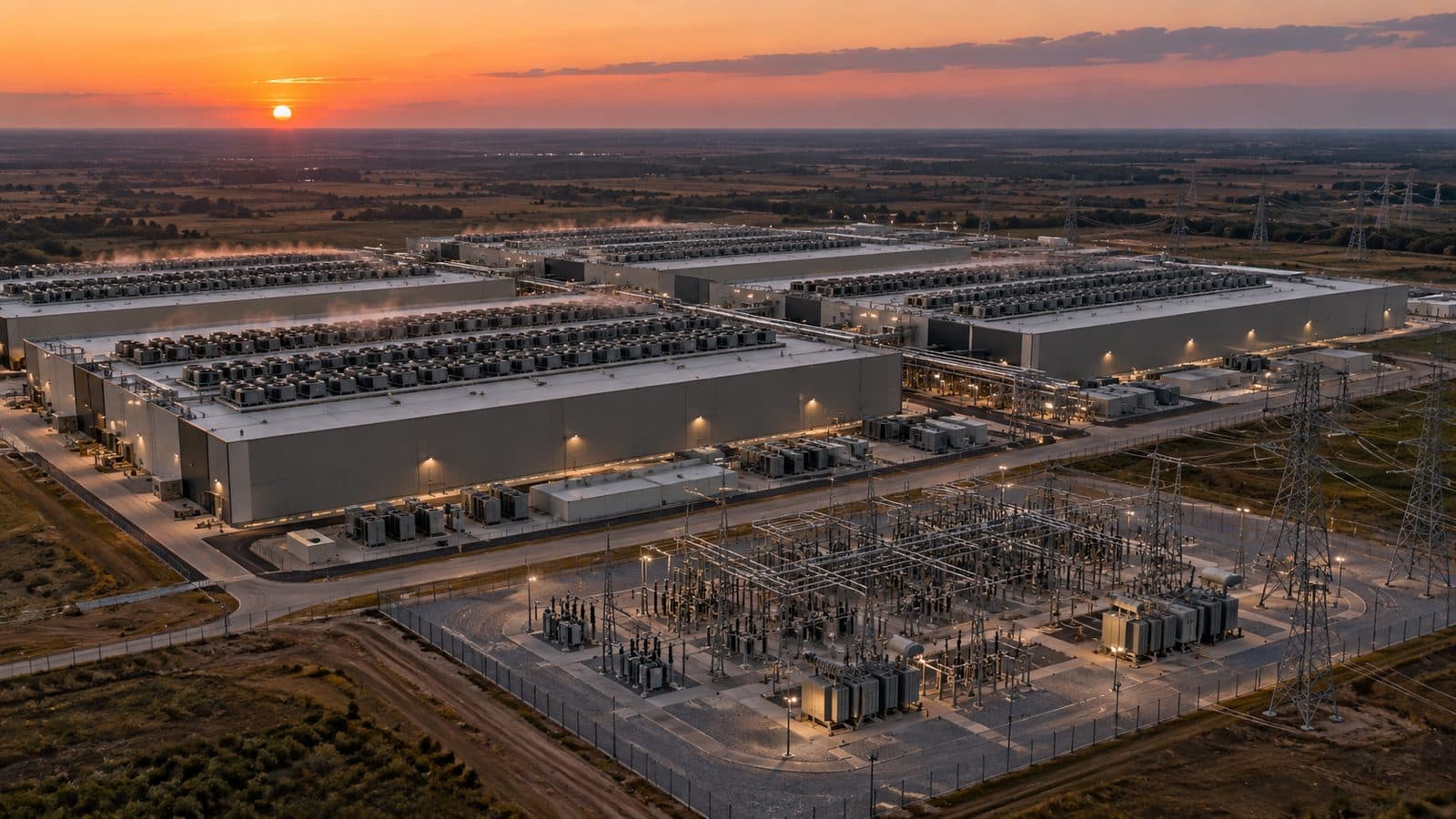
Picture a data center from the air. Long grey halls, rooftops lined with cooling fans, a fenced substation next door, and a power line running off toward a grid that is already stretched. Project Suncatcher is Google asking a strange question about that picture: could some of those buildings one day be replaced by satellites, sitting in near-constant sunlight, throwing their heat into space?
Now bring the scale back down. What actually left the ground on 1 October was four Google TPU chips on one refrigerator-sized satellite that Planet Labs built, riding to orbit on SpaceX’s Transporter-18 rideshare with about 129 other payloads. The plan is to run a small model on it for 15 minutes at a time. Between that and a data center in orbit sit several orders of magnitude, and Google’s own project lead says it won’t be cheaper than the ground for at least five years.
Project Suncatcher, Word by Word
Most of the confusion around this story comes from the nouns, so here they are first, in the order they matter.
Who and what is in this story
Short definitions, used the same way through the rest of the piece.
- SpaceXThe rocket company. It provides the ride and has no role in the AI.
- Transporter-18The 18th flight in SpaceX’s Transporter rideshare series: one rocket carrying many customers’ small satellites, each paying for its share of the ride instead of buying a whole rocket.
- Planet LabsA company that photographs Earth with fleets of small satellites. It built the satellite that carries Google’s chips.
- TPUGoogle’s own custom AI chip, doing the job Nvidia GPUs do in most other data centers. Four of them flew.
- GemmaGoogle’s family of open models, built to run on much smaller hardware than its flagship Gemini.
- In orbitOn a satellite circling Earth, rather than in a building on the ground.
- Orbital AI data centerThe long-range idea: many chip-carrying satellites, linked together, training or running models in space. Suncatcher is a step toward it.
One more phrase floats around this story without belonging to it: the “base station in space”, a cell tower in the sky that beams phone or internet signal down to you. That is a real kind of satellite, and a different one. A base station moves data around. Suncatcher tests whether data can be processed up there. We’ll come back to why the difference matters.
Why Would Anyone Put AI Chips in Orbit?
Power, land and heat are the three hard bills on Earth
The International Energy Agency projected in April 2025 that data centres will use about 945 terawatt-hours of electricity in 2030, up from about 415 in 2024, which is “slightly more than the entire electricity consumption of Japan today.” Every one of those watts also needs land to sit on and water or air to carry its heat away. That’s the pressure behind the whole idea. We traced the same squeeze through memory chips in our piece on the AI memory shortage.
The space pitch answers the power bill on paper and moves the land bill somewhere else. In the right orbit, Google’s research team wrote in November 2025, “a solar panel can be up to 8 times more productive than on earth”, because it is almost never in shadow and there is no atmosphere in the way. Instead of land you need launch capacity, radio spectrum and room in crowded orbits. Heat can be radiated into space, though that turns out to be the hard part. Treat all of this as motive; this launch was not designed to prove any of it at scale.
Why now: cheaper launches and chips that passed a radiation test
People have imagined computing in orbit for decades. Google’s case for trying now rests on two things it has published. Its design study, now peer-reviewed in the journal Joule, bets on launch prices falling below $200 a kilogram by the mid-2030s. And its TPUs have already survived a radiation test on the ground, described below. The model side has moved too. Small open models like Gemma run on modest hardware, and Starcloud says it ran Gemma on a single chip in orbit last year, so a four-chip test can answer real questions within a small satellite’s power budget.
Why it takes three companies
Read the launch as a supply chain. Google brings the chips, the model and the long-range design. Planet brings a satellite and years of practice keeping satellites alive in orbit; in a December 2025 filing it said the Suncatcher prototypes share the platform of its own next-generation Owl satellite. SpaceX brings a shared, comparatively cheap ride for something small. Take away any one and the experiment would look completely different. Google and SpaceX did not form a joint venture; SpaceX is the launch provider.
The rideshare part matters more than it sounds. A Transporter flight splits one rocket among many customers, so an experiment doesn’t need its own launch. That makes a prototype cheap enough to risk, and if it fails, the loss is one small satellite rather than a whole mission, which is why so many first attempts in orbit fly this way.
What Google Launched on Transporter-18, and What It Hasn’t Shown
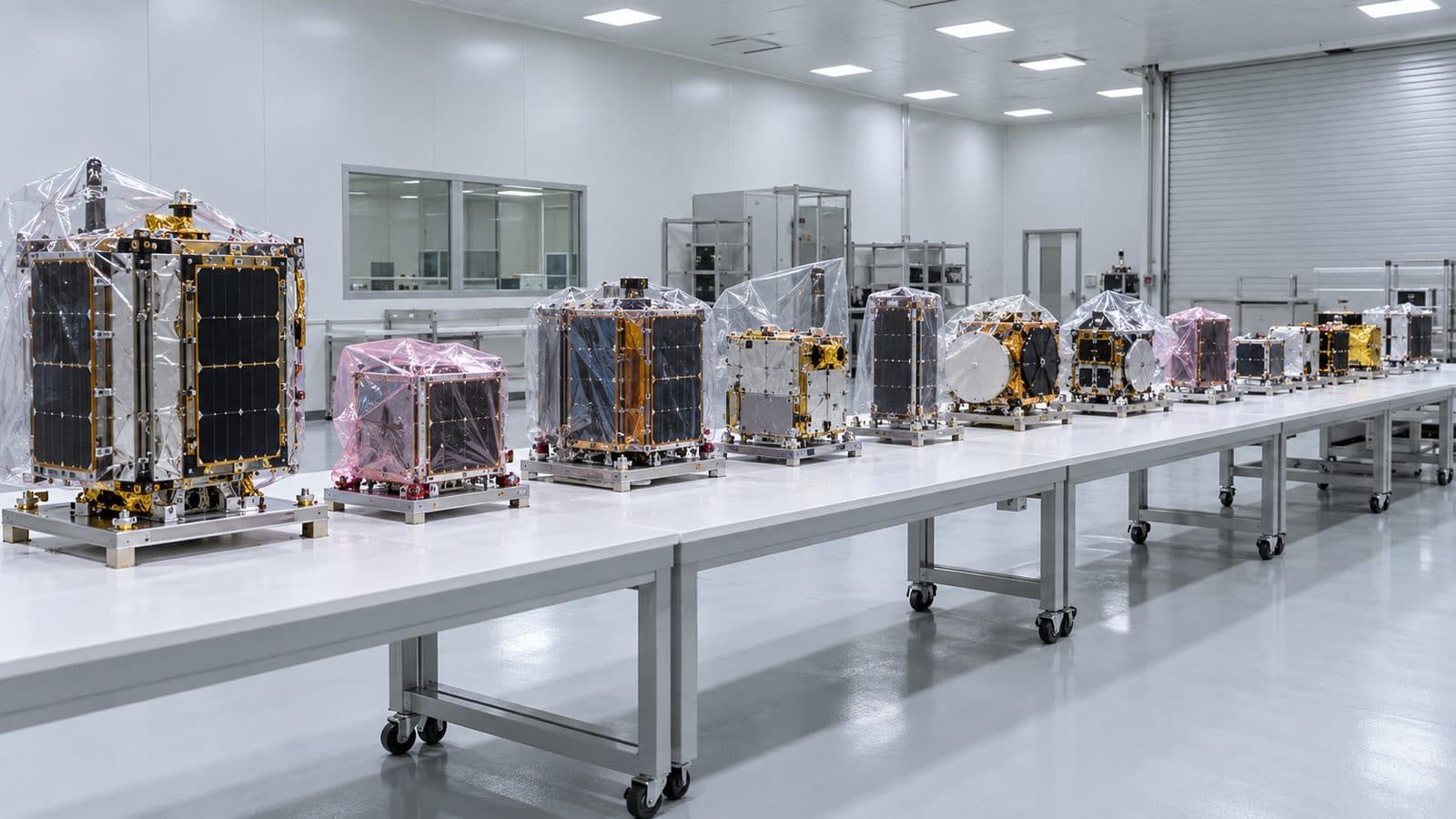
Here is what the record supports. A Falcon 9 carrying Transporter-18 lifted off from Vandenberg on 1 October 2026. On board was a single Project Suncatcher prototype, built with Planet, carrying four TPUs. The same day, Travis Beals, who leads the project, wrote on Google’s blog that “we confirmed contact with the satellite and it is operating as expected.” Planet says it has begun commissioning, the checks every new satellite goes through before real work.
The plan, as NPR reported it, is for the chips to run a version of Gemma “for 15 minutes at a time”, answering simple queries, over a one-year mission. NPR and TechCrunch both tie the short bursts to heat limits. Two more satellites are planned for next year to test laser links between them, which is the piece a real constellation would depend on.
What nobody has published: that a model has actually run in orbit, how fast it answers, how much it can compute, the orbit’s altitude, or what the mission cost. Nor is this the first AI computer in space. Starcloud’s Starcloud-1 carried an Nvidia H100 into orbit in November 2025, and the company says it trained a small model and ran Gemma there, per CNBC. The accurate “first” is narrower. Planet calls it the “first-ever test of Google’s Tensor Processing Units (TPUs) in space.”
Six Layers Under One Small Satellite
Physics: sunlight is the easy part
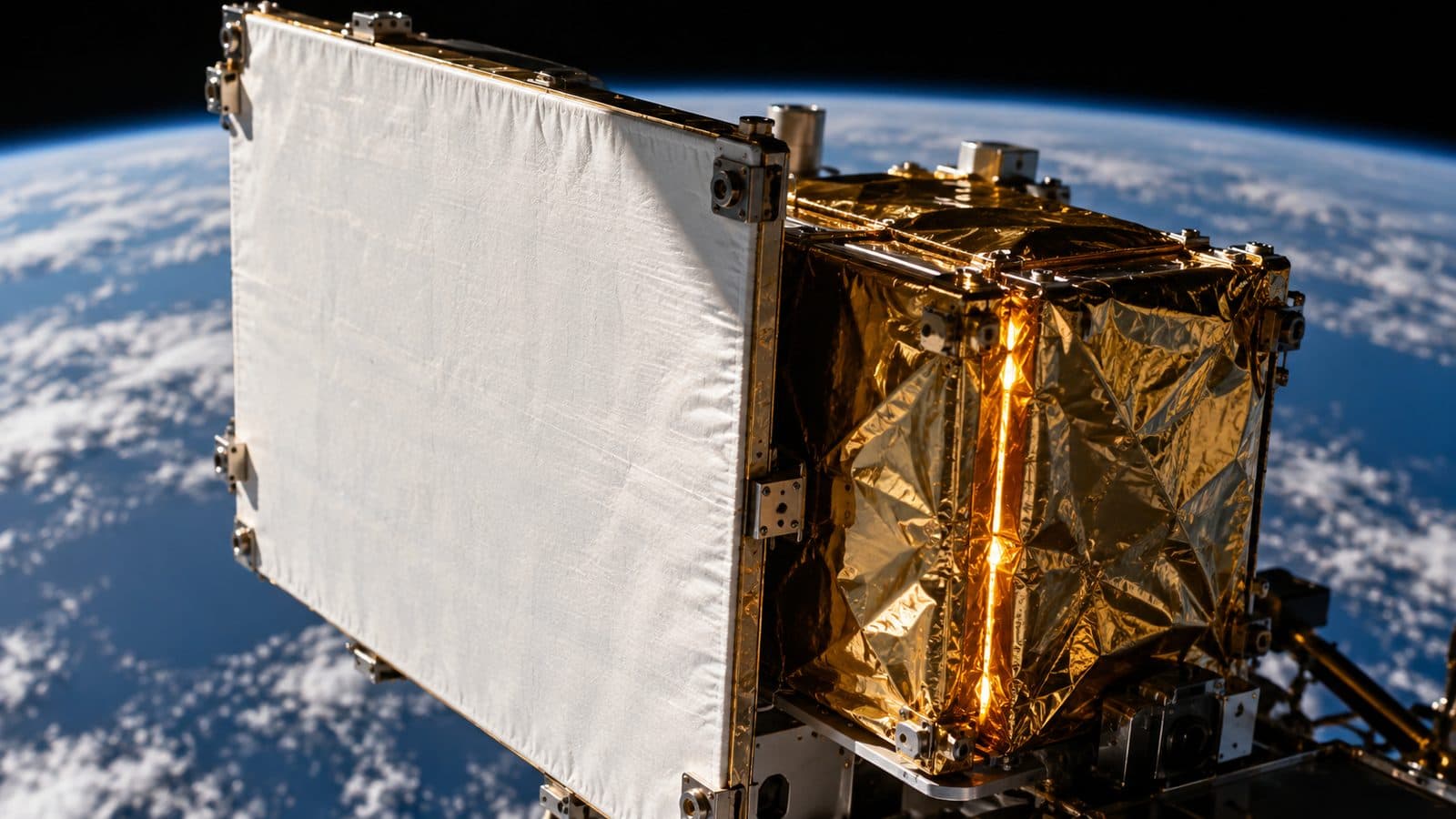
The hard problems are radiation, heat and repair. Charged particles in orbit flip bits and slowly wear chips out. In ground tests, Google’s team fired a particle-accelerator beam (67 MeV protons, a stand-in for space radiation) at its Trillium-generation TPUs. Radiation dose is measured in rad; the chips’ high-bandwidth memory showed errors after about 2,000 rad, with no outright failures up to 15,000. A shielded five-year mission, the team estimates, would absorb about 750 rad, well under the point where errors appeared.
Heat is the stubborn one. In a vacuum there is no air to blow across a chip, so every watt has to leave as radiation from a panel, and Beals told NPR the radiators are among the heaviest parts of the design. There is also no repairing anything; a fix means another launch.
Which work belongs up there
There are two very different jobs hiding under “AI in orbit”. One is processing data that is born in space: a satellite photographs a forest fire, works out where the fire line is, and sends down a few kilobytes of conclusions instead of gigabytes of raw images. That is the kind of imagery Planet already collects every day. The other is sending your chatbot question up to a satellite and back. That’s a data center business, and it only works if orbit beats the ground on cost. Suncatcher’s first year is designed to answer an earlier question: whether the chips stay alive and compute at all.
Communications: why this is not a base station
This is where the “base station in space” idea gets tangled in. A base station’s value is coverage: it relays signal back and forth, all the time, to whoever is underneath. Orbital compute’s value runs the other way, sending less by doing the work on board. Think of a satellite that can see and think as an observer who reads the whole file before reporting, and a base station as a relay that never stops talking. Someday the two may be joined. On 1 October, nobody launched a relay for your phone.
Industry: three companies, three kinds of revenue
Each company in this launch earns money differently: SpaceX from launch capacity, Planet from building and running satellites, and Google, eventually, from showing that its chips can run models in orbit. If an orbital data center is ever built, whoever controls the piece that is hardest to replace will have the strongest hand. SpaceX already has ambitions of its own: it asked the US Federal Communications Commission in January for an orbital data center constellation of “up to 1 million” satellites, as Via Satellite reported. Our SpaceX IPO breakdown covers how much of its valuation story leans on that idea.
Risk: the headline is the likeliest failure
A prototype failing would be normal. Reporting “sent to orbit” as “the age of space data centers has begun” is the slip this story invites. There are slower risks too. Chips in orbit are still subject to export controls, add to the debris problem, and need someone legally answerable for what the satellite does. And the economics are far off. Google’s own study assumes launch prices below $200 a kilogram by the mid-2030s; Beals told NPR, “I don’t see this being cheaper in the next five years.” TechCrunch’s reading of the paper implies roughly 1,800 Starship launches to get there (it first reported 1,600, then corrected the figure).
For everyone else
Your chatbot isn’t going to route through this satellite. What is worth remembering is the direction. The cost of AI is pushing compute to look for new places to live, wherever power is cheap, land is available and heat is easy to lose, and orbit is the furthest-out option anyone is seriously testing. This launch turned it from a research paper into one working satellite.
How to Read the Next Space Data Center Headline
- Count the parts. How many chips, which model, whose satellite, whose rocket, prototype or paid service. If any of those is still a plan, don’t forward it as “built”.
- Separate three verbs. Launched means it reached orbit. Running means the model actually computed up there. Serving means an outsider can pay to use it. Suncatcher has the first and is working toward the second; the third hasn’t appeared.
- If you build AI products on the ground, your cloud bill doesn’t change this year. What changes is a long-term question: as power and land get dearer, will some computing stay where the data is created, whether that’s a factory floor, a phone, or an orbit? We help teams plan for that kind of shift in our IT infrastructure work.
Thinking Data Center or Smarter Camera?
I don’t think 1 October started an era, and the people who built the satellite don’t say it did. It started a test, with a clear question attached. Over the next year we should learn whether four TPUs can live through radiation and heat while running a model in bursts. The more interesting argument is what orbit is for. Is the prize a thinking data center in the sky, or simply satellites that do their own homework and send down less raw data? My bet is that the second pays for itself long before the first does.
Further reading, by search term: Project Suncatcher Joule paper; Google TPU radiation test proton beam; Starcloud-1 Nvidia H100 in orbit; IEA data centre electricity 2030.
FAQ: Project Suncatcher
What is Google’s Project Suncatcher?
Project Suncatcher is a Google research project, announced in November 2025, that studies whether solar-powered satellites carrying Google’s TPU AI chips could one day work together as a data center in orbit. On 1 October 2026 its first prototype, a single satellite built with Planet Labs and carrying four TPUs, launched on SpaceX’s Transporter-18 rideshare mission. Google says it has contact with the satellite and that it is operating as expected.
Has the Suncatcher satellite run Gemma in orbit yet?
Not as far as anyone has published. NPR reported that the four TPUs will run a version of Google’s Gemma model for 15 minutes at a time to answer simple queries, during a one-year mission. As of 10 October 2026, Google and Planet had confirmed launch, contact and commissioning, but had not announced that a model had run.
Is this the first AI computer in space?
No. Starcloud’s Starcloud-1 satellite, carrying an Nvidia H100, launched in November 2025, and Starcloud says it trained a small model and ran Gemma in orbit in December 2025. What is new with Suncatcher is that it is the first test of Google’s TPUs in space, in Planet’s words, and Google’s first hardware step toward its own orbital design.
Is Project Suncatcher a space data center or a space base station?
Neither yet. It is one prototype satellite with four AI chips, testing whether they survive and compute in orbit. A data center would need many satellites linked together; Google plans two more satellites in 2027 to test laser links between them. A base station in space, like a satellite that relays phone or internet signals, solves a different problem: moving data, not processing it.
When could orbital AI data centers be cheaper than ones on Earth?
Not soon. Google’s design study assumes launch costs fall below $200 per kilogram by the mid-2030s, and Suncatcher’s lead, Travis Beals, told NPR he does not see it being cheaper in the next five years. TechCrunch’s reading of the peer-reviewed paper implies about 1,800 Starship launches to get there.