

On June 12, 2026, SpaceX became the biggest initial public offering in history. It sold more than 555 million shares at $135, raised roughly $75 billion, and closed its first day up 19% at about $161 — a market value north of $2 trillion before the week was out. Yet the most interesting part of the SpaceX IPO isn't the size of the raise. It's what the prospectus quietly reveals about how a rocket company convinced the market to price it like an artificial intelligence company.
What Did SpaceX Actually File?
SpaceX filed its S-1 prospectus publicly with the SEC on May 20, 2026, after a confidential draft in April, then listed on Nasdaq under the ticker SPCX on June 12 ([Reuters via Yahoo Finance](https://finance.yahoo.com/markets/article/spacex-files-ipo-prospectus-offering-a-peek-into-its-finances-205406189.html), 2026). The raise of roughly $75 billion made it the largest IPO ever recorded, more than 10 times the first-day volume of 2026's next-biggest listing.
The prospectus is where a private company finally has to show its numbers. For SpaceX, that meant three things investors had never seen in detail: real segment financials, the true scale of Starlink, and a valuation story built around AI. It also confirmed the governance structure — Elon Musk holds Class B shares carrying 10 votes each, so public Class A holders own a slice of the economics but almost none of the control.
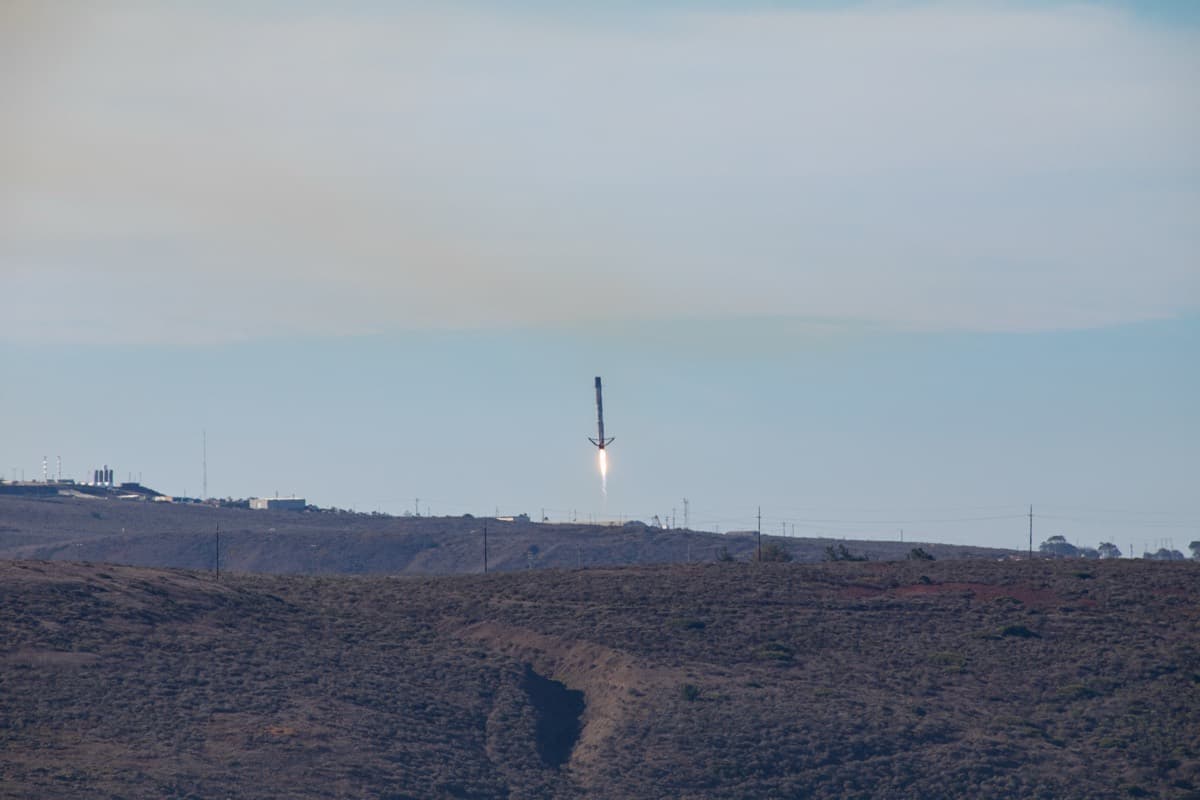
Here's the tension the S-1 has to manage. On reported results, SpaceX lost money: a GAAP net loss of $4.9 billion in 2025 and a $2.6 billion loss from operations, against $6.6 billion of adjusted EBITDA ([Morningstar](https://www.morningstar.com/stocks/6-charts-spacexs-s-1-financials), 2026). A company losing billions doesn't get to a $2 trillion price on today's earnings. It gets there on a story about tomorrow — and the prospectus is engineered to tell that story convincingly.
How Are SpaceX's Three Business Segments Split?
The S-1 breaks SpaceX into three reporting segments — Space, Connectivity, and AI — and they could not look more different. In 2025, Connectivity (Starlink) delivered $11.4 billion of the company's $18.7 billion in revenue, about 61% of the total ([CNBC](https://www.cnbc.com/2026/05/21/spacex-starlink-growth-profit-nasdaq-ipo.html), 2026). One segment prints cash. The other two burn it.
Read those three cards together and the shape of the company becomes obvious. Starlink is the profit engine. Rockets are a strategic cost center that makes Starlink possible. And AI is the newest, hungriest arrival — a business SpaceX brought in through xAI that loses roughly two dollars for every dollar it earns. So why does the prospectus lean so hard on the segment that loses the most?
Why Is Starlink the Real Engine, Not the Rockets?
Because Starlink is the part that actually works as a business. By the end of Q1 2026, SpaceX had deployed more than 9,600 Starlink satellites and served 10.3 million subscribers, with the Connectivity segment generating $3.26 billion in that quarter alone on $1.19 billion of operating income ([CNBC](https://www.cnbc.com/2026/05/21/spacex-starlink-growth-profit-nasdaq-ipo.html), 2026). This is the cash flow underwriting everything else.

One number in the filing rewards a second look. Average revenue per Starlink subscriber fell about 18% to roughly $81 a month between 2023 and 2025, even as the subscriber base quadrupled. That's not weakness — it's a deliberate trade. SpaceX is lowering the price to flood the globe with users, betting that scale and near-total coverage matter more than squeezing each account. It's the same reusable-rocket logic — drive the unit cost down, win on volume — applied to broadband.
Why Does the Launch Business Lose Money on Purpose?
The Space segment brought in about $4 billion in 2025 yet posted an operating loss, because SpaceX spent nearly as much — close to $3 billion — developing Starship ([Via Satellite](https://www.satellitetoday.com/finance/2026/05/20/spacexs-ipo-filing-gives-first-look-into-companys-financials/), 2026). On paper that looks like a failing division. In context, it's the most important investment the company makes.
Falcon 9's reusable boosters already gave SpaceX the cheapest, most frequent access to orbit on Earth — the reason Starlink could be deployed at all. Starship, now on its third-generation V3 design, is meant to cut the cost of putting mass into orbit by another order of magnitude. Every dollar of "loss" in the launch segment is really a dollar spent lowering the price of the ramp that all three businesses ride into space. Kill the R&D and the segment turns profitable overnight — and the whole growth story stalls.
What Is the $28.5 Trillion Number in the Prospectus?
The boldest slide in the S-1 is a total addressable market of $28.5 trillion, and 93% of it is AI ([Fortune](https://fortune.com/2026/05/20/spacex-ipo-filing-s1-total-addressable-market-make-life-multiplanetary/), 2026). SpaceX splits that opportunity across space-enabled solutions ($370 billion), Starlink broadband and mobile (about $1.6 trillion combined), and AI — which it sizes at $26.5 trillion. That AI figure is where the real valuation story lives.
How SpaceX Sizes Its $28.5 Trillion Market
- Enterprise applications — $22.7TThe single largest line, and the most speculative: software and services that AI could touch across the entire economy. It alone is ~80% of the whole TAM.
- AI infrastructure — $2.4TCompute, networking, and power for AI workloads — the layer SpaceX argues Starlink and orbital data centers could serve.
- Connectivity — ~$1.6TStarlink broadband (~$870B) plus satellite-to-cell mobile (~$740B): the market SpaceX already leads and monetizes today.
- Space-enabled solutions — $370BLaunch, national-security, and crew work — the original business, now the smallest slice of the claimed opportunity.
Notice what just happened. The company that makes its money from broadband and rockets has framed itself as an AI infrastructure provider that also happens to launch things — with Starlink's low-latency network and future orbital data centers as the backbone for enterprise AI. Analysts have been blunt that these are aggressive estimates, designed to align SpaceX with the AI-infrastructure frenzy ([Fortune](https://fortune.com/2026/05/20/spacex-ipo-filing-s1-total-addressable-market-make-life-multiplanetary/), 2026). A $22.7 trillion "enterprise applications" market is not a forecast anyone can underwrite. It's a direction of travel — and for a growth IPO, direction is what gets priced.
Why Did Musk Take SpaceX Public at All?
For years Musk resisted an IPO, precisely because a public company answers to capital markets and public opinion every quarter — pressure he'd rather avoid while building decade-long projects. That stance changed in 2026. The reason is written into the segment numbers: an AI business losing $6.4 billion a year and a Starship program burning $3 billion need an enormous, permanent source of capital, and public markets are the deepest pool there is.
That's the trade at the heart of the largest IPO in history. SpaceX gave up some independence to fund the two bets — cheap heavy-lift launch and space-based AI — that it believes are winner-take-all. Whether the $28.5 trillion story pays off is unknowable today. What's certain is that a genuine cash engine in Starlink is what made the market willing to fund the gamble.
What the SpaceX IPO Teaches Businesses About Positioning
You don't need a rocket company to use the lesson buried in this prospectus. SpaceX raised a record sum by pairing a proven profit engine with a much larger story about where it's going — and by framing itself in the category investors were most eager to fund in 2026. The financials earned trust; the AI narrative set the multiple. Neither works alone.
The same principle scales down to any company raising money or repositioning a brand. A story with no cash engine behind it reads as hype; a cash engine with no forward narrative gets valued as a commodity. The work is connecting the two honestly — which is exactly the kind of strategic positioning we help businesses get right before they take a message to investors, customers, or the market. If you're thinking about how AI reshapes your own category, our explainer on physical AI is a useful companion read.
Frequently Asked Questions
When did SpaceX IPO and at what valuation?
SpaceX listed on Nasdaq under ticker SPCX on June 12, 2026. It priced at $135 a share, raised roughly $75 billion — the largest IPO on record — and closed its first day up about 19% near $161, giving it a market capitalization above $2 trillion.
How does SpaceX actually make money?
Mostly from Starlink. The Connectivity segment produced $11.4 billion of SpaceX's $18.7 billion in 2025 revenue — about 61% — and $4.4 billion in operating profit. The launch business added ~$4 billion but ran at a loss due to Starship R&D, and the AI segment lost $6.4 billion.
What are SpaceX's three business segments?
The S-1 reports three: Space (Falcon and Starship launch plus crew and cargo services), Connectivity (Starlink broadband and satellite-to-cell mobile), and AI (the acquired xAI/Grok business). Connectivity is the profit driver; Space and AI both operate at a loss today.
Why is SpaceX's IPO tied to AI?
Its prospectus claims a $28.5 trillion total addressable market, with 93% attributed to AI — including a $22.7 trillion "enterprise applications" line. SpaceX positions Starlink's network and future orbital data centers as AI infrastructure, a framing that supports a far higher valuation than launch and broadband alone.
Is SpaceX profitable?
Not on a GAAP basis. SpaceX reported a $4.9 billion net loss and a $2.6 billion operating loss in 2025, offset by $6.6 billion of adjusted EBITDA. Starlink is solidly profitable, but heavy Starship and AI spending pushed the overall company into the red.
The Bottom Line
The SpaceX IPO is two stories stapled together. One is a disciplined broadband business that quietly became a $11 billion, cash-generating giant. The other is a $28.5 trillion bet on cheap launch and space-based AI that may or may not arrive. The prospectus works because the first story pays for the right to tell the second.
For anyone reading it as an investor — or as a founder studying how to price ambition — the takeaway is the same. Records get set when a real engine and a big narrative reinforce each other. Pull them apart and you're left with either a commodity or a pitch deck.
Connecting Your Numbers to a Bigger Story?
Pine & Birch helps businesses translate what they actually do into a position the market believes — the same engine-plus-narrative logic behind the biggest IPO in history, applied at your scale.
Book a Free Consultation