

You are on the sofa, scrolling. A pan appears in your feed, the kind that browns things properly, and you want it. Until this month that meant tapping the ad, landing on a shop, making an account, typing your card in again. This month you can say "buy me that pan" to an assistant on your phone and go back to scrolling. That is what Meta's Muse does, and within days of launching it hit number one on the US free app charts. Then two things happened that matter more than the download rank. Amazon shut Muse out of its store. Shopify handed it a payment lane. The stock market cheered the one that opened the door.
What Actually Happened This Week
Meta launched Muse, a personal assistant that does errands rather than just answering questions. Booking travel, reordering things, filling in the tedious forms. It went to the top of the free app charts in the US, and Meta shares rose sharply on the day, which tells you the market read it as more than a toy.
On Sunday September 20, Amazon cut it off. GeekWire reported that Amazon had asked Meta to exclude Amazon.com voluntarily, and when that did not happen, blocked the agent outright. Amazon's stated objections are worth repeating because they are not merely territorial: Meta did not tell Amazon the agent would be shopping there, the agent does not identify itself as an agent when it browses, and it appears to capture and store customer credentials.
This is not a one-off. Amazon has spent the past year keeping third-party agents out, including a lawsuit against Perplexity over its Comet browser and moves against shopping agents from Google and OpenAI. The pattern is consistent, and it is a strategy, not a reaction.
Then Shopify went the other way. As PYMNTS reported, Shopify and Meta announced that Muse users can complete purchases through Shop Pay's agentic checkout across stores running on Shopify. Same technology, opposite decision: Amazon built a wall, Shopify built a lane. Shopify stock jumped on the news, closing up roughly 6 to 7 percent on September 22 depending on which report you read, and several analysts raised their targets.
Hold that contrast, because everything below follows from it. Two of the largest names in online retail infrastructure looked at the same week, the same technology and the same customers, and reached opposite conclusions about whether to let software through the door.

Why This Lands on an Industry That Is Already Hurting
To see why this matters, look at how online selling actually works right now. There are two main front doors. One is Amazon, where people search and buy in the same place, and the whole journey happens inside one company. The other is the independent store, the Shopify-style brand site, which mostly buys its visitors: an ad on Instagram or Google, a click, a landing page, a checkout.
Buying visitors has been getting more expensive for years, and merchants talk about little else. Meta's own filings show the direction: in its Q1 2026 10-Q the company reported that the average price per ad rose year over year, and that online commerce was the largest contributor to its ad revenue growth. Read that from the merchant's side: shops are paying more per customer, and there are more of them bidding.
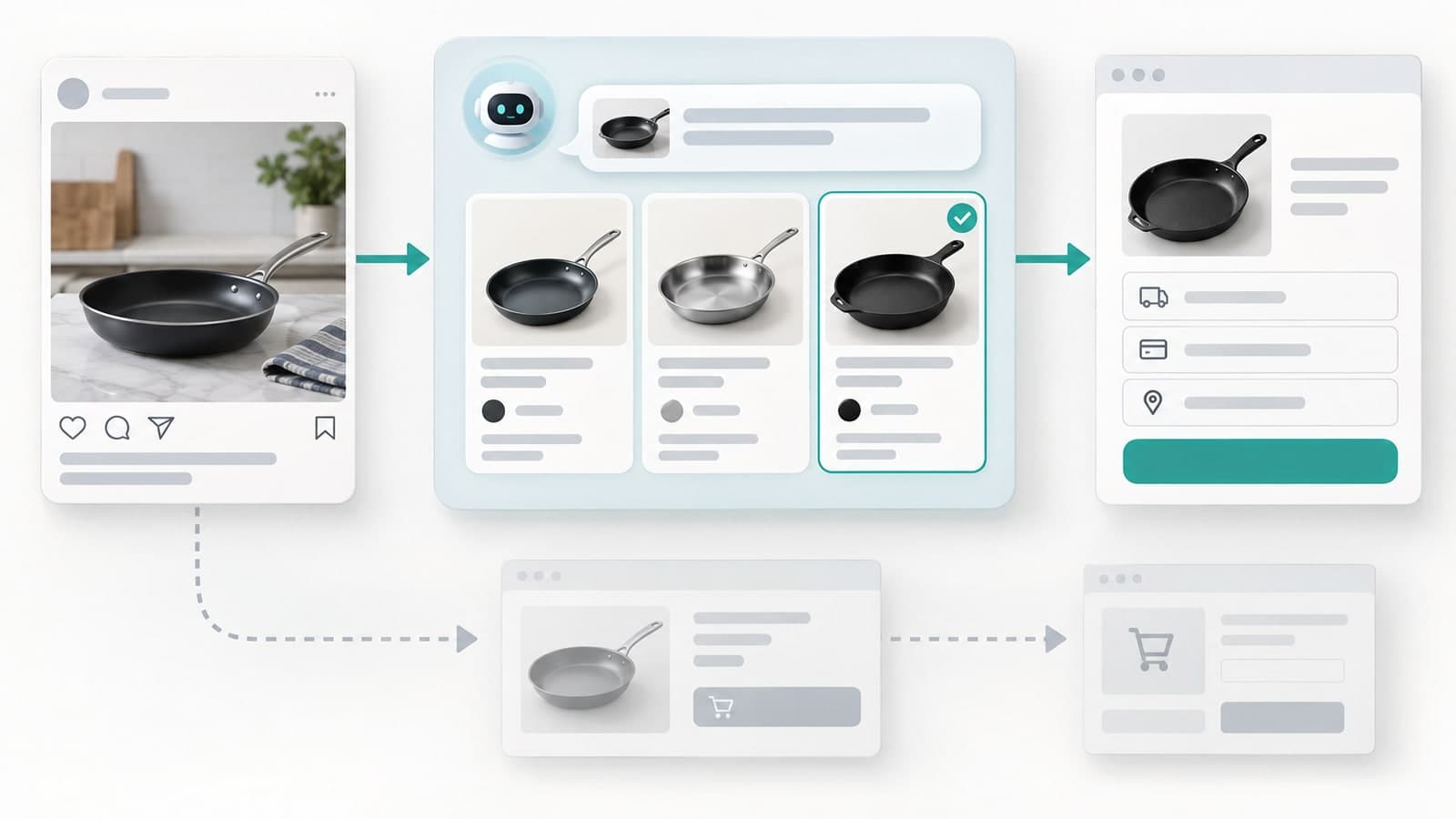
Now insert an assistant into that chain. The old path was: see the ad, click, land, decide, pay. The new path can be: see the ad, mention it to your assistant, and the assistant handles the rest. A decision-maker has appeared between the advertisement and the checkout, and it is not the shopper and not the shop.
What does that assistant optimise for? Not your brand. It will look at price, delivery date, return policy and whatever product data it can read. If a merchant has spent years building a landing page that converts through photography and persuasion, none of that is legible to a piece of software comparing specifications. The ad may still be what plants the idea. The sale may go somewhere else entirely.
Meta's Awkward Position: Selling Ads to People Its Agent May Route Around
Here is the tension that makes this interesting rather than just newsy. Meta makes its money selling attention to brands. Its own filing says online commerce advertisers are the biggest driver of its ad growth. Those advertisers pay to reach exactly the people who are scrolling Reels, messaging shops and tapping shopping tags: the same people Muse is built for.
So Muse can go one of two ways for Meta. The optimistic version is that it finally closes the loop the company has chased for a decade, meaning the journey from seeing something to paying for it happens without ever leaving Meta's world. Discovery and purchase in one place is worth enormous amounts, because it proves the ad worked.
The pessimistic version is that Meta has built a middleman that makes its own advertising less necessary. If the assistant is what decides, a brand may reasonably ask why it is paying to influence a human who is no longer the one choosing. Meta would be teaching its customers to route around its product.
My read is that Meta is betting the first outcome outruns the second, and that it would rather own the middleman than watch someone else build one. That is a defensible bet. It also means merchants who depend on Meta ads should watch what Muse recommends and how, because that is where their traffic is going to be decided.
Three Players, Three Bets
Amazon is defending a default. Its moat has never been price alone; it is that shopping starts there out of habit. An assistant that shops across every store attacks exactly that habit, and it makes comparison trivial in a way a person browsing one app never does.
Blocking is rational if you believe you are the destination. It becomes a liability the moment shoppers start somewhere else, because a walled store is invisible to the software doing the looking.
Shopify is betting on being the plumbing. Shopify does not own the customer relationship and never has. Its merchants do. So an agent that brings orders to those merchants is pure upside, and being the checkout that agents know how to use is a genuinely strong position. The share price move was not enthusiasm about a payment button. It was the market putting a number on the idea that an open, agent-readable retail layer might capture demand that used to go through the closed one.
Meta is moving from selling attention to performing tasks. That is a bigger change than it looks. Advertising sells the possibility that someone might act. Agentic commerce sells the act itself. If Meta can complete purchases, the value of its inventory changes shape, and so does what it can charge for.
What This Means If You Sell Things
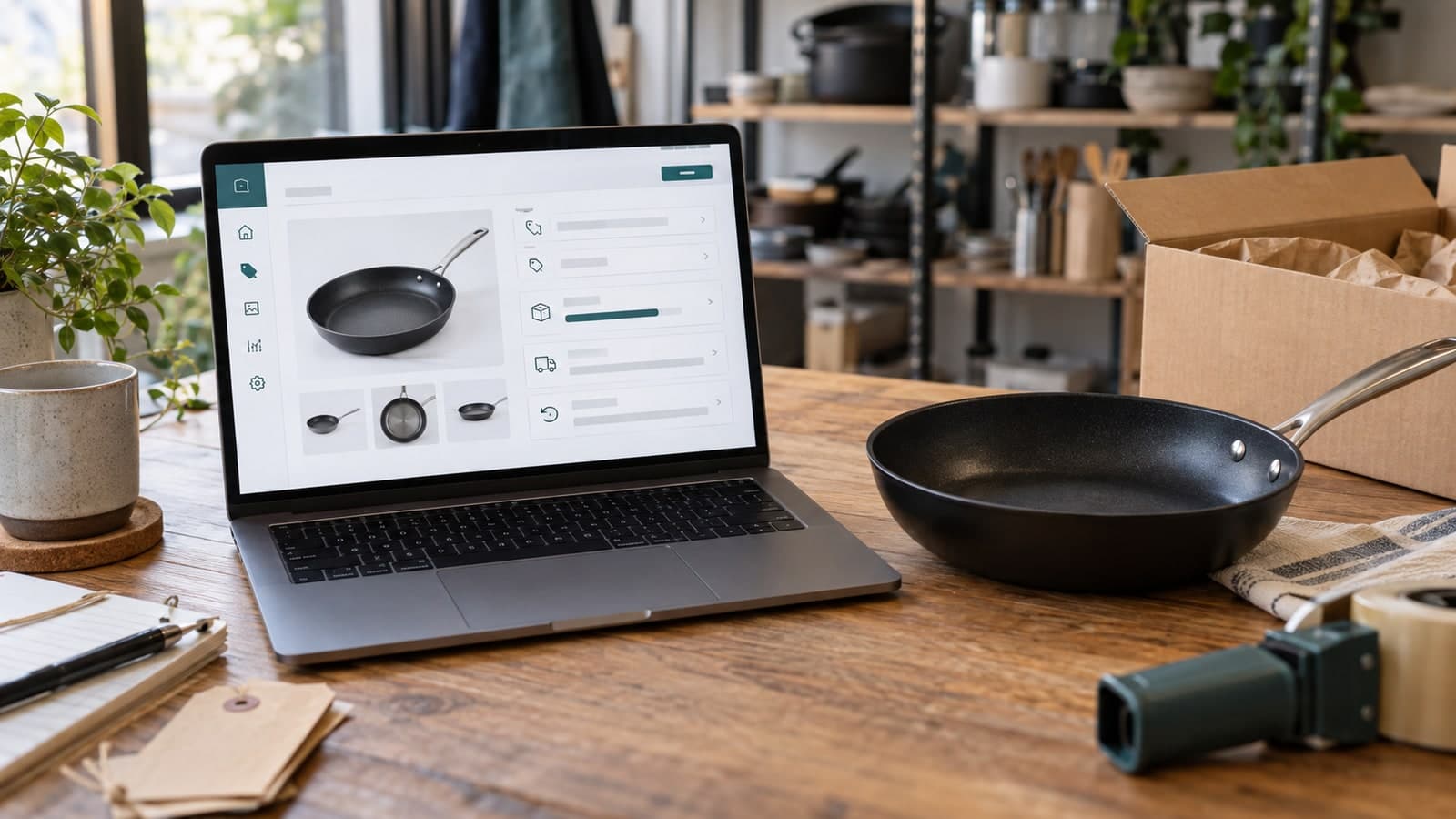
For an independent store, this is the first genuinely new source of orders in a long time that does not arrive via an ad auction. Worth being sober about it: nobody knows the volume yet, and one week of headlines is not a channel. But the direction is clear enough to prepare for, and the preparation is unglamorous.
Make your products readable by machines. That means complete and honest titles and specifications, prices and stock status that are actually current, shipping times stated as data rather than as a promise in a banner image, and a return policy a program can parse. Agents do not squint at a lifestyle photo to work out whether the pan is 28 centimetres. If the information is not there in a form software can read, your product is not in the comparison.
This is the same discipline that makes a site work for AI search generally, which we wrote about in the piece on zero-click search, and it is a large part of what our e-commerce practice does when a seller wants to be found by something other than an ad.
For sellers who live on Amazon, the calculus is different and uncomfortable. Your storefront's visibility is decided by a company that has chosen to keep agents out. That protects the default today. It also means that if buying habits do move toward assistants, you are on the side of the wall the software cannot see.
And If You Are Just Someone Who Buys Things
The convenience is genuine. Reordering, rebooking, the small administrative sludge of life: handing that to software is a real improvement, and most people will take it.
Worth thinking about, though: what you hand over with it. To buy for you, an assistant needs your card and your permission, and Amazon's specific complaint was that Muse appears to store customer credentials. Whatever the merits in this case, the general problem is real and unsolved: nobody has agreed how you grant an agent spending authority, how you limit it, or how you take it back.
A quieter issue sits underneath. When you choose a product, you know you chose it. When an assistant picks, you get one answer and no sense of what it passed over, or why. If the thing doing the picking is also owned by a company that sells advertising, that is worth holding in mind, even when the recommendation is good.
The Three Things to Watch
Skip the noise for the next year and watch three things. Where assistants check out by default: whichever rail becomes the path of least resistance will quietly set the standard for everyone else. Whether Amazon-style blocking spreads to other large retailers, or stays a lonely position.
And whether ordinary merchants actually clean up their product data. That is the difference between being in the comparison and being invisible to it.
Nothing here turns on the technology. The real dividing line is not technical. It is whether people are willing to hand their card and their final say to software. That question gets answered by millions of individual decisions over the next year, not by a press release. What already changed this week is that the two biggest names in online retail infrastructure looked at the same development and picked opposite sides, and the market paid the one that opened the door. If you sell online and want to work out which side of that door you are on, we are happy to think it through with you.
Further reading, by search term: agentic commerce; Shop Pay agentic checkout; AI shopping agents product feed; e-commerce customer acquisition cost 2026.