
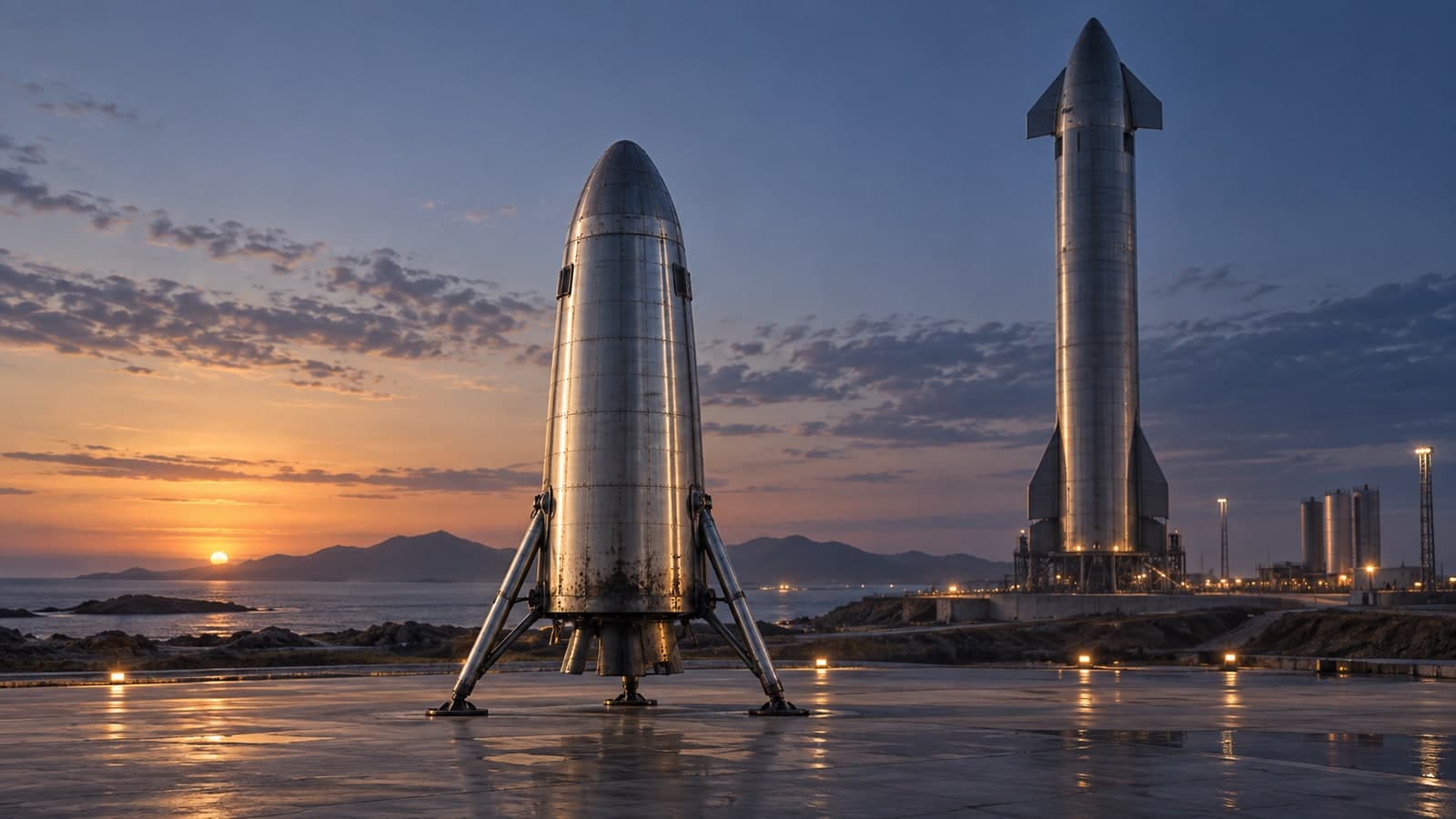
On September 8, 2026, Stoke Space announced the first close of a $1 billion Series E, co-led by Point72 Ventures and Spark Capital, taking the company's total funding to about $2.3 billion. Its rocket, Nova, has not flown. Its first orbital launch is now targeted for early 2027, a year later than the company said in October 2025. And the firm it is most often compared to, SpaceX, went public in June at a valuation near $1.75 trillion after launching Falcon 9 a record 165 times in 2025. So why does a rocket company with no orbital flight command a reported $10 billion valuation? Because it is betting on the one thing SpaceX still hasn't done: bring a second stage back from orbit and fly it again.
What Stoke Space Actually Raised
Unusually for a private round, the facts are clean, because the company published them itself. In its September 8, 2026 announcement, Stoke Space said the $1 billion Series E was an initial closing, co-led by Point72 Ventures and Spark Capital, with General Innovation, Glade Brook Capital, US Innovation Technology, Washington Harbour Partners, Woven Capital and Y Combinator participating, and that total capital raised now stands at $2.3 billion. The money goes to reuse technology, manufacturing, test, launch and recovery infrastructure for what the company calls high-cadence operations.
Valuation was not disclosed. Reporting after the close put it at roughly $10 billion, and Benzinga noted on September 9 that the company's secondary-market price had risen about 497% in a year. Treat the $10 billion as reported rather than confirmed. What is confirmed is the pace: $510 million in October 2025, a billion eleven months later, for a vehicle still on the ground.
One detail in the timeline deserves more attention than it got. At the October 2025 round, Stoke described Nova's first flight as coming in early 2026. The September 2026 release says early 2027. A one-year slip on a first launch is normal in this industry, as Rocket Lab and Relativity are both demonstrating this year, but it is the single most important number for anyone trying to value the company, and it moved.
Why Full Reuse Is the Only Cost Floor That Matters
Stoke's co-founder and CEO Andy Lapsa put the thesis in one sentence in the funding release: every mature transportation system is built around fully reusable vehicles, and it is the only way to reach the cost floor while scaling availability. The comparison he is drawing is to airliners and trucks. Nobody throws away an aircraft after one flight, and if they did, a ticket would cost what a rocket launch costs.
Falcon 9 got halfway there and changed the industry doing it. The booster lands and flies again; the upper stage burns up on every mission. That is why SpaceX's published list price for a Falcon 9 sits near $70 million while its rideshare pricing as of February 2026 starts at $350,000 for 50 kilograms to sun-synchronous orbit, or $7,000 per kilogram. Cheap by the standards of 2010. Still far from an airline economics of a few dollars per kilogram of cargo.
Physics makes the upper stage the hard half. It reaches orbital speed, so it must survive re-entry heating that the booster never sees, and every kilogram of heat shield it carries is a kilogram of payload it cannot. SpaceX's answer on Starship is a stainless-steel ship covered in thermal tiles that belly-flops through the atmosphere. Stoke's answer is the interesting part of this whole story.
How Nova's Upper Stage Differs From Starship's
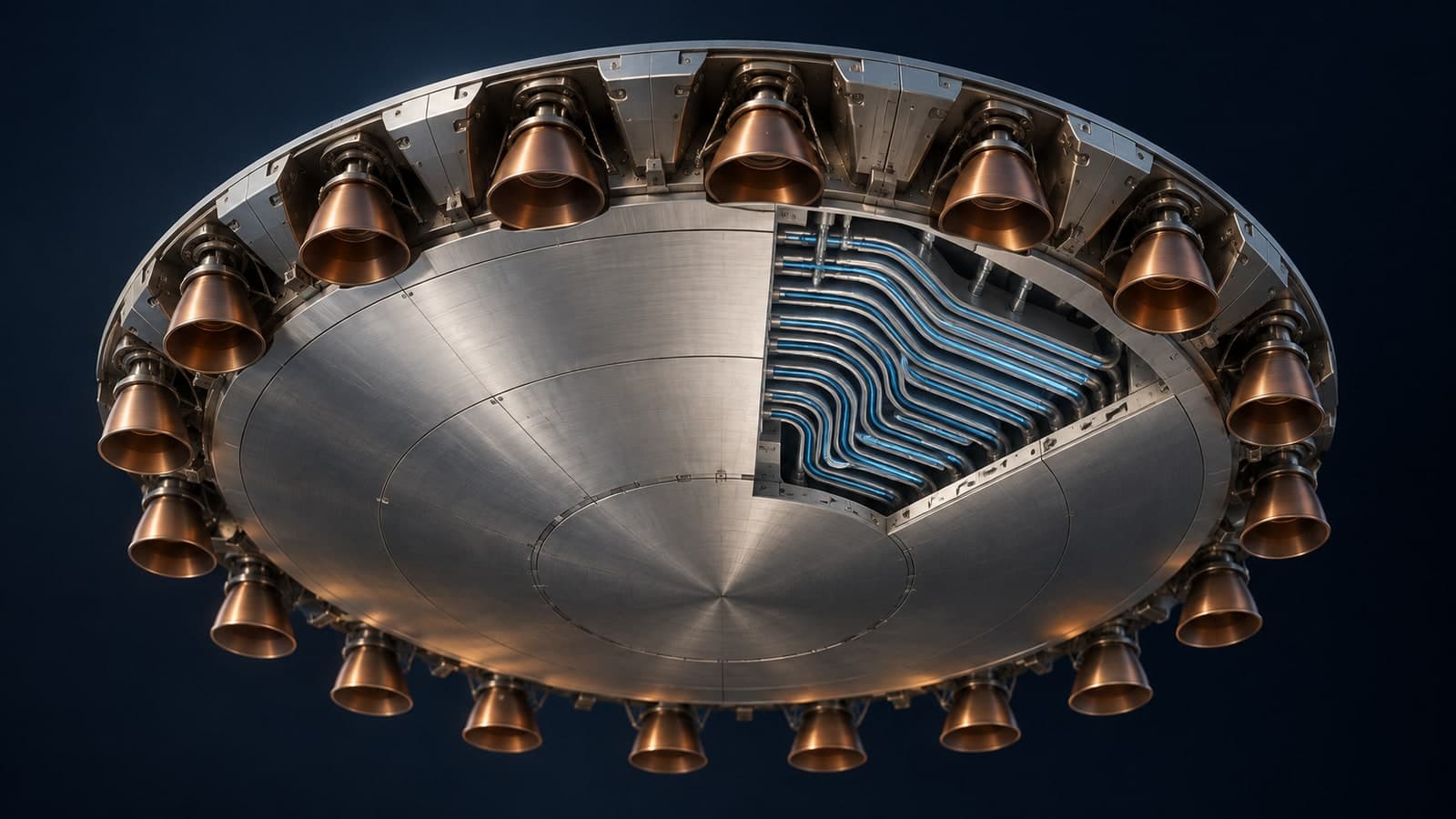
According to the published vehicle specifications, Nova's second stage burns liquid hydrogen and oxygen through an engine, Andromeda, with 24 thrust chambers arranged in a ring around a regeneratively cooled heat shield. The cryogenic propellant circulates through the shield during re-entry and carries the heat away, so there are no tiles to inspect, replace or lose. The stage comes down engine-first and lands vertically, the same way a Falcon 9 booster does.
That design has never been flown to orbit and back by anyone, and Stoke is candid that Pathfinder's first mission will carry a customer payload rather than attempt a full recovery. But the engineering logic is sound: tiles are the part of Starship that has caused the most visible trouble, and an actively cooled metal shield is how rocket engine nozzles have survived far higher temperatures for seventy years. Stoke is applying a solved problem to a new place.
Size matters here as much as the technology does. Nova Pathfinder is rated for about 3 tonnes to low Earth orbit with both stages recovered, or 7 tonnes expended, from a vehicle 40 metres tall. Nova Block 2, announced with the Series E, is designed for 15 tonnes reusable in a 5-metre fairing, with a first flight targeted for 2029. Starship is designed to carry 100 tonnes or more. These are different products for different customers, which is the first clue that "Stoke vs SpaceX" is the wrong frame.
SpaceX in September 2026: A Record Year, a $1.75 Trillion IPO, and Zero Recovered Ships
Precision about where the incumbent stands earns its space here, because the coverage tends to blur it. SpaceX flew Falcon 9 165 times in 2025, more than every other rocket on Earth combined, according to Space.com's year-end count. It priced its IPO at $135 a share on June 11, 2026 and listed on the Nasdaq as SPCX the next day, the largest offering in U.S. history per the Nasdaq newsroom, at a valuation of about $1.75 trillion. We covered the prospectus in our SpaceX IPO breakdown.
Starship is a different story. The flight record through Flight 13 on July 24, 2026 shows Super Heavy boosters re-flown, Booster 14 first on Flight 7 and again on Flight 9 in 2025, but no Starship upper stage ever caught by the tower or re-flown. Every ship has splashed down in the ocean or been lost. Flight 14, the first fully orbital Starship mission and the first to deploy Starlink V3 satellites, is scheduled for September 22 and plans no catch of either stage; a catch attempt may follow on Flight 15.
So the honest scorecard, as of this week, is below. It is the table most articles about "the reusable rocket race" skip, because it complicates the story.
The 2026 Reusable Rocket Scorecard
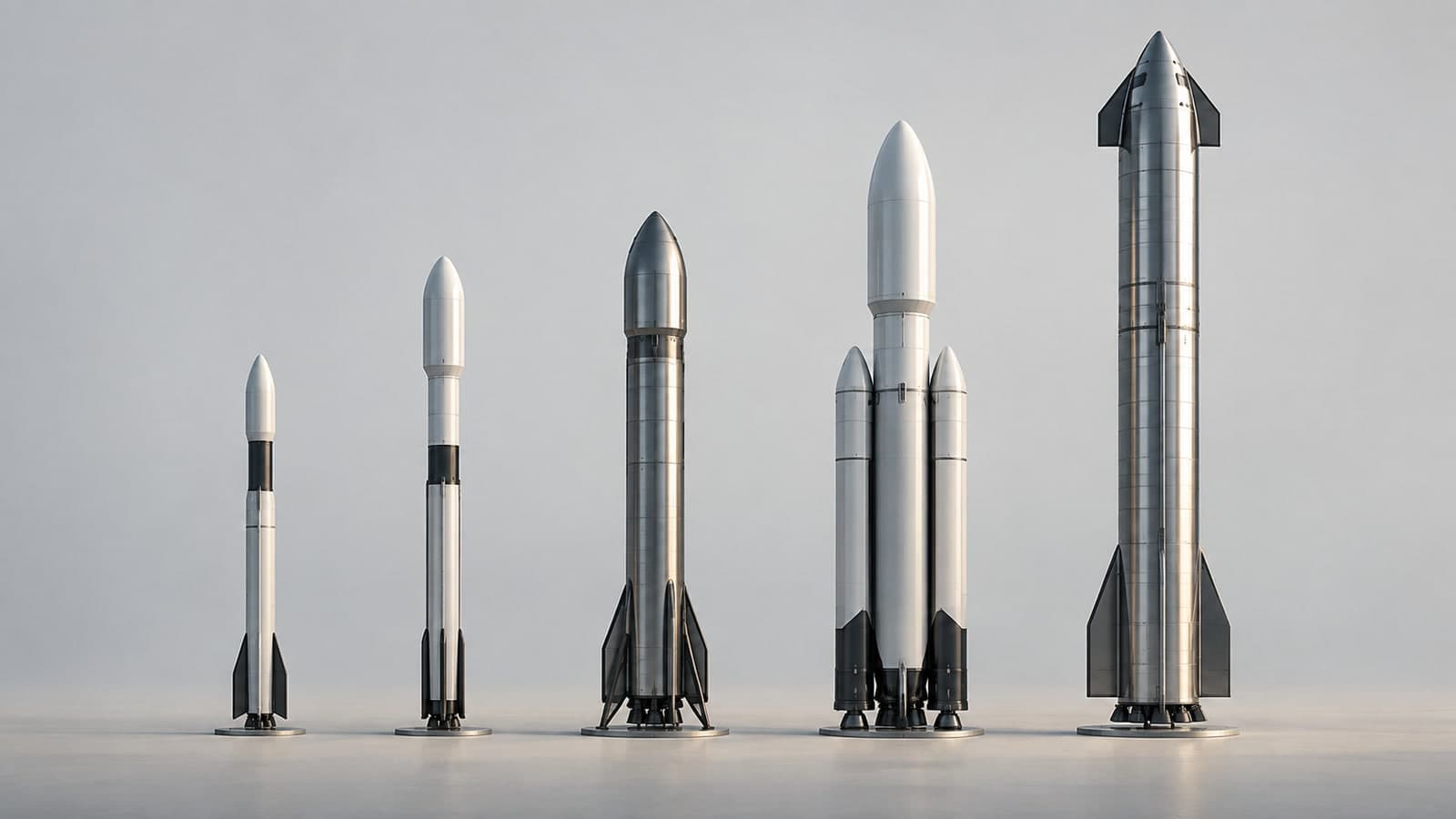
SpaceX Falcon 9: booster reuse routine, upper stage expended every flight. SpaceX Starship: booster re-flown, upper stage never recovered as of Flight 13. Blue Origin New Glenn: a booster landed after its second flight and was re-flown on April 19, 2026, the second rocket family ever to re-fly a booster on a customer mission, though the satellite reached the wrong orbit. LandSpace Zhuque-3: China's first commercial booster landing, in August 2026, before the stage tipped over. Rocket Lab Neutron: first flight targeted for the fourth quarter of 2026, a window Spaceflight Now described in August as narrowing. Relativity Terran R: late 2026 debut planned from the pad next door to Stoke's at Cape Canaveral. Stoke Nova: early 2027, the only one of the group designed for full reuse from day one.
Read that list again and notice what is missing. Nobody, anywhere, has brought an orbital upper stage home and flown it again. The whole race is still on the booster. Stoke's $1 billion is a bet that the second leg of the race is about to start and that a vehicle designed for it from the outset beats one adapted to it.
Why the Real Competition Is Not Starship
Stoke is a medium-lift company. Its customers are the ones who want 3 to 15 tonnes on their own schedule, not a share of a 100-tonne Starship, and the deepest pocket in that segment is the U.S. government. In March 2025 the Space Force added Stoke and Rocket Lab to its National Security Space Launch Phase 3 Lane 1 contract, a vehicle with a $5.6 billion ceiling that lets on-ramped companies compete for individual missions through 2029. A ceiling is not revenue; it is a licence to bid. But it is also the clearest signal in this story of who the customer is.
The Pentagon has spent two decades trying not to depend on a single launch provider, and after SpaceX's IPO that preference has a market price. A second supplier of cheap, frequent medium-lift launch is worth paying for even if it never undercuts SpaceX. That is the position Neutron, Terran R and Nova are all fighting for, and it is why Stoke's investor list reads like a growth-equity syndicate rather than a science project: the demand exists before the rocket does.
Which also frames the comparison correctly. Stoke does not need to beat SpaceX. It needs to beat Neutron and Terran R to the pad, hold its 2027 date better than they held theirs, and then prove the upper stage comes back. If it does all three, it has a product nobody else sells.
What a $10 Billion Valuation Is Pricing
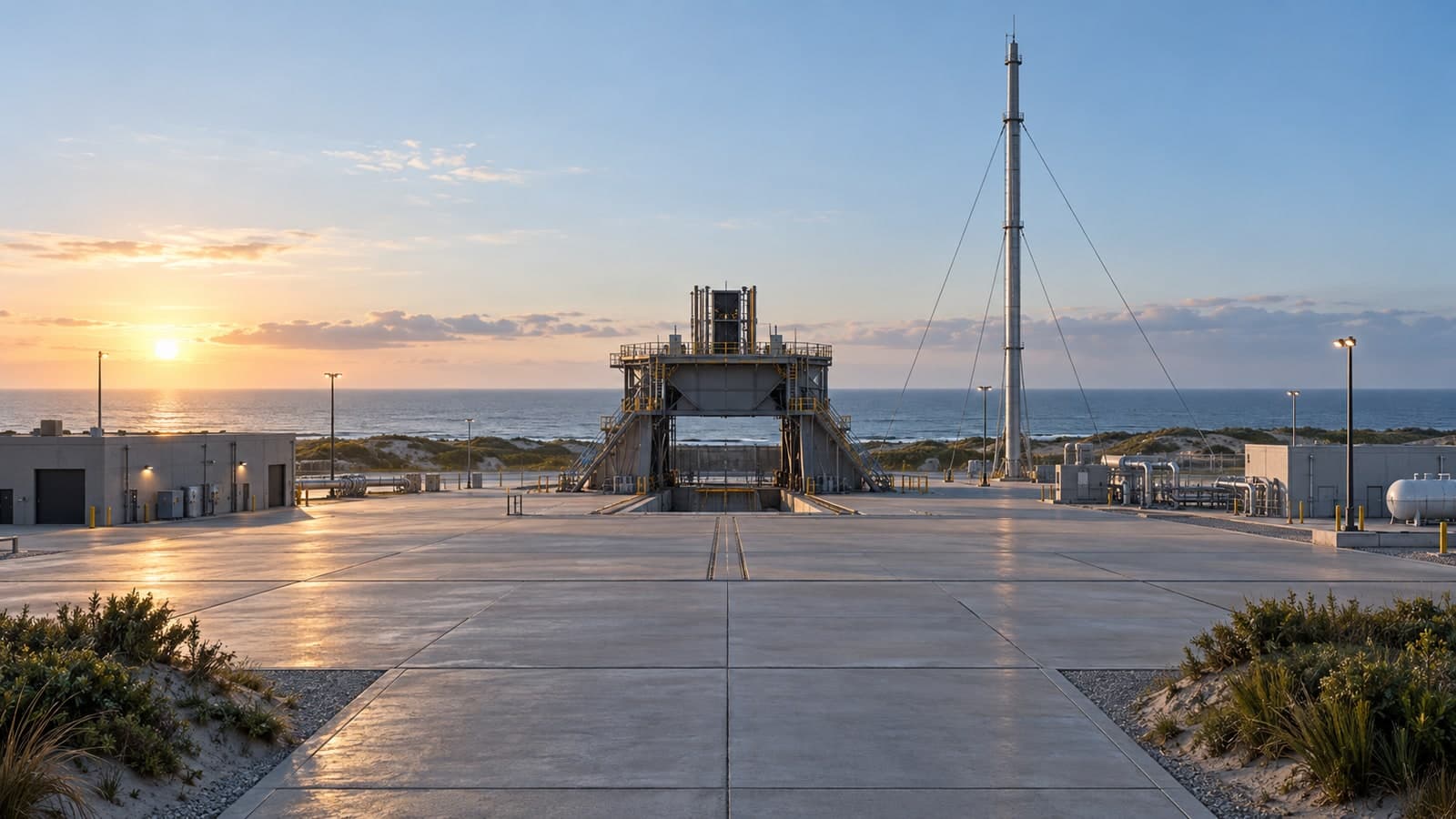
Put the pieces together and the number stops looking strange. $2.3 billion invested buys a completed launch pad at Cape Canaveral's Launch Complex 14, a test site in Moses Lake, Washington, an engine and stage programme that has been hot-firing since 2023, a seat at a $5.6 billion government table, a first customer in AstroForge, and a design that, if it works, is the only fully reusable medium-lift rocket on the market. Against a $1.75 trillion incumbent, $10 billion for the most credible second-stage-reuse programme outside SpaceX is a rounding error for the funds involved.
Schedule is the discount. Every rocket in the scorecard above has slipped, and Stoke already has. When we look at this from the outside, the way we look at any technology roadmap a client shows us, the question is not whether early 2027 holds; it is what happens to the next round if it doesn't.
A billion dollars buys time. It does not buy a second first impression with the Space Force.
What This Changes for the Rest of Us
Launch cost is the hidden line item in a surprising amount of daily life. Satellite internet, the weather forecast, the GPS in every delivery van, the imagery that prices crop insurance: all of it rides on how cheaply mass gets to orbit. Falcon 9 halved the bill for a generation of companies. A working full-reuse rocket, from anyone, is the next halving, and it shows up eventually as cheaper Starlink-class broadband in rural Ontario, more frequent satellite imagery for farms and insurers, and a lower barrier for the small satellite businesses that are already the fastest-growing customers of launch.
A business lesson sits inside this story that has nothing to do with rockets, and it is the one we find ourselves repeating to clients who face a dominant platform in their own industry. Stoke did not try to build a smaller SpaceX. It picked the one capability the giant had not finished, chose a customer the giant could not serve alone, and built a narrower product around exactly that gap. Second movers win by being specific. When we help a company decide where to compete, that is the shape we are looking for, and it is the same logic behind our strategy work: find the gap the incumbent structurally cannot close, and put everything there.
Our Take
Stoke Space is not a SpaceX killer, and the $1 billion does not make it one. It is the best-funded hedge the launch market has against a single supplier, and its technical bet on an actively cooled upper stage is the most interesting unsolved problem in rocketry right now. Three things will tell you whether the bet pays: how Starship Flight 14 goes this week, whether Nova Pathfinder's early-2027 date survives the winter, and whether Neutron or Terran R reach orbit first and take the second-supplier slot before Stoke can. Watch those, not the headline number.
If your own business is deciding where to compete against a platform that seems to own everything, we are happy to think it through with you. The gap is usually there. It is just narrower than the press release.