

Two Business Owners, One Week, Two Different Votes
Picture two readers of the same headline. In Calgary, a petroleum engineer thinks about pipelines and whether Ottawa listens. In Newmarket, Ontario, a software business owner thinks about the Canadian dollar and client contracts. Both have heard that Alberta votes on independence on 19 October, and both have it slightly wrong.
The Alberta referendum asks whether the provincial government should start the legal process toward a later, binding vote on Alberta separation. It does not ask whether Alberta should leave Canada. This piece explains what is on the ballot, why so many Albertans are unhappy, what the Supreme Court and the federal Clarity Act require, what markets and the loonie are doing, and what it means for an Ontario business like ours. It was written before the vote and reports no results.
What Is the Alberta Referendum Actually Voting On?
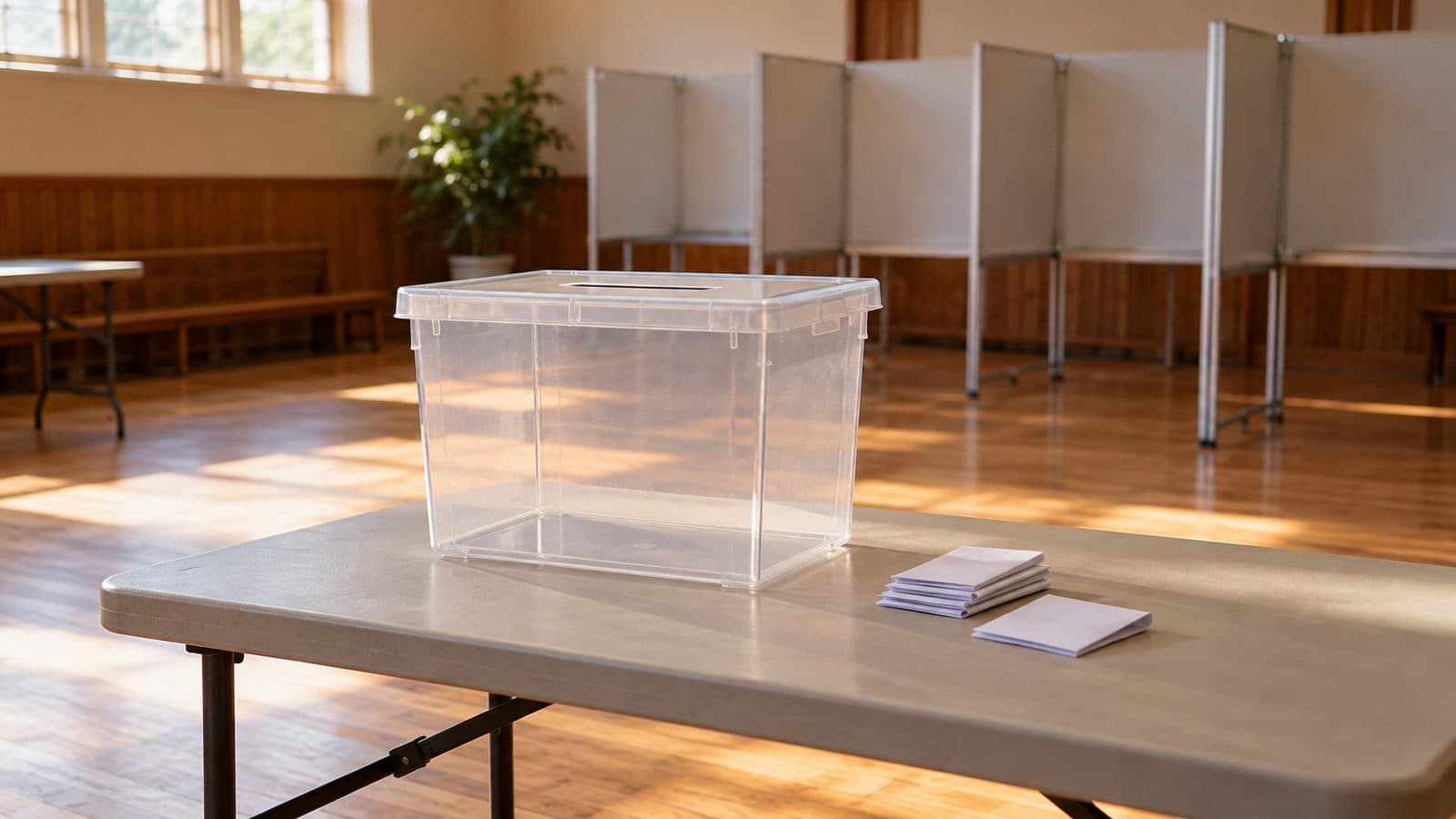
Question 10 reads: “Should Alberta remain a province of Canada, or should the Government of Alberta commence the legal process required under the Canadian Constitution to hold a binding provincial referendum on whether or not Alberta should separate from Canada?” Option 1 is to remain. Option 2 is to begin that process. The cabinet order that called the vote, O.C. 160/2026, states that “the result of the referendum is not to be binding”, according to the Elections Alberta referendum page. A non-binding referendum is a political signal: it does not legally require the government to do anything.
The same ballot carries nine other questions set in March: four on immigration and the status of newcomers, one on proof of citizenship to vote, and four constitutional ones, including abolishing the Senate and letting provinces pick superior-court judges. Polls are open from 9 a.m. to 8 p.m. on Monday.
How the question got here
It began with a citizen petition led by Mitch Sylvestre of Stay Free Alberta, asking: “Do you agree that the Province of Alberta should cease to be a part of Canada to become an independent state?” Elections Alberta verified 222,597 signatures by sampling, above the 177,732 needed. Four First Nations went to court, and in May a judge quashed the approval of the petition. In June the Court of Appeal let verification finish but barred the proposal from going to the Minister; that appeal is still undecided.
Premier Danielle Smith then called this separate, non-binding vote. She has said where she stands: “I support Alberta remaining in Canada… It is also the position of my government,” she said in May, as AP reported. Asked about a later separation vote, she said, “Not as long as I’m premier,” CBC and CTV reported.
What the polls and the campaign say
Published polls show remain ahead. Léger’s poll of 1,001 Albertans, taken 2 to 4 October, had 70% for remain, 22% for starting the process and 7% undecided, with United Conservative voters at 48% start and 43% remain; its next, of 1,000 taken 14 to 16 October, had 74% remain, 21% start and 4% no opinion. Angus Reid, released on 16 October, had remain at 66% and option 2 at 34% among decided, leaning and already-voted respondents, so it is not directly comparable with Léger, and 62% agreed “there will never be an end to the separatist movement.” Both are online panels, so the usual margin of error does not apply.
Prime Minister Mark Carney campaigned in Alberta this week. “This referendum comes at the worst possible time,” he said, adding that “some outside our borders are working to break us so they can own us,” as AP reported. “Turnout will determine the outcome,” he said, The Canadian Press reported. He and Smith both back option 1, but split on the other nine questions: Carney urged a no, Smith a yes. More than a million Albertans had voted early or by mail by mid-week, according to Bloomberg’s reading of Elections Alberta figures.
Why Are Some Albertans Backing Option 2?
The grievances are long-standing and specific. Equalization is the federal program that sends tax money to provinces with less capacity to raise their own; Albertans pay federal taxes like everyone else, but the province itself has not received equalization since the mid-1960s and gets nothing in 2026-27, per Finance Canada. The Fraser Institute, a free-market think tank, estimates Albertans paid $244.6 billion more to Ottawa than they received between 2007 and 2022.
Then there is energy. Northern Gateway was rejected in 2016, Keystone XL died in 2021, and Bill C-69, which critics called the “no more pipelines” law, was found largely unconstitutional by the Supreme Court in 2023. Many Albertans read those episodes, alongside the 1980 National Energy Program, as a pattern of decisions made in Ottawa at their expense. Angus Reid found that 60% of option 2 supporters see their vote as “sending a message to Ottawa”, and 37% cite separation itself.
Option 2’s campaigners put their case in their own terms. The Alberta Freedom Foundation, which backs option 2, calls it “a vote to start a process” that “opens a legal door that a later, binding referendum would still have to walk through,” and argues that “a strong Yes result sends Ottawa an unmistakable signal” on equalization, in an opinion essay on its site.
Federalists point to other figures. The Library of Parliament found Alberta was the largest net contributor to federal finances from 2015 to 2024 because of high incomes, a strong economy and a younger population, rather than the transfer formula. Ottawa bought Trans Mountain in 2018 and its expansion entered service in 2024. Under a 2025 agreement with Alberta, Ottawa dropped a planned oil-and-gas emissions cap, and in October a new Pacific oil pipeline was designated a project of national interest.
Quebec is the other half of the story
On 5 October, the Parti Québécois won a minority government in Quebec. Its leader, Paul St-Pierre Plamondon, has promised a third referendum in his first term but “not before Jan. 20, 2029,” as AP reported. The last one, in 1995, ended 50.58% to 49.42% for No, on 93.52% turnout, according to Élections Québec.
Can Alberta Legally Separate from Canada?
Not on its own. In the 1998 Secession Reference, an advisory opinion the federal government sought from the Supreme Court about Quebec, the Court held that a province cannot secede unilaterally, but that “a clear majority on a clear question” in favour of secession would create “a reciprocal obligation on all parties to Confederation to negotiate.” It left the meaning of “clear” to political actors. The federalClarity Act then set the process: the House of Commons decides whether a question is clear and, after a vote, whether the majority is, looking at “the size of the majority”, “the percentage of eligible voters voting” and the views of Indigenous representatives, among others. It states there is “no right under the Constitution of Canada to effect the secession of a province from Canada unilaterally.”
The Act also says a question that “merely focuses on a mandate to negotiate without soliciting a direct expression of the will of the population” cannot be a clear one. Whether it reaches a process question like Question 10 is for Parliament and, potentially, the courts; this article takes no view, and no figure in law sets what “clear” means.
If option 2 won: the road that would follow
A scenario, not a forecast. Each step is a separate decision with its own risks of delay or reversal.
- Start the constitutional processAlberta’s government begins the legal steps toward a binding vote, if it chooses to; the 19 October result is not binding.
- A binding question is publishedA new question, this time on separation itself, and within 30 days the House of Commons decides whether it is clear.
- The binding referendum and the majorityIf the question passes that test and the vote is held, the House assesses whether the majority is clear.
- NegotiationOttawa and the other provinces negotiate debt, currency, pensions, borders and treaty obligations.
- Constitutional amendmentRequired for any secession, under both the 1998 ruling and the Clarity Act.

Each step carries questions with no settled answers. Treaties 6, 7 and 8, agreements between First Nations and the Crown whose rights are protected by section 35 of the Constitution, cover most of Alberta, and how obligations owed by the Crown would carry over is unsettled. The Canada Pension Plan, the national public pension workers and employers pay into, would have to be divided: an Alberta-commissioned study in 2023 put Alberta’s share at $334 billion, while the federal Chief Actuary said that method “does not respect” the law and economist Trevor Tombe estimated about $135 billion. And there is “no provision in the CUSMA for new entrants”, trade lawyer Lawrence Herman wrote for the C.D. Howe Institute, so a new state would need the United States, Mexico and Canada to agree. Public sources give no reliable figure for splitting the national debt.
What It Means for the Canadian Dollar and Investors
So far markets are calm: all four rating agencies hold Alberta at stable, according to the province’s investor relations page. When the PQ won on 5 October, Quebec’s 30-year bonds briefly traded more than 9 basis points over Ontario’s, as Bloomberg reported, then tightened to about 7.5 basis points, according to a later Bloomberg report. A risk premium is the extra return investors demand for uncertainty, and it often shows up in these spreads and in the exchange rate.
History says the calm can break during a campaign. In September 1995, as the Quebec referendum campaign began, the Canadian dollar fell about 2.4% in a week, according to Maclean’s. Our read is that a clear remain result on Monday would leave markets largely where they are, while a strong option 2 showing, combined with movement on Quebec, is what would put a premium back on Canadian assets.
What It Means for an Ontario Tech Consultancy Like Ours
Pine & Birch is a small technology consultancy in Newmarket, Ontario. We use AI heavily in client projects, work with outsourced delivery teams, and build our own apps. Here is what we are watching, and what we would suggest to businesses like ours.

- AI and consulting work. Cloud hosting, AI model usage and most software licences are typically billed in US dollars, and much of what we charge is in Canadian dollars. A weaker loonie raises our costs and makes us cheaper for US clients. For longer projects, a currency clause or a US-dollar price option is worth having ready.
- Outsourced delivery. If delivery partners invoice in US dollars, a falling loonie raises that cost too, so agree the invoicing currency up front. If you have clients or partners in Alberta or Quebec, know which province’s law governs your contracts and where data is stored; in the short term there is no reason to change either.
- Our own apps. App stores set prices per currency, so review Canadian price tiers if the loonie moves. When raising money, frame the market as North American rather than tied to one province, and watch whether federal programs such as IRAP and SR&ED tax credits change.
The broader advice is to avoid major decisions on headlines. Three signals matter more: the result and turnout on Monday, the Court of Appeal’s ruling on the First Nations’ challenge, and whether the PQ tables referendum legislation. If you are weighing how political or currency risk should change your plans, that is the kind of question our strategic planning work is for, and you can read more about who we are. For how investors are reading other risks this month, see our look at this autumn’s AI funding rounds.
What to Watch After October 19
- Read the headline carefully: an option 2 win would be a non-binding instruction to start a process, with the government deciding what follows, and an option 1 win would not end the debate. Unofficial results are due within 48 hours of polls closing; official results on 29 October.
- Watch the option 2 share and turnout more than the winner. Both sides will treat the size of that vote as a message.
- Follow the courts and Quebec. The First Nations’ appeal and any PQ legislation will shape the next two years more than Monday’s count.
Three questions are worth following whatever the count:
- Would the government act on an option 2 win, given the Premier’s stated support for remaining?
- Does the Clarity Act’s test for a clear question apply to a question about starting a process?
- With no agreed method for dividing the CPP, the debt or treaty obligations, who would set one?
Monday’s vote measures how many Albertans want a binding question put to them, as Quebec’s government prepares to ask its own. What would it take to settle the grievances behind Question 10, whichever way Albertans vote?
Further reading, by search term: Alberta referendum Question 10; Clarity Act Canada; Secession Reference 1998; equalization payments Alberta; Parti Québécois referendum 2029.
FAQ: The Alberta Referendum
What is the Alberta referendum question on October 19?
Question 10 asks: “Should Alberta remain a province of Canada, or should the Government of Alberta commence the legal process required under the Canadian Constitution to hold a binding provincial referendum on whether or not Alberta should separate from Canada?” Option 1 is to remain; option 2 is to start the process toward a later, binding separation referendum. The vote itself is not binding, and the same ballot carries nine other questions.
Is the Alberta referendum a vote on independence?
Not directly. The October 19 vote is a non-binding question about whether Alberta’s government should begin the constitutional process toward a future binding referendum on separation. Even if option 2 won, separation would still require a second referendum, an assessment by the House of Commons under the Clarity Act, negotiations with the federal government and other provinces, and a constitutional amendment.
Can Alberta legally separate from Canada?
Not unilaterally. The Supreme Court’s 1998 Secession Reference held that a province cannot secede on its own, but that a clear majority on a clear question in favour of secession would oblige the federal government and the other provinces to negotiate. The Clarity Act adds that there is no constitutional right to secede unilaterally, and that the House of Commons decides whether a referendum question and majority are clear. Secession would require a constitutional amendment.
What do the polls say about the Alberta referendum?
Polls published in October show remain ahead. Léger’s poll published October 8 had 70% for remain, 22% for starting the process and 7% undecided; its poll published October 17 had 74% remain and 21% start. Angus Reid, released October 16, had 66% remain and 34% start among decided and leaning voters, and found 62% agree the separatist movement will never end. Online panel polls carry no margin of error in the usual sense.
How could the Alberta referendum affect the Canadian dollar?
So far markets have reacted calmly: all four rating agencies hold stable outlooks on Alberta, and Quebec’s bond spreads widened only briefly after the Parti Québécois won a minority on October 5. History suggests volatility can rise during a campaign; in September 1995 the Canadian dollar fell about 2.4% in a week as the Quebec campaign began. The things to watch are the size of the option 2 vote, turnout, the courts, and Quebec.