
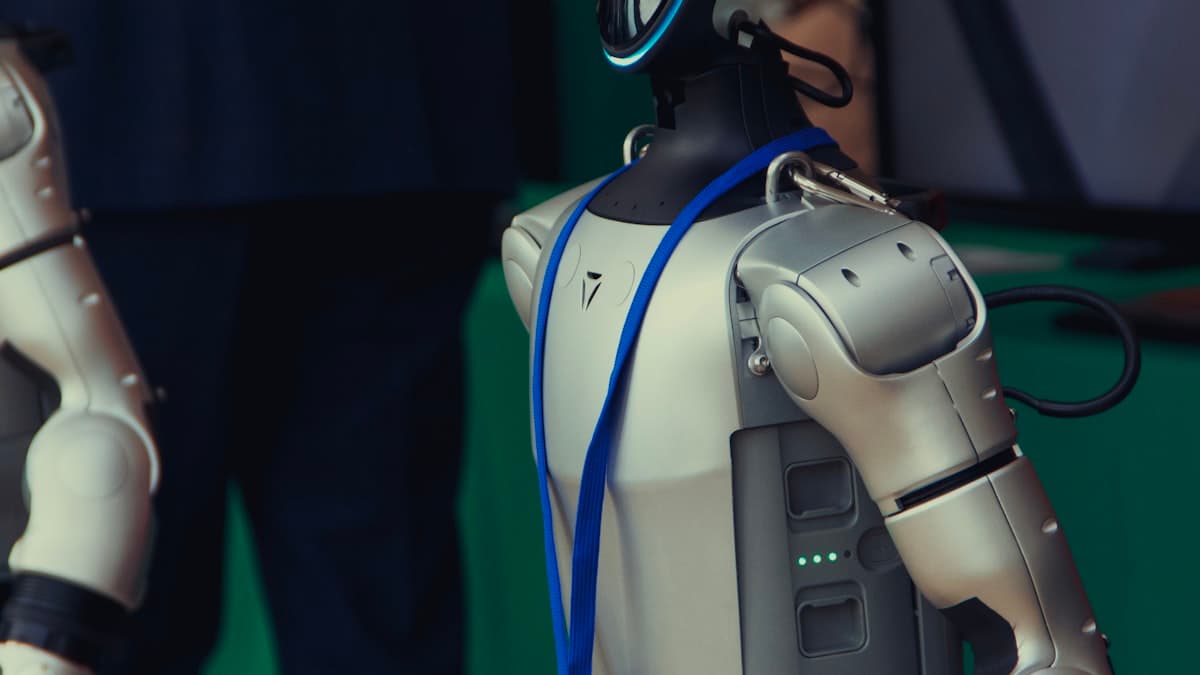
Three numbers describe the household robot market in September 2026. Manufacturers shipped 32.7 million home cleaning robots in 2025. The world shipped 19,100 humanoid robots in the first half of 2026, 97% of them Chinese-made and most bound for factories, labs and showrooms. And the number of general-purpose home robots verifiably delivered to a paying household, anywhere in the world, is still zero. The household robot both exists and does not, depending on which tier you are looking at — and the distance between tiers is where most of the confusion, and most of the money, now sits.
What Counts as a Household Robot in 2026?
Four very different products share the label. In 2025, according to IDC data released by the market leader, 32.7 million household cleaning robots shipped worldwide, up 20.1% on the year, with Roborock first at 5.8 million units and a 17.7% share, and the top five vendors — Roborock, Ecovacs, Dreame, Xiaomi and Narwal — were all Chinese (Roborock / IDC, 2026). That is the first tier, and it is the only one with audited revenue at scale.
The Four Tiers of Home Robotics
- 1. Single-task appliancesVacuums, mops, mowers, window cleaners. Tens of millions of units a year, brutal price competition, and the first manipulators: Roborock's Saros Z70 ships with a five-axis arm at a $2,599 list price.
- 2. Retrofit device networksHubs, sensors, locks, curtain motors and small actuators that add control to an existing home (Aqara, SwitchBot and the Matter ecosystem). Cheap, proven, and increasingly pitched as the sensor network a future robot will plug into.
- 3. Specialty and companion robotsTennis partners, desk companions, monitoring robots. Real products with real prices, usually subscription-dependent, and a category Samsung quietly left when it shelved Ballie in January 2026 (Bloomberg).
- 4. General-purpose manipulatorsHumanoids and wheeled dual-arm robots meant to do chores: 1X NEO, Figure 03, Tesla Optimus, Unitree G1, LG CLOiD, XPeng IRON, Sunday Memo, Weave Isaac, SwitchBot onero H1. The tier that attracts the capital, and the tier with the least delivery evidence.
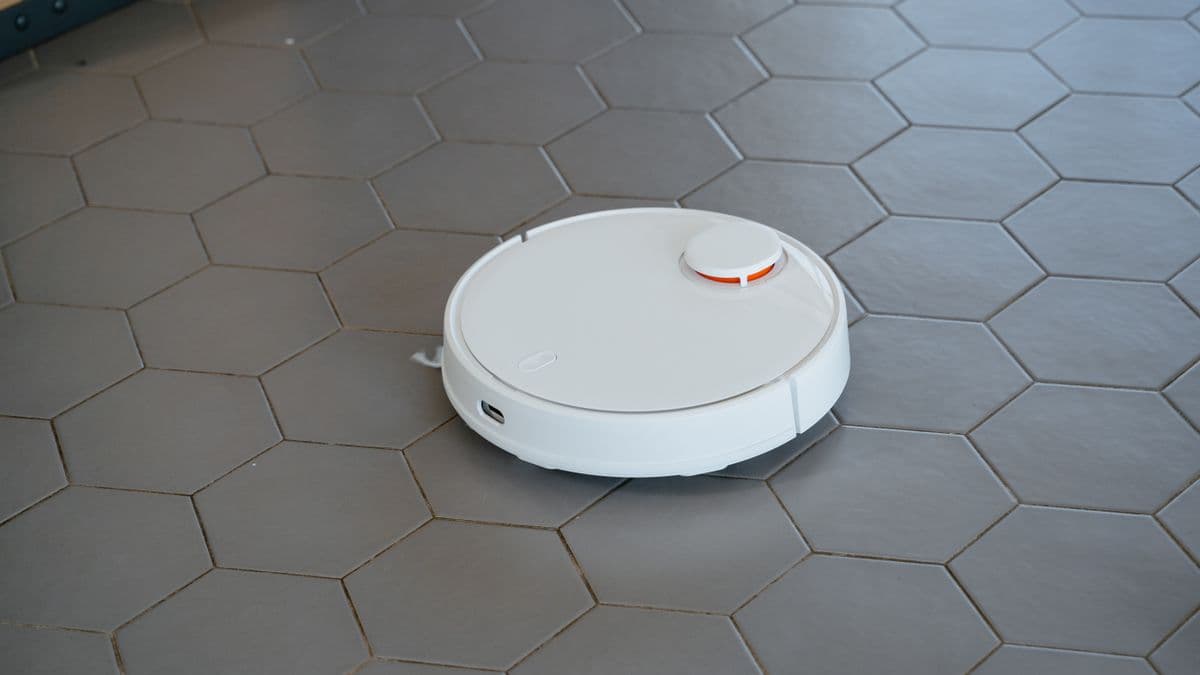
The first tier also shows what happens when the fourth tier eventually matures. iRobot, the company that created the category, filed for Chapter 11 in December 2025 and emerged in January with 100% of its equity handed to its Chinese contract manufacturer; shareholders received nothing (The Robot Report, 2026). IDC's verdict: it clung to premium pricing while rivals shipped better mid-range machines. Anyone pricing a humanoid at $20,000 should study that sequence.
Who Is Actually Shipping, and at What Price?
Global humanoid shipments reached 19,100 in the first half of 2026, 3.7 times the same period a year earlier; Chinese vendors made 97% of them, and AgiBot and Unitree alone accounted for three-quarters (SAG data via BigGo, 2026). More than 70% went to industrial and commercial buyers. The honest way to sort the consumer market is by what happens when you click "buy".
You can buy today. Unitree sells the G1 biped for $13,500, the smaller R1 from $4,900 and the full-size H2 for $29,900, all with roughly two to three hours of battery and all sold as research and development platforms rather than housekeepers (Unitree, 2026). Roborock's arm-equipped vacuum is in stock. The list of humanoid-adjacent hardware a consumer can pay for and receive this month is short.
You can put down a deposit. 1X's NEO costs $20,000 up front or $499 a month, sold out its first-year allocation of over 10,000 units within five days of its October 2025 launch, and opened a Hayward, California factory in April 2026 with early units going to internal testing (1X; TNW, 2026). Weave Robotics' wheeled Isaac 1 is $7,999 or $449 a month with California deliveries promised for this month (TNW, 2026). Sunday Robotics raised $165 million at a $1.15 billion valuation in March to put its Memo robot in about 50 beta homes (SiliconANGLE, 2026). SwitchBot's onero H1 lists at $9,999 and reads "Coming Soon".
You cannot buy at all. Figure has built more than 350 Figure 03 robots and allocates them to its own housework and service operations, not to consumers (Figure, 2026). Tesla told investors in April that Optimus output would be "quite slow" and in its second-quarter update that first units will collect training data rather than go to customers; the long-promised V3 has still not been shown (Electrek, 2026). LG's CLOiD is a CES demo. XPeng's IRON walked off an automated production line on September 7 with household sales pencilled in for around 2028 (Electrek, 2026). And Agility Robotics' chief executive, taking her company public in June, said a robot in your home is "10-plus years" away (TechCrunch, 2026).
How Good Is the AI Behind Them?
Better than two years ago, and far worse than the headline numbers. The best open result on LIBERO, the standard manipulation benchmark, is 97.1% average success from OpenVLA-OFT. But LIBERO-plus, a stress test that changes camera angles, lighting, object layout and wording, found leading vision-language-action models fall "from 95% to below 30% under modest perturbations" and largely ignore the language instruction (arXiv, 2025). A kitchen is nothing but modest perturbations. (Our explainer on physical AI covers why.)
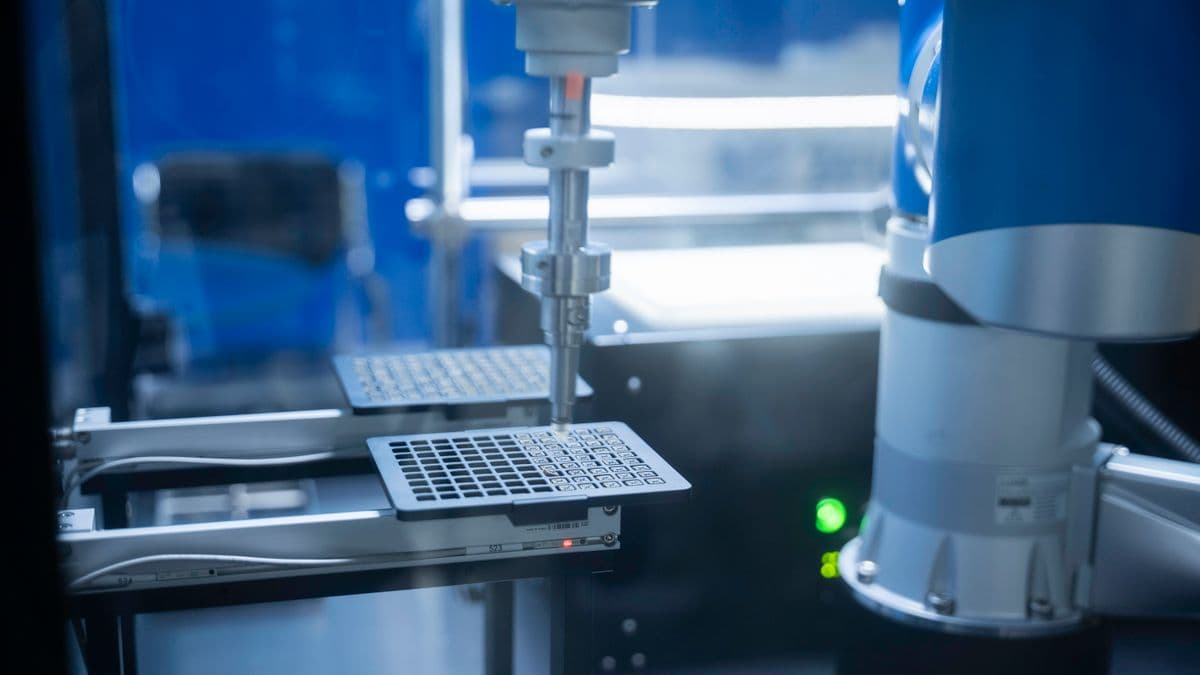
The frontier has therefore moved to learning in real homes. Physical Intelligence's π0.5 was trained on roughly 400 hours of mobile-manipulation teleoperation plus web and cross-robot data and was the first model to generalise to entirely new houses (Physical Intelligence, 2025); its successor adds reinforcement learning from the robot's own corrected mistakes. NVIDIA's open GR00T N1.7 trains on 20,854 hours of first-person human video (NVIDIA, 2026). Figure's Helix 02 controller was trained entirely in simulation and, the company says, completed an eight-hour autonomous shift in May. Google's Gemini Robotics models remain limited to trusted testers.
The number that matters is the one nobody publishes: what share of a robot's working hours a human is quietly in the loop. 1X sells NEO with an "Expert Mode" in which a company operator remotely supervises tasks the robot has not learned. Weave says a human can take over remotely. XPeng claims no teleoperation at all. None of the three discloses an autonomy percentage, and a widely quoted 60–70% figure for NEO traces only to aggregator sites. Until that ratio is published, a home robot demo isn't only a claim about a model. It's also a claim about a call centre.
How Do You Read a Home Robot Spec Sheet?
With the same scepticism you would apply to a car brochure. 1X lists 22 degrees of freedom per hand, seven per arm and six per leg for NEO; other vendors count the wheeled base and gripper in a single total, so "22 DoF" and "76 DoF" are not on the same scale. Compute is quoted as 2,070 FP4 TFLOPS on a Jetson Thor by one vendor and "6 TOPS" on an unnamed chip by another, with no shared precision. Payload figures rarely come with a duty-cycle curve, and NEO's 842 Wh for four hours against a G1's two hours means little until someone defines the task cycle.
Two vendors have set a disclosure bar the rest should be held to. 1X publishes safety figures for a machine that will share a room with a child: a head-injury criterion below 250, no pinch points, 22 dB audible noise and an IP44 body. Figure publishes manufacturing figures for a machine built at scale: end-of-line first-pass yield above 80%, a battery line at 99.3%, more than 80 functional tests per robot and a takt time that went from one a day to one an hour in under 120 days (Figure, 2026). Neither set is independently audited, but both are specific enough to be falsified.
The Physical-AI Scorecard We Would Ask Any Vendor For
- Strict autonomous success rateTasks completed with no remote operator, no verbal correction and no manual reset, reported with a confidence interval, on tasks and homes the robot has not seen.
- Human interventions per task-hourRemote and on-site, counted separately, with the minutes each one consumed. This is the hidden labour cost of every "autonomous" demo.
- Task time at P50 and P95Against a teleoperated baseline. A robot that folds a towel in four minutes on average and forty at the tail is a different product from one that folds it in four.
- Recovery, latency and energyShare of failures recovered without a human; end-to-end sensor-to-motor latency and its cloud share; watt-hours per completed task rather than "hours of runtime".
- Availability and safety eventsThirty-day uptime across a fleet, mean time between failures, and every contact, fall, pinch or uncontrolled motion — including the ones that happened during the demo.
What About Safety, Security and the Cameras?
The rulebook is arriving just behind the products. The revised ISO 13482 service-robot safety standard is in its final stage, UL 3300 for consumer robots was added to OSHA's recognised test list on the last day of 2025, and the EU's new Machinery Regulation, which explicitly covers autonomous mobile machines and AI-based safety functions, applies from January 20, 2027 with no grace period (EU-OSHA). China set up a national humanoid standards committee in December and published a standards roadmap in February.
Security is further behind. On August 27, researchers disclosed two root-level remote-code-execution chains in Unitree's G1 EDU, one reachable over Bluetooth without authentication, with no fixed firmware confirmed at the time (The Hacker News, 2026) — a year after a separate hard-coded-key flaw in the same product line. Ecovacs vacuums were shown at DEF CON 2024 to be hijackable from about 130 metres, camera included (TechCrunch, 2024). And no vendor of a humanoid has published how long it will support the software; Amazon switched off its Astro for Business robots about a year after launch.
That matters because a chore robot is a mobile camera and microphone with hands. Seventy percent of Americans already expect AI to make their personal information less secure (Pew Research Center, 2026). "Local AI" is the industry's answer, and it is real but partial: models run on the robot, while event clips, labels and anything a remote operator sees travel to a server. Weave declined to say whether home footage trains its model. Ask before you sign.
Where Is the Money Going?
Into a bet that hardware cost falls faster than patience runs out. Bank of America estimates a humanoid bill of materials of about $35,000 in 2025 falling below $17,000 by 2030, and projects three billion humanoids in service by 2060, two billion of them in homes (Fortune, 2026). On August 31, Goldman Sachs raised its 2035 market forecast from $38 billion to $138 billion and its unit forecast to 6.48 million (Investing.com, 2026). Figure is valued at $39 billion after its 2025 Series C (The Robot Report, 2026), and Unitree closed its first day on Shanghai's STAR Market on August 19 up 460% (NBC News, 2026).
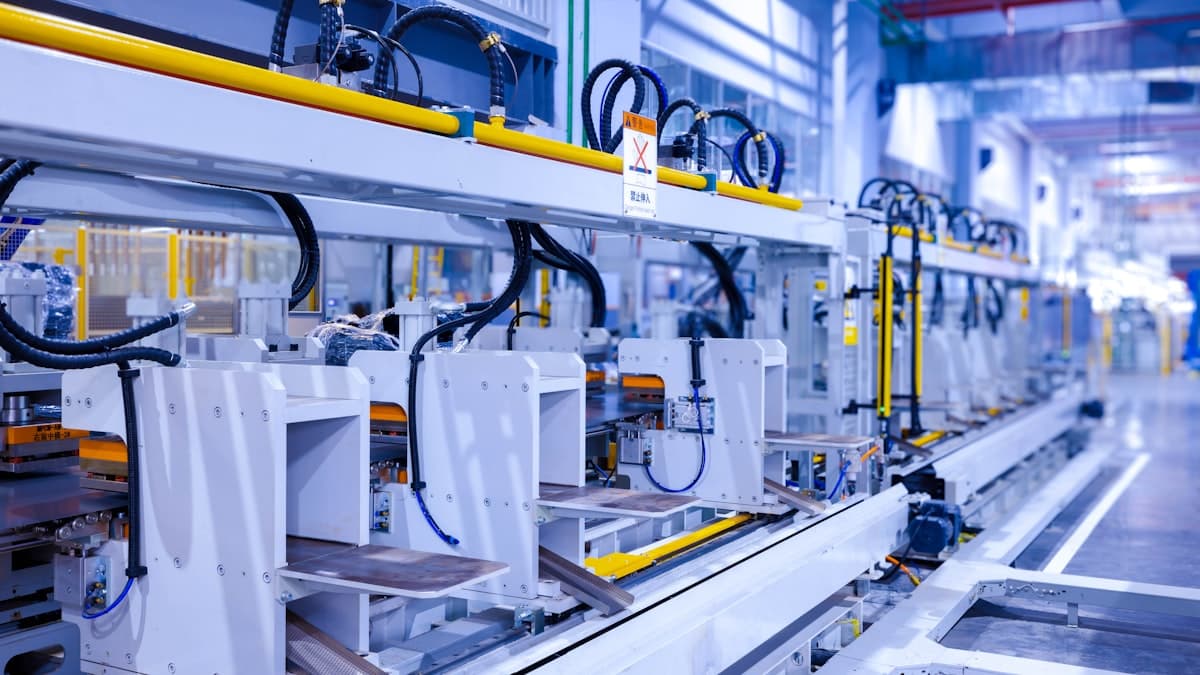
Geopolitics now shapes the shelf. On July 29 the US Federal Communications Commission moved to block authorisation of new foreign-made humanoid and quadruped robots on supply-chain security grounds; existing models are unaffected, and Canada is not covered (PBS, 2026). With China producing 97% of the world's humanoids and Unitree's G1 costing a third less than a NEO, the American home robot market is being deliberately built behind a wall. The vacuum market, which had no such wall, ended with the American pioneer owned by its Chinese supplier.
What Should a Canadian Household or Business Do?
Start from the work, not the robot. Canadians spend 3.2 hours a day on unpaid household work, women 3.7 hours (Statistics Canada, 2024). Ontario personal support workers earn a median of $22 an hour (Job Bank, 2026) and the federal Job Bank flags a strong risk of shortage through 2033. A Toronto cleaner runs $45 to $55 an hour by industry price guides. Against that, a $449 Weave or $499 NEO subscription is about $15 to $17 a day — but nobody has priced the remote expert, the service visit or the replacement battery yet.

For a household, the answer in 2026 is tiers one and two: a good cleaning robot and a retrofit control layer solve real hours today at prices that keep falling. Put a refundable deposit on a tier-four robot if you enjoy being early, but don't plan your staffing around it. For a business — a senior-care operator, a property manager, a hotel — the answer is a pilot with the scorecard above written into the contract: autonomous success rate on your tasks, interventions per hour, safety events, data flows and a software support commitment. Most vendors can't fill in that table yet; the ones who can are worth a pilot. Deciding which workflows a robot should touch first is a strategy question before it is a procurement one.
Frequently Asked Questions
Can I buy a humanoid home robot in 2026?
You can buy a research humanoid today: Unitree's G1 costs $13,500 and the R1 starts at $4,900. Home-chore robots such as 1X NEO ($20,000 or $499 a month), Weave Isaac ($7,999) and Sunday Memo take deposits or run invite-only betas, with first deliveries promised for 2026 or left undated.
How much household work can a robot actually do autonomously?
Nobody publishes the figure. Vision-language-action models score about 97% on the LIBERO benchmark but drop below 30% under modest changes in camera angle or layout, and 1X and Weave both rely on remote human operators for tasks their robots have not learned. Ask any vendor for autonomous success rate and interventions per hour on your tasks.
Which company leads in household robots?
It depends on the tier. Roborock led cleaning robots in 2025 with 5.8 million units, a 17.7% share of 32.7 million. AgiBot and Unitree shipped the most humanoids in the first half of 2026. Figure has built the most general-purpose robots in the West, over 350, but sells none to consumers. No company yet leads in delivered home humanoids.
Are home robots safe and private?
Standards are arriving: a revised ISO 13482, UL 3300 and the EU Machinery Regulation from January 2027. Security is weaker — root exploits in Unitree's G1 were disclosed in August 2026 with no patch confirmed, and no humanoid vendor states a software support lifetime. Any robot with cameras sends some data to a server; get the data flow in writing.
The Bottom Line
The household robot of 2026 is a vacuum that has learned to pick up a sock, a factory humanoid that has learned to walk off its own production line, and a $20,000 deposit on a machine whose autonomy nobody will quantify. All three are real progress. Only the first is a product you can judge by using it; the other two you can't judge at all yet.
The industry's next year will be decided less by new demos than by a few disclosures: first deliveries with delivery counts, autonomy rates measured in strangers' homes, security patches that arrive, and support lifetimes written down. Buyers who insist on those numbers will get better robots. Buyers who settle for degrees of freedom won't.
Evaluating Physical AI for Your Operation?
Pine & Birch helps businesses decide which workflows are ready for automation, write the acceptance criteria a vendor must meet, and run pilots that produce numbers instead of demos.
Book a Free Consultation