

Why Sequoia Backed Mecka AI’s Robot Training Data Business
Ask a robot to fold a towel and it will often fail. Mecka AI and its investors are betting the reason isn’t a weak chip: very few people have ever shown a robot, in enough detail and enough times, how a towel gets folded. Language models learned from text that already sat on the internet. Robots have nothing comparable to read, so someone has to make it. Making robot training data is Mecka AI’s business, and in October it raised a $60 million Series B led by Sequoia to make more.
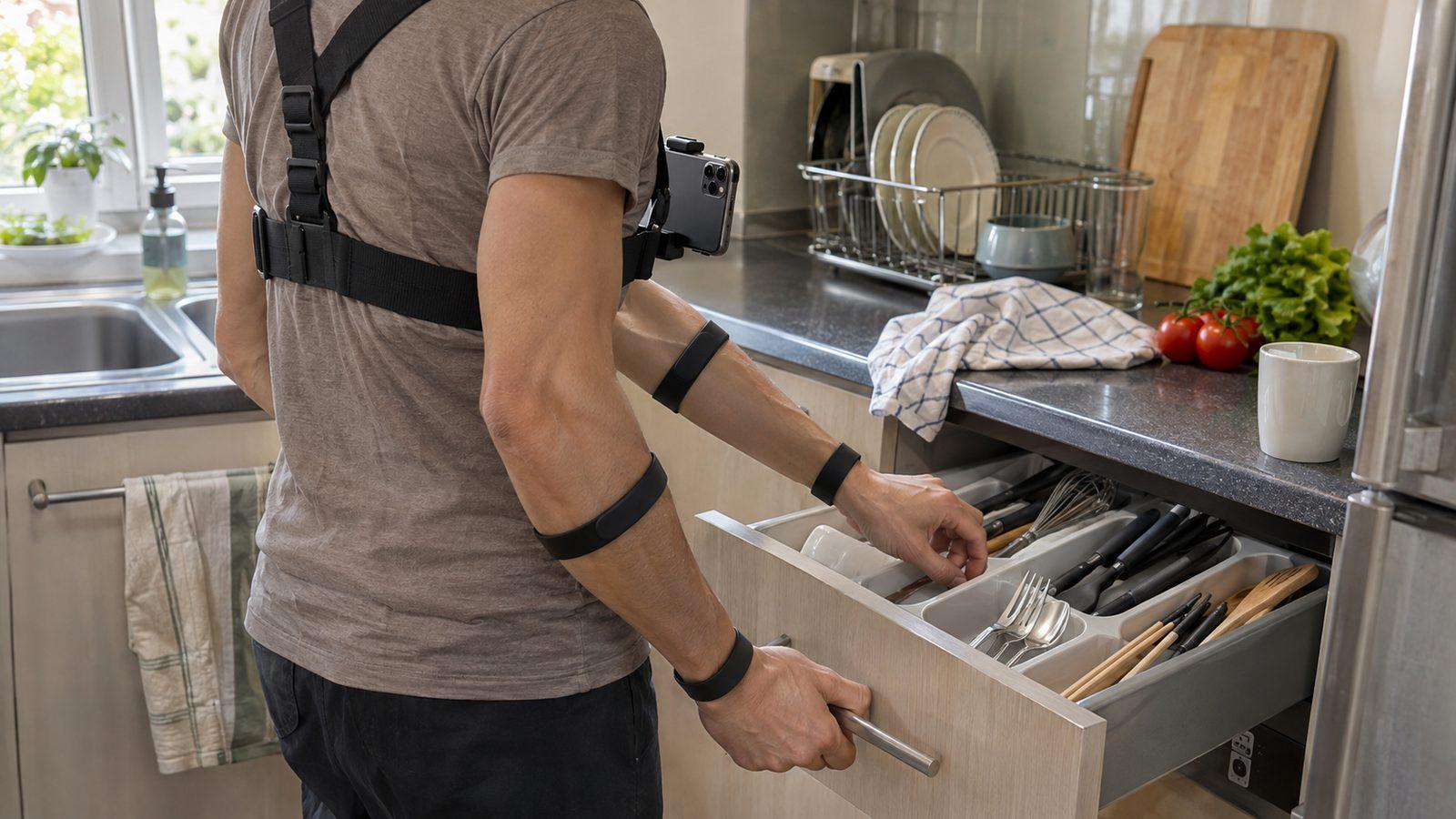
Mecka “pays people to record themselves doing everyday tasks, like making coffee or fixing cars, while wearing body sensors and using smartphones”, as TechCrunch put it on 7 October. NVIDIA, Microsoft’s venture fund, Qualcomm and Samsung all came in as new investors. How much Mecka earns, and from whom, rests on what Mecka and its investors say.
Robot Training Data, First-Person Video and Run Rate in Plain Words
If robots interest you but the data side is a blank, these terms cover the rest of the article.
The vocabulary
| Term | In plain words |
|---|---|
| Robot training data | Recorded examples of a task being done, with the movements labelled, that a robot model learns from. |
| First-person (egocentric) view | Video shot from the doer’s own eyes or chest, not by someone standing to the side. It is closer to what a robot will see. |
| Body sensors | Devices worn on the wrists, arms or body that record how they move, more precisely than video alone. |
| Motion tracking and 3D reconstruction | Software that works out from the recording how each joint moved and what the room looked like in three dimensions. |
| Teleoperation | A person steering a robot by remote control so the robot’s own movements are recorded. Accurate, but slow and costly. |
| Systems integrator | A company that installs a working system for a customer: hardware, setup, training and upkeep, not just software. |
| Series B | A company’s third main funding round, after a seed round and a Series A, usually raised to grow something already selling. |
| Run rate | An annualised revenue figure the company chooses how to calculate: often the latest month’s revenue times twelve, sometimes the yearly value of signed contracts. It is not audited annual revenue. |
Why Do Robots Lack Training Data?
Compare the two kinds of AI. Large language models were trained on text “that would take a human 100,000 years to read”, Ken Goldberg, a roboticist at the University of California, Berkeley, told MIT Technology Review. Robot data is counted in hours. The DROID dataset, a well-known academic effort, holds 350 hours of robot interaction, gathered by 50 people over 12 months; that is roughly two months of one person’s full-time work. Scale AI, a competitor of Mecka’s, said in September 2025 that DROID and Open X-Embodiment, the best-known open sets, offered “only about 5,000 hours of interaction data combined”.
Recording robots directly is the slow part. Someone has to steer the robot by remote control, one task at a time, on expensive hardware. The industry’s answer is egocentric data, footage of people doing the work from their own point of view: a person with a phone strapped on needs no robot at all. The catch is that human hands and robot grippers don’t move alike, so the footage needs heavy processing before a robot can use it. Our explainer on what physical AI is covers the other answer to the same shortage: training robots in simulation.
What Does Mecka AI Actually Do?
Mecka describes three layers in its Series B announcement. First, it designs and manufactures its own sensor hardware. Second, it runs what it calls “capture fleets recording human demonstration in homes and commercial environments”. And it builds its own models for “motion tracking, 3D reconstruction, and sensor alignment”, which turn raw footage into usable data. Fortune reported in June that the recording kit includes iPhones as well as body sensors.
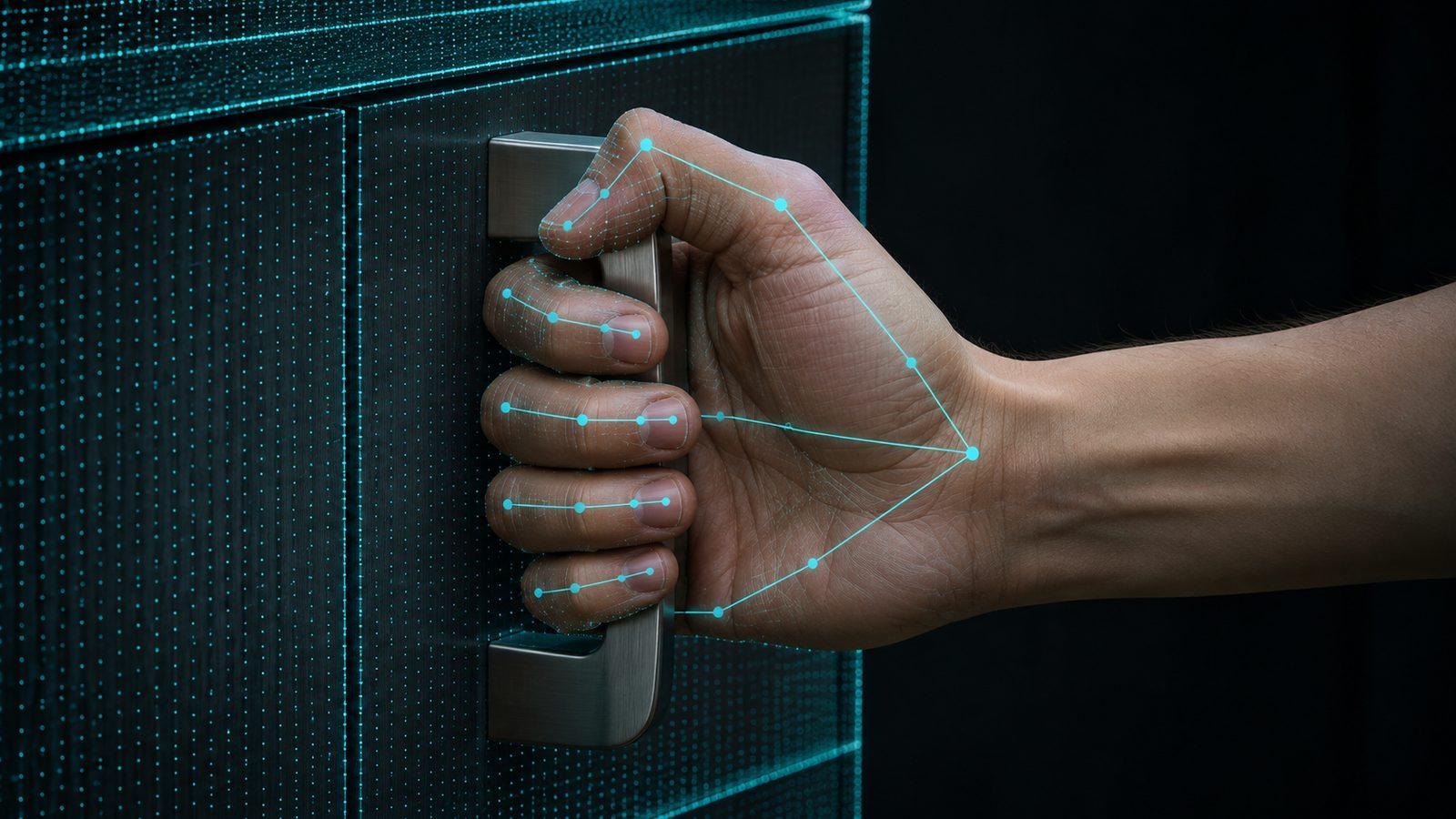
Mecka claims “state-of-the-art sub-centimeter hand-pose accuracy on in-the-wild data”. On the company’s account, that means its software can locate the joints of a hand to within a centimetre in ordinary, messy rooms rather than a lab. Precision of that kind matters, because a robot that misjudges a grip by a couple of centimetres can miss the handle. We found no independent test of the figure, and the announcement doesn’t say what it was measured against.
Mecka AI’s $60M Series B: What Was Announced
Two rounds of about $60 million each, roughly four months apart, is fast even by AI standards. This table combines the company’s post, Sequoia’s announcement and press reports. Where a figure is reported but not confirmed, it says so.
Mecka AI at a glance
| Item | Detail |
|---|---|
| Round | $60M Series B, led by Sequoia, announced 7 Oct 2026 |
| New investors | NVIDIA, Microsoft’s M12, Qualcomm Ventures, Samsung |
| Continuing backers | Kindred, Framework Ventures, Neo (“continued support”, in the company’s words) |
| Angels | Tony Xu, Frank Slootman and Milan Kovac, former head of Tesla’s Optimus humanoid programme, per the company; Christopher Payne and Jonathan Chadwick, per Sequoia |
| Valuation | Not disclosed; about $500M in talks, TechCrunch reported in September, citing two people |
| Earlier funding | $60M across a $25M Series A and a $35M follow-on, led by Framework Ventures, disclosed by Fortune on 1 June 2026 |
| Company | Founded 2024 by four co-founders; CEO Josh Gao; headquartered in New York (Fortune), with 40 of 45 staff in Toronto (BetaKit, June 2026; Fortune put the total at 40) |
| Customers | Not named; “several of the top frontier robotics labs and multiple Mag 7 companies” (the seven largest US tech companies), per Mecka |
The four co-founders “don’t have backgrounds in robotics”, TechCrunch noted in September. Two had built a restaurant fintech startup, and a third joined Coinbase after it bought his crypto exchange. That matters less than it might: Mecka is closer to a data production company than a robot maker, and running recording sessions at scale is an operations problem as much as a research one.
Is Mecka AI’s $100M Run Rate Real?
Mecka’s own post says: “We surpassed $100 million in run-rate revenue in June 2026 within only a few months of operations, and project a $300M run rate by end of year.” Dealroom’s profile repeats the figure without attribution. So far it is only the company’s claim; we found no independent check of it.
In June, Fortune reported that Mecka “projects an annual run rate of $100 million based on already-signed contracts”, and that Gao “declined to name Mecka AI’s customers”. By October, Mecka was describing the same figure as revenue it had “surpassed” in June, the month Fortune reported it as a projection. Both could be true; signed contracts can turn into revenue quickly. But Mecka hasn’t said which basis its run rate uses, and with anonymous customers there is no way to tell how much rests on one or two large buyers.
What Is the EgoVerse Dataset?
Mecka’s name also appears on a large academic project in the same field. EgoVerse, subtitled “An Egocentric Human Dataset for Robot Learning from Around the World”, is a research paper and dataset first posted on arXiv in April 2026. Its premise is the one Mecka sells: “robot data collection remains expensive and difficult to scale”. Its current release holds 1,362 hours of demonstrations across 1,965 tasks, recorded by 2,087 different people.
Mecka’s Josh Gao and Jason Chong are among the paper’s 40 authors. So are researchers from Scale AI, one of Mecka’s competitors, and others from Meta Reality Labs Research, Stanford, ETH Zurich and UC San Diego. The paper doesn’t say how much of the data came from Mecka. What the author list suggests is that rivals still build this kind of data together in research, even while competing to sell it.
Mecka AI’s Second Business: Installing Robots
Mecka also sells something else. Calling itself “a modern robotics integrator”, it says: “Enterprises want physical AI but have no robotics team to build it. We bring the hardware, data capture, post-training, integration, and ongoing operations.” In plain terms, Mecka says it will install robots for a business, record data at that site and keep training the robots on it (post-training means that further training on a customer’s own tasks). We found no named customer deployment.
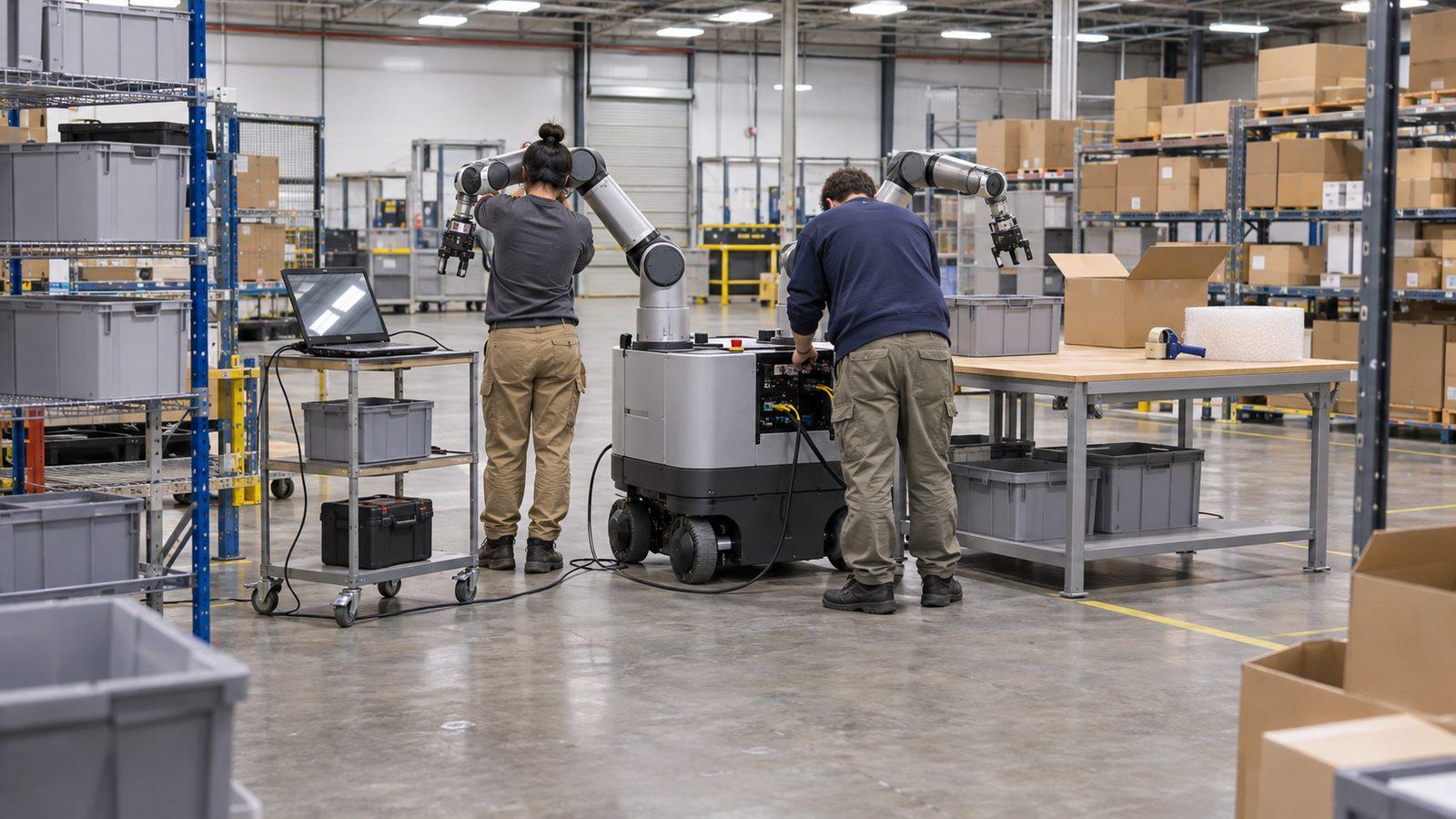
Our reading is that the two businesses pull in different directions. Selling data to AI labs can grow fast, but the buyers are few and powerful, and every new hour of footage still needs someone to record it. Integration could keep customers for longer and produce data no rival has, though each site needs engineers on the ground. That echoes SiMa.ai’s bet that the slow part of physical AI is getting a model working on a real device.
Is Mecka AI the Scale AI of Robotics?
TechCrunch framed Mecka’s aim as doing “for robotics what Scale AI, Mercor, Surge, and other data-labeling companies have done for LLMs”. Those firms pay contractors to write, check and label the examples chatbots learn from. The comparison fits the model: pay many people to produce data, sell it to a few labs. On competition the fit is looser, because Scale AI is in robot data itself and reported “more than 100,000 production hours” of it as of September 2025. A similar squeeze shows up in AI-agent training, where Halluminate sells finance practice environments to a handful of labs that could also build their own.
XDOF, which collects remote-control robot data, was in “late-stage talks” for a Series B at about $1.2 billion in September and works with 20 customers, according to the same TechCrunch report; we found no announcement that the round closed. Micro1 had hired “thousands of contract workers in more than 50 countries” to record household tasks as of April, according to MIT Technology Review. Mecka’s case rests on two things it says it does well: precise hand tracking, and hardware it designs itself. We found no independent test of either.
Who Records Robot Training Data, and on What Terms?
Mecka pays people to record themselves in homes and commercial sites, but it has not published what it pays or how it handles the footage, and we found no reporting on either. Reporting on other companies in the same trade shows why that matters. Micro1 workers who spoke to MIT Technology Review said they did not know “how exactly their data will be used, stored, and shared with third parties”. In October, NPR reported from Karur in India, where workers at a data company called Objectways record housework for “about $2.60 an hour”, and a factory worker told NPR: “Nobody told me anything about it.”
None of that reporting concerns Mecka. First-person footage from homes and workplaces can also capture other people, documents and rooms, unless the collector screens or blurs them. If you’re offered paid work recording your own chores or job, ask what it pays per hour of usable footage, who will see it, whether faces and documents are blurred, and whether you can have it deleted.
How to Read a Robot Data Funding Story
Two distinctions help most:
- A run rate is not a year’s revenue. Ask whether it is booked, billed or merely contracted.
- Check who is speaking. Here the revenue, the hand-tracking accuracy and the customer list all come from Mecka.
Selling data and installing robots are also different businesses, with different margins and staffing. The questions worth putting to any company in this field: which tasks the data actually covers, and how much of it; whether customers renew after the first purchase; and what makes the data better than XDOF’s, Scale AI’s or a lab’s own recordings. If you’re working out whether a robot or an AI agent could take on work in your own operations, that assessment is part of our AI agent development work, and our look at household robots in 2026 shows how far the machines themselves have come.
Chips or Demonstrations?
Mecka’s investors are betting that robots are short of examples, not only of computing power, and that whoever supplies them will be well paid. Mecka hasn’t won that market yet, and its biggest numbers are still its own. When robots do arrive in ordinary homes and workplaces, will the bottleneck turn out to be the chips inside them, or the people willing to show them, again and again, how the work is done?
FAQ: Mecka AI and Robot Training Data
What is Mecka AI?
Mecka AI is a robot training data company founded in 2024, headquartered in New York with most of its staff in Toronto, and led by co-founder and CEO Josh Gao. It pays people to record everyday tasks while wearing body sensors and phones, then uses its own models to turn the recordings into data robots can learn from. It also says it installs and runs robots for businesses. On 7 October 2026 it announced a $60 million Series B led by Sequoia.
Who invested in Mecka AI’s Series B?
Sequoia led the $60 million round. New investors named by the company are NVIDIA, Microsoft’s venture fund M12, Qualcomm Ventures and Samsung, with continued support from Kindred, Framework Ventures and Neo, in the company’s words. Angels include Tony Xu, Frank Slootman and Milan Kovac, and Sequoia also names Christopher Payne and Jonathan Chadwick.
What is Mecka AI’s valuation?
Mecka AI has not disclosed a valuation. In September 2026 TechCrunch reported, citing two people with knowledge of the deal, that the Sequoia-led round was being negotiated at about $500 million and that terms were not final. Neither Mecka nor Sequoia has confirmed a figure.
Why do robots need human training data?
Language models learned from text that already existed on the internet. Robot movements can’t be scraped that way; each demonstration has to be recorded in the real world. Scale AI said in September 2025 that two of the best-known open robot datasets, DROID and Open X-Embodiment, offered only about 5,000 hours combined. Recording people doing tasks from their own point of view is pitched as a faster, cheaper way to produce more than steering robots by remote control.
Is Mecka AI’s $100M run rate real?
It is the company’s claim. Mecka says it passed $100 million in run-rate revenue in June 2026 and projects a $300 million run rate by the end of the year. A run rate is an annualised figure the company chooses how to calculate, not audited annual revenue. In June, Fortune reported the $100 million as a projection based on signed contracts. We found no independent figure, and the company has not named its customers.
What is the EgoVerse dataset?
EgoVerse is a research paper and egocentric (first-person) dataset of human demonstrations for robot learning, first posted on arXiv in April 2026. Its release includes 1,362 hours of demonstrations covering 1,965 tasks from 2,087 people. Mecka’s Josh Gao and Jason Chong are among its 40 authors, alongside researchers from Scale AI, Meta Reality Labs Research, Stanford, ETH Zurich and UC San Diego.
Is Mecka AI the Scale AI for robotics?
TechCrunch framed Mecka AI’s ambition as doing for robotics what Scale AI, Mercor and Surge did for language models. The comparison holds for the business model, paying people to produce data for AI labs. It is less exact on competition: Scale AI itself sells robot data and reported more than 100,000 production hours as of September 2025, and XDOF was reported in September 2026 to be in talks at a $1.2 billion valuation.