
On August 26, 2026, Bill Gates published a roughly 6,000-word essay on Gates Notes titled "The turbulent AI era is here. The choices we make now are critical." He backed it with a same-day round of interviews — the New York Times, MIT Technology Review, CNN, Axios, Semafor — and a line he clearly wanted quoted: "Self-regulation on the most dangerous tool ever invented? No, thanks!" Three years earlier, the same man wrote that the risks of AI were "real but manageable." The distance between those two sentences is the story.
What Did Bill Gates Actually Say About AI?
The essay names three risks. First, mass job loss: AI "will take on work in law, customer service, medicine, software, and manufacturing," and will do so "over the course of a decade rather than a few generations" (CBS News, 2026). Second, weaponized capability — bioterrorism and cyber attacks by people with limited skills. Third, what he calls stunted human development: AI companions that never push you outside your comfort zone and could become "highly addictive."
The interviews were sharper. He told MIT Technology Review that "we've crossed the threshold in terms of [AI's] bio-capabilities, cyber-capabilities, psychosocial capabilities, job-market-destruction capabilities, and even the lack of control" (MIT Technology Review, 2026). He told Semafor: "I am in a state of shock that I'm sort of the first one saying, 'This is crazy. This is insane.'" And he told the Times what he says industry insiders say to each other in private: "Hey, man, don't say that. It's bad for us — the next trillion dollars we're trying to raise." Notice that he is vague about which jobs survive and precise about the mechanism: "Any job that's well defined, the AI is cheaper and better."
How Far Has Gates Moved Since 2023?
Further than in any earlier essay, and in a direction he says he dislikes: "I don't like saying that innovation may be a net negative," he told the Times. The trajectory is easiest to see laid end to end.
Gates on AI: Five Positions in Three Years
- March 2023 — "The Age of AI has begun"After GPT-4 scores 59 of 60 on AP Biology questions, he ranks AI with the PC and the internet. Tone: excited.
- July 2023 — "The risks of AI are real but manageable"Jobs named as a risk, but the transition is framed as bumpy and survivable, like past technology shifts.
- February 2025 — The Tonight ShowGreat medical advice and tutoring will become "free, commonplace." He floats a two- or three-day work week.
- January 2026 — "The Year Ahead 2026"AI "will change society the most" of anything humans have built. He hints at "areas we don't want to use AI in."
- August 2026 — "The turbulent AI era is here"Net job destruction, a robot and token tax, Human Reserved jobs, and "a very high chance of a net negative outcome" on the current course.
Read the sequence and the pivot is not about capability. Gates was already impressed in 2023. What broke was the historical analogy: every earlier Gates essay leaned on the idea that technology has never cut jobs on net. In August he said that sentence again and then reversed it: "this time is different." Drop the analogy and everything else follows. If the market won't reabsorb displaced workers on its own, you need a tax, a reserve, and an institution to run them.
Why Did He Speak Now?
His own answer is silence. "The silence is what really drove me to speak out at this point," he told CNN's Anderson Cooper (Newsweek, 2026). The more interesting answer is that the data caught up with the private worry. Three numbers landed in the eight weeks before the essay, and all three point the same way.
The Stanford figure matters most because it isolates the mechanism. Young workers in exposed jobs are not being laid off. They are not being hired. The gap has "widened consistently since August 2025," driven by reduced hiring rather than separations (Stanford Digital Economy Lab, 2026). This matches the pattern Gates describes — entry-level sales, support, software, and paralegal work going first — and it is happening while total layoffs sit at a two-year low. The labour market looks calm and is quietly closing its front door.
There was a second dimension. Gates spoke from a weakened position — "I'm an imperfect messenger," he said, two months after a House Oversight interview about Jeffrey Epstein (CNBC, 2026) — and into a market where the five largest US technology companies were guiding to $660 to $690 billion of 2026 capital spending, against roughly $380 billion in 2025 (Futurum, 2026). If you believe the "next trillion dollars" quote, that spending is the silence.
Is the Evidence on His Side?
On direction, yes. On magnitude, it is genuinely contested. The World Economic Forum's survey of more than 1,000 employers projects 170 million jobs created and 92 million displaced by 2030 — a net gain of 78 million (World Economic Forum, 2025). Jensen Huang made the optimist's case two days after the essay: "I love the heck out of Bill … but I don't see what he sees. When companies are more productive, they don't lay off people, they hire more people" (Fortune, 2026). That was Gates's own position as recently as February 2025.
So who is right? The two sides are measuring different things. The WEF and Huang describe the total. Gates and the Stanford data describe the distribution — who absorbs the shock, how fast, and whether they can move. A net gain of 78 million jobs is fully compatible with Gates's own example, a 55-year-old construction worker who cannot become an elder-care aide. Both can be true. The essay's real claim is that the second is what politics will respond to.
Why Is the Robot Tax the Weakest Part of the Essay?
Because it fixes a real asymmetry with the wrong instrument. The asymmetry is genuine, and Gates states it more plainly than most economists do: hire a person and you pay payroll tax on their wages; buy a robot and "you can usually write it off right away as a business expense. The tax system nudges you toward replacing people with machines" (Fortune, 2026). That is true in the United States, and it is true in Canada.
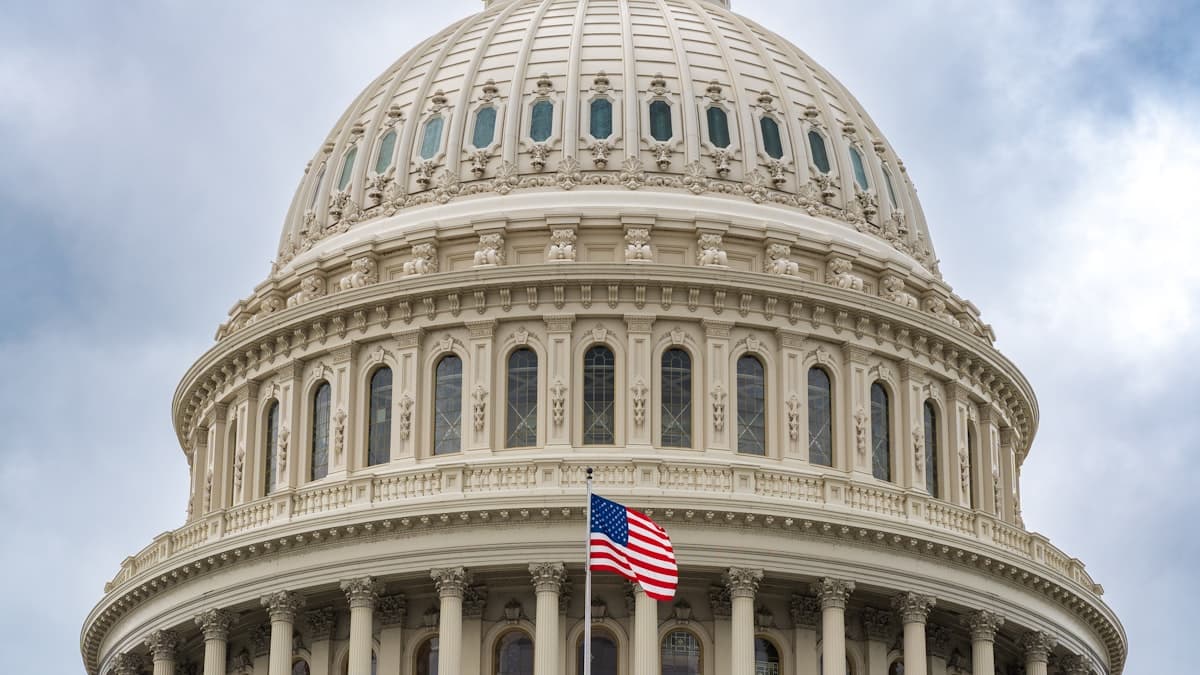
His fix is a levy on robots and on AI tokens, modelled on alcohol and tobacco taxes, funding retraining and a stronger safety net. The objections arrived within a day. Oren Etzioni, founding chief executive of the Allen Institute for AI, agreed with the diagnosis and rejected the cure: "taxing tokens is like taxing keystrokes on a typewriter. You tax what you want less of" (ABC News, 2026). The International Federation of Robotics called it a solution to "a problem that does not exist." The European Parliament rejected the same idea in 2017 (Manufacturing Dive, 2026).
The deeper problem is that a token is a token. Gates wants the tax "targeted so it does not slow down the purely beneficial uses of AI," but the same model call that drafts a layoff plan also reads a malaria trial, and no tax authority can tell them apart at the meter. The asymmetry he identified can be closed from the other side — by cutting payroll taxes rather than adding compute taxes — and that version would win Huang's support instead of his opposition. Gates didn't make that argument. He should have.
What Does "Human Reserved" Get Right, and What Does It Dodge?
It gets the moral question right and leaves the economic one open. Gates borrows the image of a nature reserve — land you could build on and choose not to — and applies it to work. "Imagine a robot giving you the awful news that you have an incurable disease," he writes. "There's no technical reason why it couldn't. Yet it shouldn't" (TechCrunch, 2026). The personal root is visible: his father's round-the-clock Alzheimer's care before his death in 2020, which he calls work no robot could or should have done.

Candidates he named include child care, elder care, teaching, patient counselling, and jury service, at an initial scale of roughly 40% of work. That is the part the headlines missed: Human Reserved replaces the two-day work week he floated in 2025, and it is a far more conservative idea. He wants people employed, not idle. "The goal of humanity," he told Semafor, "is not economic optimization."
What it dodges is the obvious question: who decides? A reserve only holds if someone pays wages for work a machine would do more cheaply, and the essay does not say who — employers through a mandate, or the state through a subsidy. "We'll be able to afford a little inefficiency as the price for keeping people employed" sounds modest. It is a proposal to re-price a large share of the labour market by law. It may be right. It is not small.
What Did Gates Leave Out?
Energy — and that is the omission an analyst has to note, because it is where his interests are largest. The essay says nothing substantive about the power demand of AI data centres. Asked about data-centre protests, he told MIT Technology Review they were "not the most effective way to start the debate." One week before the essay, TerraPower, the nuclear company he founded and chairs, announced its first dedicated AI data-centre project (TechCrunch, 2026). Earlier in the year Meta agreed to buy up to eight of its reactors (Fortune, 2026).

None of this makes the essay dishonest. His proposals cut against the companies he is closest to: a token tax would dent every major lab, including the two his foundation signed deals with this year, Anthropic in May (Anthropic, 2026) and OpenAI in January (GeekWire, 2026). But the foundation's 20-year spend-down is designed to be topped up by earnings from TerraPower and Breakthrough Energy. Gates is, structurally, long the AI energy buildout. A 6,000-word essay on AI's dangers that skips the grid is a choice, and readers deserve to know it was one.
One more gap. The international inspection body he wants depends on a US-China agreement he concedes is unlikely, and our analysis of China's open-source AI strategy explains why: the models are already published.
What Should a Canadian Business Take From This?
Start with where Canada already stands. In March 2026, 41.6% of Canadian workers had used at least one AI or automation tool in their main job in the previous year, and 35.9% had used generative AI (Statistics Canada, 2026). Roughly three in ten Canadian workers sit in jobs StatCan classifies as highly exposed to AI with low complementarity (Statistics Canada, 2024) — the category Gates would call "well defined." That is not a forecast. It is the current state.
The practical test is the one Gates gave almost in passing: is the job well defined? If a role can be fully specified — inputs, outputs, quality criteria — it is on the near side of the line, whatever its salary. If it depends on implicit expertise, the judgment built up over years inside a business, it is on the far side, for now. Most companies we work with have never classified their roles this way. Doing so is the first honest step in any AI automation programme, and it is usually more uncomfortable than the technology.
Then take the Stanford finding as a warning about your own pipeline. Firms that stop hiring juniors because a model handles the junior work will, in five years, have no one who understands the work well enough to supervise the model. The entry-level squeeze is a cost saving today and a succession problem tomorrow — a strategic planning decision, not an IT one. On the robot side of his argument, our explainer on physical AI covers what is actually deployed today.
Frequently Asked Questions
What did Bill Gates say about AI in August 2026?
In a roughly 6,000-word Gates Notes essay published August 26, 2026, he warned of three risks — mass job loss, bioterrorism and cyber attacks, and AI stunting human development — and proposed a tax on robots and AI tokens, "Human Reserved" jobs, and new national and international regulatory institutions.
What is Gates's "Human Reserved" idea?
A category of work that societies deliberately keep for people even when machines could do it, modelled on nature reserves. He named elder care, child care, teaching, patient counselling, and jury service as candidates, and suggested it could initially cover roughly 40% of work.
Has Bill Gates changed his mind on AI and jobs?
Yes. In July 2023 he wrote that AI's job disruption would be bumpy but manageable, like past technologies. In August 2026 he said this time is different, predicted net job losses within a decade, and told CNN he was "staking my reputation completely" on that view.
How did the tech industry respond to Gates's robot tax?
Mostly negatively. Nvidia's Jensen Huang said productive companies hire rather than fire. Oren Etzioni called taxing tokens "like taxing keystrokes on a typewriter." The International Federation of Robotics said it would solve a problem that does not exist. Gates's reply: "You can't count on an industry to self-regulate."
The Bottom Line
Gates's essay is a better diagnosis than a prescription. The diagnosis — that AI is arriving faster than a career can adjust, that the industry has a financial reason to stay quiet, and that self-regulation of a technology this consequential is "kind of a crazy idea" — is supported by the best labour data available in 2026. The prescription is a robot tax the economists don't like, a reserve nobody has priced, and an international body that needs a treaty he admits won't come.
Still, it is more than most people in his position have offered. The value of the essay is not its policy. It is that the most establishment figure in the history of software has publicly abandoned the argument the establishment relies on — that technology always creates more jobs than it destroys — and put his name on the alternative. Whether he is right will be settled by hiring data, not op-eds. For now the hiring data is on his side.
Which of Your Roles Are "Well Defined"?
Pine & Birch helps businesses map where AI actually substitutes for work, where it complements it, and where the honest answer is not yet — before the decision is made for you.
Book a Free Consultation