
On September 1, 2026, Elon Musk joined the G20 Innovation Ministerial in Chapel Hill by video and, over thirteen minutes with White House science adviser Michael Kratsios, made five quantitative claims about artificial intelligence. AI will add 20 to 30% to the global economy. Software will be superhuman within 18 months. A billion humanoid robots will exist within ten years, and that estimate is conservative. The world faces a 15-gigawatt power shortfall in 2027. And Google and Anthropic already lease compute from SpaceX. The wire coverage reported all five. As far as we can find, nobody checked them. So we did.
What Exactly Did Musk Tell the G20?
The setting matters for how the numbers should be read. The United States holds the G20 presidency from December 2025 to November 2026, and the Innovation Ministerial ran September 1-2 at Chapel Hill, hosted by Commerce Secretary Howard Lutnick and Office of Science and Technology Policy Director Michael Kratsios (US Commerce Department, 2026). Musk appeared remotely in a fireside chat with Kratsios on the first day. Sam Altman, Jensen Huang, Mark Zuckerberg, Demis Hassabis and Anthropic co-founder Tom Brown spoke at the same event.
This was not a product launch or an earnings call. It was a room of ministers deciding how to spend public money on energy, chips and regulation, and the output was a consensus document called the Carolina Principles for Emerging Technology. Numbers offered in that room become inputs to national policy. That is the standard we are holding them to.
Claim 1: Does AI Add 20-30% to the Global Economy?
The arithmetic roughly works; the magnitude does not. World nominal GDP was about $118 trillion in 2025, so 20% is $23.6 trillion — close enough to Musk's "$20 trillion." His top end is looser: 30% would be $35 trillion, not the $30 trillion he quoted. He appears to be working from a world GDP figure several years out of date. That is a rounding quibble, though. The real problem is the 20-30% itself.
Even the most bullish mainstream number does not reach him. PwC's widely cited $15.7 trillion is a cumulative uplift to the level of global GDP by 2030, not an annual flow (PwC). Musk's figure is both annual and roughly twice that. He is not at the optimistic end of the forecast range. He is three to ten times outside it.
What does the realized data show? In May 2026 the San Francisco Federal Reserve examined whether the US had entered a new productivity era and concluded that "the current data on productivity do not yet provide definitive evidence that the U.S. economy has entered a period of high productivity growth" (Federal Reserve Bank of San Francisco, 2026). US nonfarm productivity grew 1.4% in the second quarter of 2026. The boom may still arrive. It is not in the numbers yet.
Claim 2: Will AI Do Every Digital Job by the End of 2027?
This is the claim where Musk is most defensible, which is not the same as being right. He said software would be "Stockfish level good" within 12 to 18 months — impossible for a human to compete with — and that AI would handle anything not requiring "shaping of atoms by hand" by the end of 2027.
The trend line supports the direction. METR, the evaluation lab, measures how long a task a model can complete with 50% reliability. In January 2026 it put the best models at roughly 320 minutes, about five hours, with the doubling time down to 131 days (METR, 2026). Extrapolate naively and a 40-hour task lands in early 2027, which is close to what Musk said. Coding benchmarks tell a similar story: the top models now cluster above 95% on SWE-bench Verified, the standard software engineering benchmark, which is effectively saturation.
Then look at what happens outside the benchmark. Research on long-horizon agent performance in 2026 found models succeeding at close to 100% on tasks a human would finish in under four minutes, and under 10% on tasks taking more than four hours. A February 2026 study measured a 24-point drop moving from five-minute tasks to two-hour tasks. METR itself cautions that its confidence intervals are wide — the upper bound on its best measurement is more than double the point estimate — and that few tasks in its suite are long enough to test the frontier properly.
There is also the forecaster's record. Musk has predicted imminent full self-driving every year since 2014, told an audience in April 2024 that AI would be smarter than any human "next year," and repeated that same prediction, re-dated, at Davos in January 2026. Tesla's own lawyers told the California DMV in 2021 that his autonomy timelines did not reflect engineering reality. None of that makes him wrong about 2027. It does mean the base rate on his deadlines is poor.
Claim 3: A Billion Humanoid Robots by 2036?
Musk called this conservative and said he would bet serious money on it. Here is the current reality: the world shipped 19,100 humanoid robots in the first half of 2026, up 272% year over year, with Chinese vendors accounting for 97% of them and most going to factories rather than homes. Full-year 2026 is tracking toward about 60,000 units.
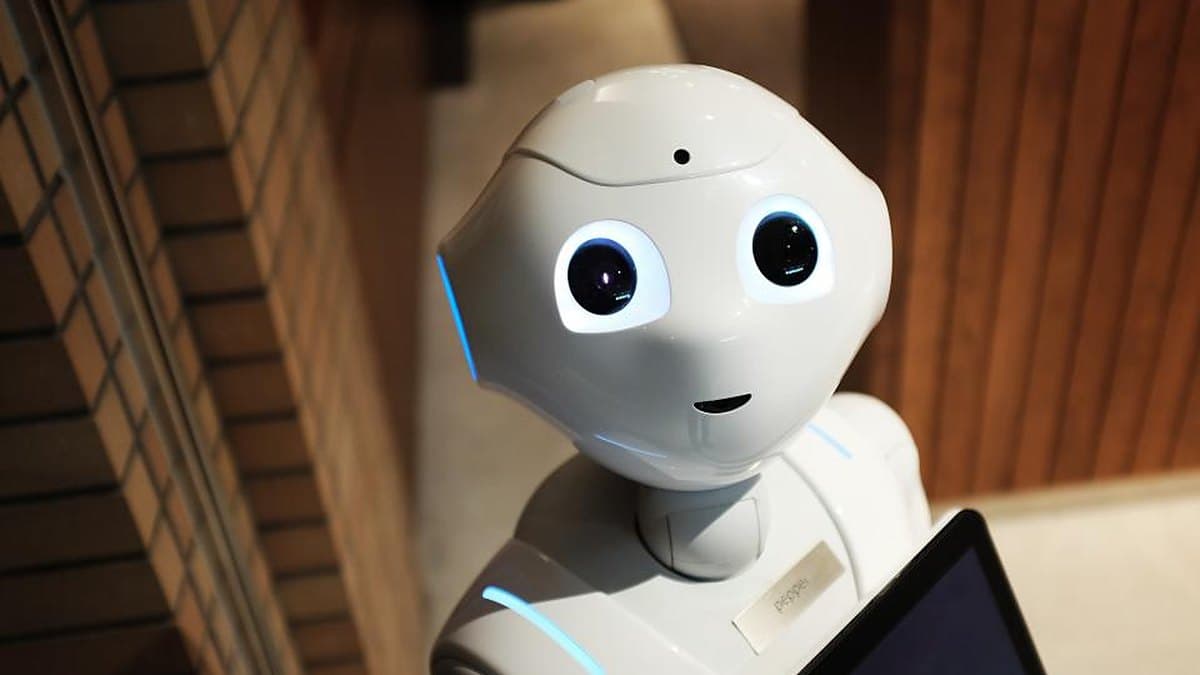
The timing of the comparison is almost unfair. Twelve days after Musk spoke, Goldman Sachs published an 80-page report raising its humanoid forecast by roughly five times, to 6.48 million units and a $138 billion market by 2035 (Investing.com, 2026). That is the freshly upgraded Wall Street bull case. Musk's "conservative" number is about 154 times larger, arriving a year earlier. Morgan Stanley does forecast a billion humanoids — in 2050, fourteen years after Musk's date.
What a Billion Robots by 2036 Would Actually Require
- 100 million units a yearMore annual production than the entire global auto industry, which built 96.4 million vehicles in 2025 after 130 years of practice. From a 2026 base of about 60,000 units, that is four orders of magnitude in ten years.
- Rare earth magnetsAt roughly 1.3 kg of neodymium-praseodymium per human-sized robot, a billion units would need many times current global NdFeB magnet output — a supply chain China dominates at the refining stage.
- 3,600 TWh of electricity a yearAbout 11-12% of current world generation, or roughly the entire annual output of the United States — for the robots alone, on top of the data centres Musk says we already cannot power.
- A productivity multiple nobody has measuredThe "five times a human" figure has no published basis we could find from any analyst, and the conclusion that a billion robots out-produce all humans is arithmetic performed on top of it.
One more piece of context belongs here. Four weeks before the G20, on its second-quarter call, Tesla declined to disclose a single quarter's Optimus production number and softened its launch guidance to "later this year." Third-party trackers put Tesla, Figure and Agility at roughly 150 robots each for all of 2025.
Claim 4: Is There a 15-Gigawatt Power Shortfall Coming?
The shortfall figure is plausible. The growth rate he used to justify it is not. Musk said AI chip production is rising 40-50% a year while "the power available outside of China has been rising at like 10 to 20% a year." The International Energy Agency puts global electricity demand growth at 3.0% in 2025 and 3.7% forecast for 2026, with the United States and European Union each growing about 2% a year through 2030 (IEA Electricity 2026).
Musk's floor of 10% is five times the actual US rate. His ceiling of 20% is ten times it. The claim is also self-refuting in structure: he contrasts non-China growth against China, but China is the fastest-growing major electricity market on earth at about 4.9% a year — below the bottom of the range he assigned to everyone else. No country or bloc is expanding electricity supply at 10-20% annually. The only way to reach those figures is to measure data centre load specifically and present it as total grid growth, which would break the comparison he was making.
His directional point survives, and deserves to. China added more than 430 GW of wind and solar in 2025 and became the first country past 1,000 GW of installed solar; its clean generation growth alone covered all of its demand growth. The entire US data centre fleet is roughly 31 to 41 GW. Turbine lead times run five to seven years, and GE Vernova had about 116 GW under contract by July 2026, largely sold out through 2030. The West does have a power problem. It does not have the one he described.
The 15 GW number itself we could not trace to any published study. Morgan Stanley has estimated a 49 GW shortfall in the US alone. Notably, this is the one claim where Musk is more conservative than the analysts — and it is also the claim that supports his specific ask of the ministers in the room: build more power, faster, with fewer permits.
Claim 5: Do Google and Anthropic Really Lease Compute from SpaceX?
Yes. This is the claim that sounds least plausible and turns out to be true, because of a corporate fact many people missed: SpaceX acquired xAI in February 2026, and went public in June in the largest IPO on record. The compute being leased is xAI's Colossus capacity in Memphis, now a SpaceX asset.
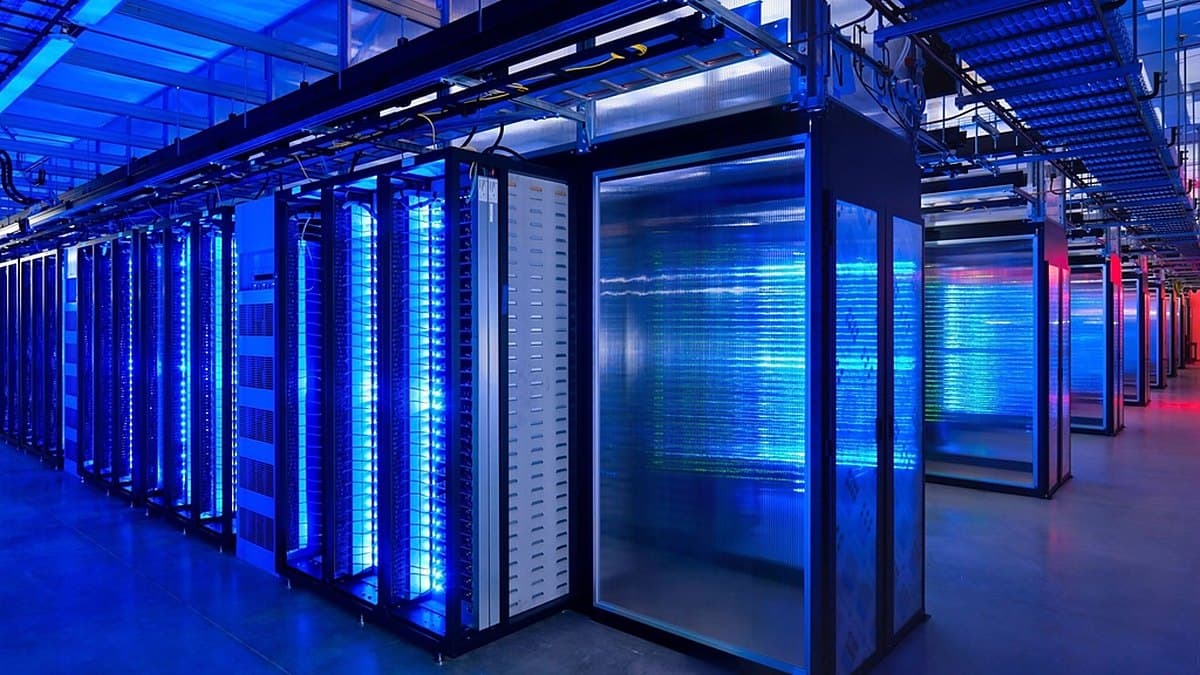
SpaceX's own IPO filing disclosed the terms. Anthropic is contracted at about $1.25 billion a month from May 2026 through 2029 for more than 300 MW; Google at about $920 million a month from October 2026 (Data Center Dynamics, 2026). The "own power plants" part is real too: Mississippi regulators authorised 41 gas turbines in Southaven in March 2026, and the company has faced litigation and a Memphis community campaign over turbines run without permits.
What the statement omits is proportion. Anthropic has contracted for up to 5 GW from AWS and multiple gigawatts of Google TPU capacity. SpaceX's 300 MW is something like 3-5% of its secured compute. The sentence is true and the impression it leaves — that the frontier labs depend on Musk for power — is not.
Why Two of These Claims Cannot Both Be True
The sharpest problem with the G20 remarks needs no external authority. In one answer Musk said the world faces a 15 GW power shortfall in 2027 severe enough that countries should urgently build generation. In an earlier answer he said a billion humanoid robots will be operating within ten years. A billion robots drawing roughly 10 kWh a day need something like 3,600 TWh a year — close to the entire annual electricity output of the United States, added on top of the data centre demand he says is already unservable.
Both claims serve an argument, and they are the same argument: build more power, regulate less. But they are not consistent as forecasts. If power is the binding constraint on AI in 2027, it is a much harder constraint on a billion electricity-consuming robots by 2036. No one in the room appears to have asked.
What Should a Business Actually Take From This?
Separate the direction from the dates. Musk is directionally right about several things that matter: AI coding capability is improving faster than most firms have adjusted to, electricity and turbine supply are now genuine constraints on compute, and China is building generation at a pace the West is not matching. Those are real planning inputs.
The dates and magnitudes are a different matter, and there is a disclosure worth stating plainly. Every one of the five claims maps onto a balance sheet he controls. The robot forecast is the clearest case: Tesla shareholders approved a compensation package in November 2025 whose milestones include selling one million humanoid robots (CNBC, 2025). He told the G20 that a billion robots in ten years is a bet he would make. He has already made it.
For operators, the practical move is the same one we recommend for any vendor forecast: ask what would have to be true, then ask who measures it. If a technology roadmap depends on a tenfold change in electricity supply, check the IEA number before you budget against it. Our survey of what household robots can actually do today applies the same test to the robot claims, and deciding which of these trends should change your own plans is a strategy question before it is a technology one.
Frequently Asked Questions
What did Elon Musk say at the G20 in September 2026?
Speaking virtually to the G20 Innovation Ministerial on September 1, 2026, Musk predicted AI would add 20-30% to global GDP ($20-30 trillion a year), that software would be superhuman within 12-18 months, that over a billion humanoid robots would exist within ten years, that a 15 GW power shortfall would hit in 2027, and that Google and Anthropic already lease compute from SpaceX.
Is electricity supply really growing 10-20% a year?
No. The International Energy Agency reports global electricity demand growth of 3.0% in 2025 and 3.7% forecast for 2026, with the US and EU each around 2% a year through 2030. Even China, the fastest-growing major market, is near 4.9%. No major economy grows electricity supply at 10-20% annually.
Do Google and Anthropic lease compute from SpaceX?
Yes. SpaceX acquired xAI in February 2026 and its IPO filing disclosed that Anthropic pays roughly $1.25 billion a month from May 2026 for 300+ MW, and Google roughly $920 million a month from October 2026. It is a small share of either company's total compute, which is contracted mainly with AWS and Google's own TPU fleet.
How many humanoid robots exist today?
About 19,100 shipped worldwide in the first half of 2026, 97% from Chinese vendors and mostly to industrial buyers, with full-year 2026 tracking toward 60,000. Goldman Sachs raised its forecast in September 2026 to 6.48 million units by 2035 — roughly one 154th of Musk's ten-year figure.
The Bottom Line
Of five claims, one is false in a way that is easy to check and went unchecked in every news report we found. One is true and more interesting than it sounded. Two are outside the range of every published forecast by a factor of three to 154. And one pair cannot both be right. That is not a bad hit rate for thirteen minutes of unscripted answers, but it is a poor basis for energy policy.
The useful discipline is not deciding whether Musk is credible. It is noticing which claims come with a measurement and which come with a round number. The IEA publishes electricity growth. METR publishes task horizons. Goldman publishes unit forecasts. When a prediction cannot be traced to any of them, that is the moment to ask why — and whose balance sheet improves if you believe it.
Separating AI Signal From AI Sales Pitch?
Pine & Birch helps businesses test technology claims against evidence, size what AI can realistically do for their operations, and build the systems that deliver it.
Book a Free Consultation